Do we ever learn from History

Flying up to Italy for the 80th Anniversary of the Italian Armistice that took place on (or about!) 8th September 1943 I was reminded of all the conflicts that had taken place in or around all the cities that kept popping up on my screen when I was checking on how our flight was progressing.

Ice Cold in Alex
In February 1945, US President Franklin Roosevelt, British Prime Minister Winston Churchill, and Soviet dictator Joseph Stalin met at the Yalta resort in then-Soviet Crimea to finalize their strategy for the remainder of World War Two and forge a post-war settlement.

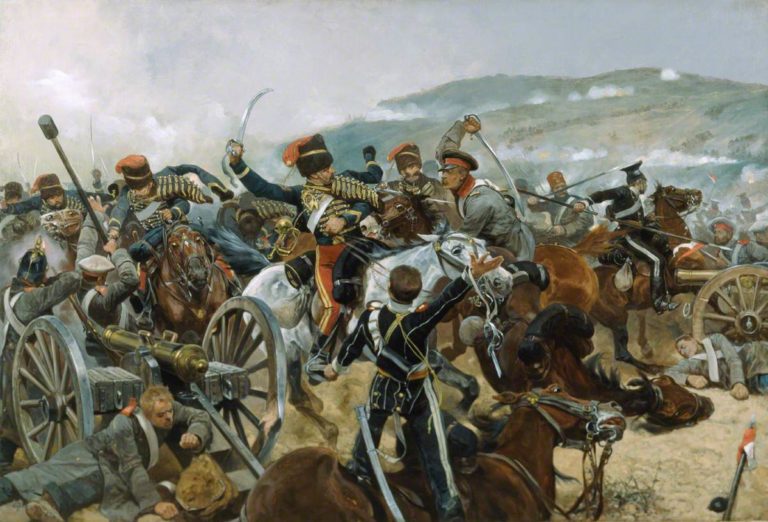
Woodville, Richard Caton; The Relief of the Light Brigade, 25th October 1854; National Army Museum; http://www.artuk.org/artworks/the-relief-of-the-light-brigade-25th-october-1854-183084

“’Forward the Light Brigade!’

Was there a man dismayed?

Not though the soldier knew

Someone had blundered.

Theirs not to make reply.

Theirs not to reason why.

Theirs but to do and die.

Into the valley of Death

Rode the six hundred.”

Another piece of the Jigsaw

Into Battle at El Alamein

Well, back in 2021, following some advice I had received from Anne Copley of the Monte San Martino Trust about researching my dad’s wartime record, I reached out to an organisation called WW2Talk but sadly unearthed very little about my father or his wartime unit in the Indian Army, which was the 4/11th Sikh Regiment.

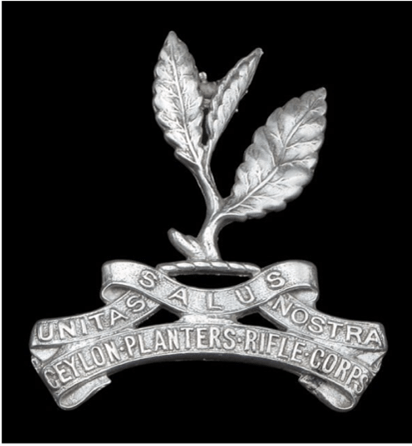
“When storm clouds gathered in Europe and war became inevitable all the young British tea planters and brokers were expected to join the volunteer regiment, the Ceylon Planters Rifle Corps (their cap badge was a tea leaf) and, when war broke out, they shipped up to India, where he enrolled in the 4/11 Sikh Regiment and was soon on his way to Egypt. He was one of 33,000 Allied troops captured at the fall of Tobruk in 1942 but escaped on his first night of captivity and, after two weeks during which he was given food and shelter by Bedouin tribes, made his way back to Allied lines on foot. Captured a second time he was sent to a POW camp in Italy where he escaped again and, for 6 months, found shelter with Italian communist villagers in the hills of Tuscany.”

N.T.G. Willis

23 June 1942
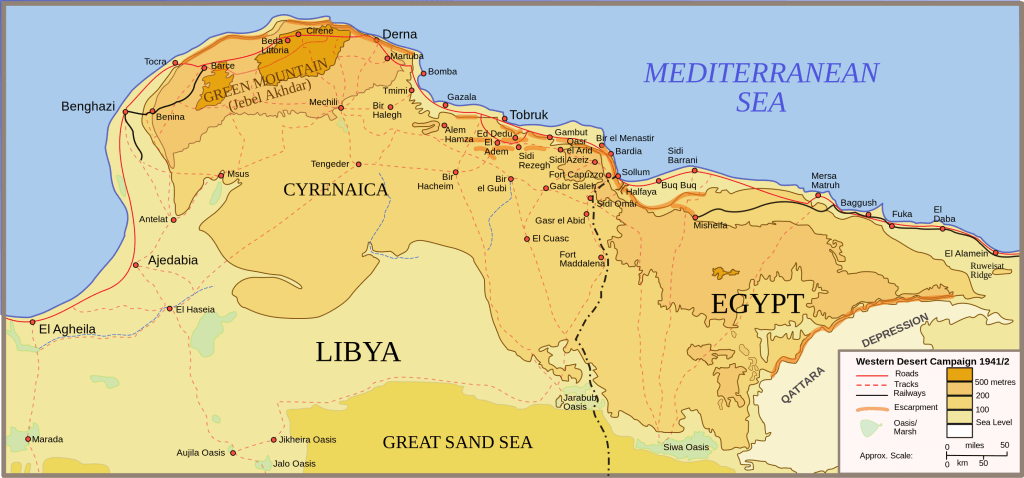
Road party in unit M.T. under Willis & Ward, who had just returned off a Commando Course, left at 0500 hrs. Remainder of Bn left for HAIFA EAST railway station starting at 0645. Everybody entrained by 0945 & train left at 1005 hrs for KANTARA.

24 June 1942
Arrived KANTARA on time at 0200 hrs. Men got tea & by 0430 everything had been ferried across the canal & all loaded up in train ready for move. The train left at 0500 for SEMILLA which was some 15 miles from MERSA MATRUH. This obviously indicated a change in plan as our road parties were definitely ordered to Cairo. Some of the mess servants got left behind on departure but they caught up later as they were brought along by 2/5 ESSEX REGT. Arrived AMIRYEH at 1500 hrs where we had a two hours halt & the men were able to cook food. Left at 1700. Up to now we had been running well on time. From now onwards slow progress & sometime during night halted short of DABA. Moved again but then halted soon after owing to the train running out of water. Were passed by 2/5 ESSEX train. Eventually got water & arrived at DABA 1600 hrs. After another 20 miles or so the train halted about a ¾ mile short of GALAL where the ESSEX had also halted. Some doubt as to reason.

25/26 June 1942
Obliged to spend night here although had to be ready to move at a moment’s notice. Continual air activity on both sides. The enemy dropped flares & soon realised the situation. As a result both us & the Essex were bombed. One stick bursting very close to the train. Unfortunately everybody was not able to get clear in time and 7 were killed & 18 wounded. Of the wounded 2 later died in hospital. The remainder of the night was spent lying dispersed away from the train. No further bombing directed on us but not much sleep obtained & a most unpleasant return to W.D. However all well next day & jawans [??] cheerful.

26 June 1942
At 0745 hrs the train was ordered to move back to DABA, where we arrived at 1200. After a short halt we moved back to EL ALAMEIN & came under 1 S.A. Div. Went into a dispersal area N.W. of station at about 1415. At about 1600 Willis & road party arrived. They had gone to DABA but had been sent back from there.

  • 2/5th Battalion The Essex Regiment
  • 2/3rd Gurkhas Rifles
  • 121 Field Regiment Royal Artillery
  • Plus Field Ambulance, Work Section, Brigade Transport Section

MONTE SAN MARTINO, ITALY

4 years ago, in July 2019, just prior to my Cancer Diagnosis and the World shutting down with Covid, I was lucky enough to discover a small village in Italy called Monte San Martino while holidaying close by in the foothills of the Sibillini Hills in Le Marche, at the home of an old school friend.

I had just started investigating the wartime exploits of my father and had discovered that he had been a Prisoner of War (POW) in Fontanellato, near Parma in Italy.

Unfortunately, as I was just starting out on my journey to piece together my Dad’s wartime experiences in 2018, the Monte San Martino Trust had been celebrating the 75th Anniversary of the Italian Armistice, and this had taken place in September 2018 in Fontanellato, the very Prison Camp my father had been a POW.

The Monte San Martino Trust celebrating the 75th Anniversary of the Italian Armistice in Fontanellato – September 2018

But there had been several other Anniversaries in Fontanellato that I had known nothing about. The first that I came across was when I first stood outside the gates of Dad’s wartime prison, the “Orfantario” (The Orphanage), in 2019 while Rex and I had been driving from Lucca to Verona, which indicated the 40th Anniversary had taken place on “11 SETTEMBRE 1983”. Although the date below it appeared to indicate 11th September 1965?!

Then notably the 60th Anniversary which also took place in Fontanellato in September 2003.

PG 49 –  FONTANELLATO, ITALY –  60 Years on – WW2 Escape Lines Memorial Society

And inside the building yet another plaque that indicated the 70th Anniversary that had been celebrated in Fontanellato on 8th September 2013.

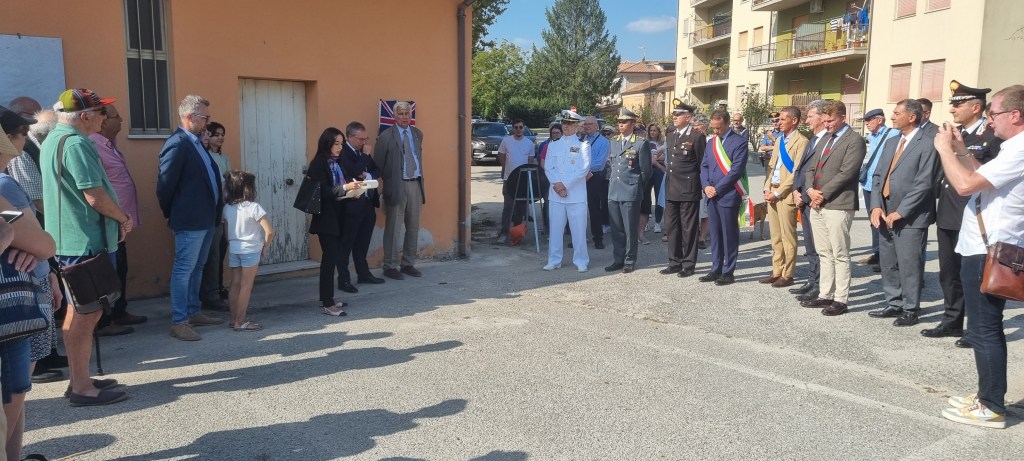
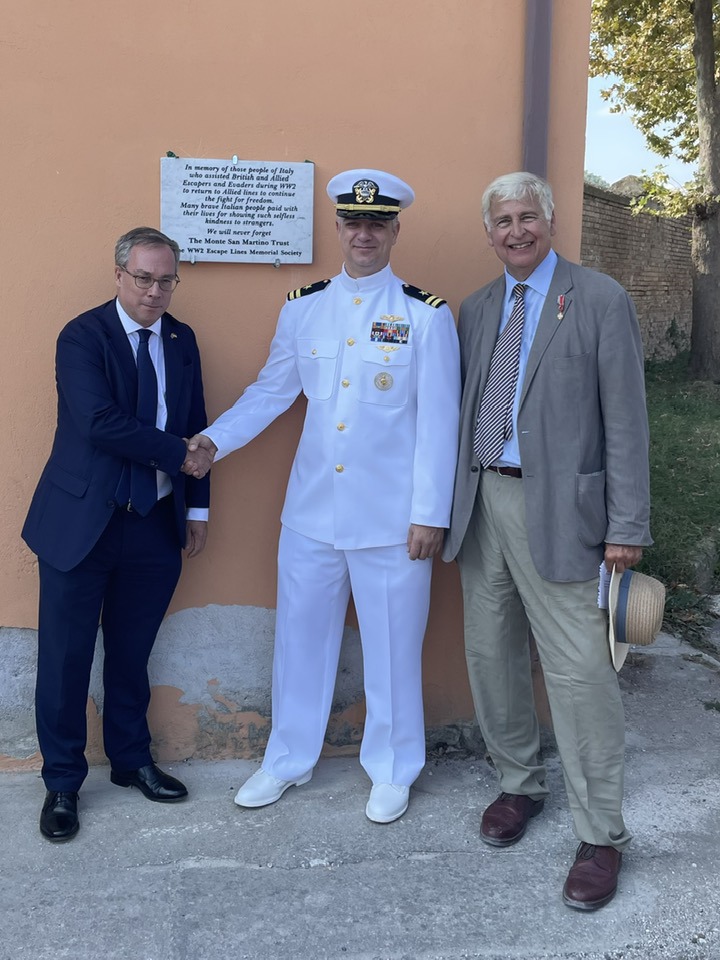
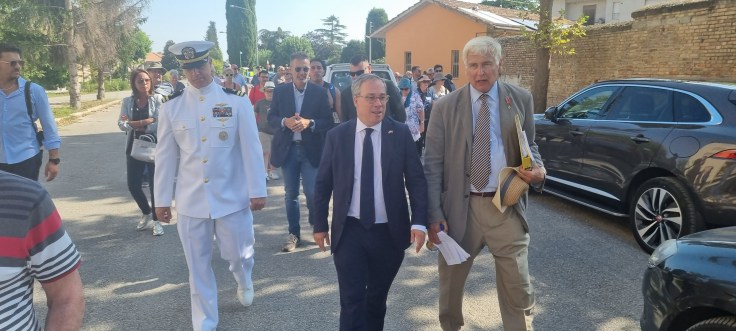
But this year, 2023, will mark the 80th Anniversary of the Italian Armistice on 8th September 1943 and I am lucky enough to be returning to the area we visited in 2019 known as Le Marche (pronounced luh mahr-kay) to join in with those celebrations in the villages of Servigliano and Monte San Martino that are being co-ordinated by the Monte San Martino Trust in conjunction with the Escape Lines Memorial Society (E.L.M.S.) and the Casa Della Memoria Association.

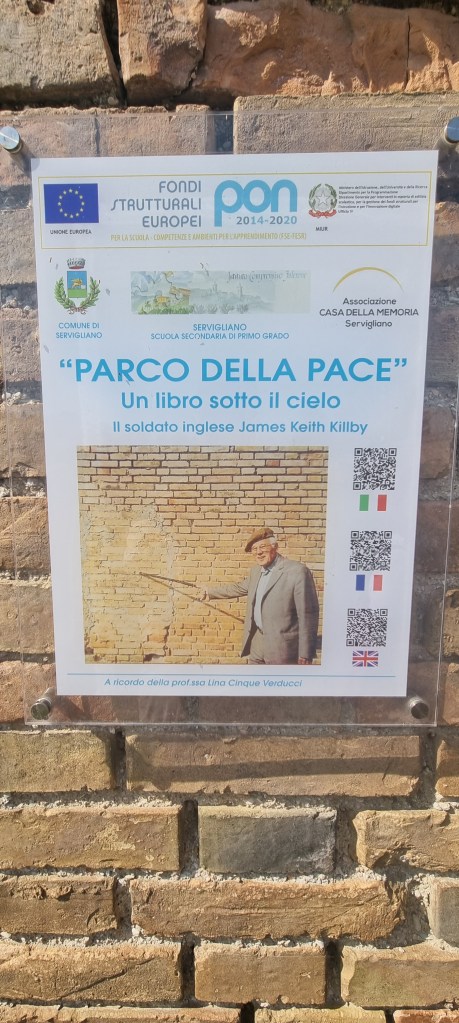
The Monte San Martino Trust was started by Keith Killby, a former inmate of the nearby POW Camp (PG 59) at Servigliano, who had sought shelter in the nearby village of Monte San Martino shortly after the release of the prisoners into the Italian countryside.

And it is the Trust that has provided me with snippets of information about my father and the time he spent as a POW, together with a few pieces of the jigsaw that saw him being released and his subsequent journey through the Italian countryside in his attempts, presumably, to reach England. Or at the very least re-uniting with Allied forces in Italy or reaching the wartime sanctuary and safety of neutral Switzerland.

This website that I have created tells of my own journey of discovery in piecing together this puzzle in the hope that it provides us with a glimpse into the extraordinary kindnesses and sacrifices that were made by so many Italian families who provided the nourishment and shelter that thousands of Allied soldiers received after their release from captivity.

FINDING FONTANELLATO

Finding Fontanellato was a bit like “Finding Nemo”. Yes, I had always known that my father had been in a POW Camp in Italy during WWII. Mainly because I knew that he had been told that his father had died on 10th March 1943 when he was a prisoner of war. But for the best part of half a century I had no idea Where in Italy? What Town? What did the Camp Look Like? Was it Still There? What had it been like Being Imprisoned There? Where did they go after being Liberated at the time of the Armistice? Question after question kept popping into my head.

After establishing in early December 2018 that my father had indeed been in PG49 in Fontanellato I couldn’t think of anything other than finding this place.

It was about this same time that my partner, Rex, and I had started to plan a trip to Europe to catch up with family and friends. Plans started to formulate in early 2019 and soon we had our itinerary set for stops in London, Malaga, Granada, Rome, Sarnano (to visit friends), Lucca (a pilgrimage for Rex to pay homage to Puccini), Verona (for an Opera at The Arena) and Venice before embarking on a memorable Cruise around the Baltic on the Queen Victoria.

London saw us take in the incredibly acerbic and riotously irreverent musical comedy “The Book of Mormon” at The Prince of Wales Theatre and the gloriously melodramatic Opera of “Tosca” at Covent Garden. That set us up for the most incredible journey into the Moorish Architecture and Arabic World of The Alhambra in Granada which is an experience I would recommend to anyone. But it was on returning from The Alhambra in Granada with my brother Graham and his wife, who had both brilliantly organised our glimpse into The Arabian Nights, to their holiday home in Estepona that the most incredible thing happened. As you can imagine both he and I had recently stumbled on this treasure trove of information on PG49 at Fontanellato, as provided by the Monte San Martino Trust. And consequently, all these questions which had been bouncing around in my head suddenly had a sounding board, which probably only succeeded in creating yet more questions.

Then, out of the blue, Graham said…. “I think you need to read this.”

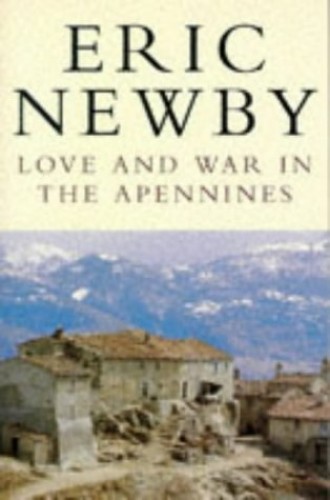
Eric Newby’s lifetime exploits are well documented (see Books) and none more so in relation to PG49 at Fontanellato than “Love and War in the Apennines”.

And what an extraordinary revelation it was. Not only was this man, Eric Newby, writing about his wartime experiences and capture off the coast of Sicily in August 1942. But he very soon afterwards pops up in PG49 at Fontanellato when he starts describing some of his experiences and life within the Camp. And suddenly I’m there……

“The prison camp was on the outskirts of a large village in the Pianura Padana, the great plain through which the river Po flows on its way from the Cottian Alps to the sea. The nearest city was Parma on the Via Emilia, the Roman road which runs through the plain in an almost straight line from Milan to the Adriatic.”

So now I know Where it Is! But there’s more!

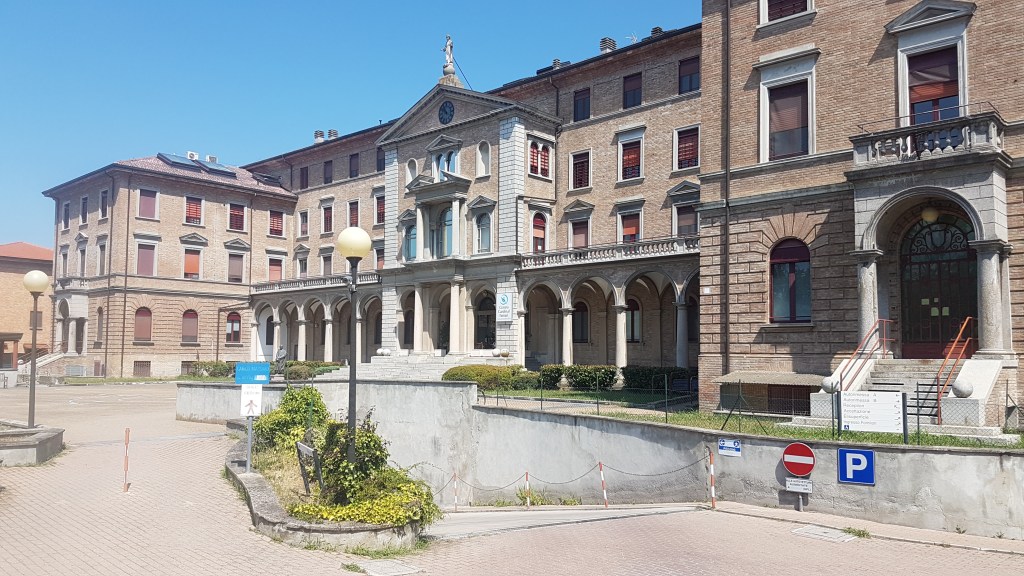
“The building in which we were housed had originally been built as an orfanotrofio, an orphanage…The foundations had been laid back in 1928, but the work had proceeded so slowly that the war began before it could be completed, and it remained empty until the spring of 1943 when it became a prisoner of war camp for officers and a few other ranks who acted as orderlies.”

And I now also know that it was a building! And it wasn’t just my Dad who was there! Yet more disconcertingly….

“It was a large, three storeyed building with a sham classical façade, so unstable that if anyone jumped up and down on one of the upper floors, or even got out of bed heavily, it appeared to wobble like a jelly.”

So, was it still there? Now I really HAD to find this place. It was at this point that I started trying to figure out if our carefully planned route through Italy could squeeze in an interloper. It wasn’t long before I worked out that our route from Lucca to Verona HAD to go in a certain direction. A quick check on Google Maps meant that our journey would no longer go via any of Florence, Bologna or Modena but instead go via Spezia, Parma, Cremona and Brescia. And only 40 minutes added to the planned 3 hour drive to our next destination!

Lunch in Fontanellato was on!

“The book which triggered one of the most thrilling adventures in detection of my life.”

Following my re-reading of Eric Newby’s book entitled “Love and War in the Apennines” I was reminded about a wonderful opportunity I was given as I was recovering from an operation I underwent in December 2020 to listen in on a Zoom meeting held by the Monte San Martino Trust on 16th May 2021 to commemorate the 50-year Anniversary of the book.

Professor Robert Tregay follows Eric Newby’s travels through Italy

The travel writer Eric Newby’s memoir Love and War in the Apennines was first published in 1971 and has been in print ever since. The book tells the dramatic story of Newby’s capture in Sicily in 1942, while on a commando raid, his time as a prisoner of war in Italy and on the run in the autumn of 1943 after the Italian armistice. He wrote the book as a tribute to the Italian people who risked their lives to assist him. To celebrate the 50th anniversary of the book’s first publication, Nick Young, chair of the Monte San Martino Trust, a charity founded by former British prisoners of war in Italy, hosted a discussion with Eric Newby’s daughter, Sonia Ashmore, and Professor Robert Tregay, who has researched the people and locations Newby describes.

The extraordinary thing I now realise with hindsight is that the opening words by Professor Robert Tregay in introducing his own book describing Eric Newby’s ‘Escape from Fontanellato’ was that I too was in the throes of being diagnosed with cancer and recovering from all sorts of hellish treatments and surgeries to ensure that I had a few more years left on this mortal coil to finish the journey I had commenced, prior to my diagnosis, of finding out about my Dad’s wartime exploits.

I have already wondered while reading this book myself, just what other relatives of POW’s are thinking when they have read it, but then I found out that someone else, who has no connection with Fontanellato or any other wartime exploits as far as I know, is as gripped by the story as I am and, like me, just wants to find out what actually happened. Or in my case where did my Dad go, and who was it that provided him with food and shelter, and what happened to some of the people he knew and met?

It was when I started reading the following extract from Professor Tregay’s summary of his investigations that I realised I was not the only person on the planet that was intrigued by this extraordinary period in time –

“Recovering from an operation six years ago, I was given Eric Newby’s book, Love and War in the Apennines, to read. “It’s my favourite novel,” my friend said, and it became for me the book which triggered one of the most thrilling adventures in detection of my life.

Professor Robert Tregay – The True Story of Eric Newby’s “Love and War in the Apennines”.

Hobbling and on the run!

It’s been about 4 years since I first read Eric Newby’s book entitled “Love and War in the Apennines” so I’ve decided to see if I can refresh my memory of the very feelings I had when I first read it.

And before very long you’re immersed in another world. And most importantly I’m aware that my own Dad was alive and experiencing the exact same circumstances that Eric Newby is describing. And you’re there. You’re walking the same corridors. Marching the same roads. Playing in the same exercise yard. And eating and drinking, yes drinking, wine and vermouth in the same rooms. My Dad’s favourite drink on a Sunday lunch after a few hours in the garden when we were living in Jersey, was a Gin and Dubonnet.

 Actually, I think he used to say that it was the Queen Mother’s favourite tipple, but I now wonder if this taste for vermouth first came from his imprisonment in PG 49 at Fontanellato?

Whilst immersed in this book I start wondering if other relatives of these inmates at PG 49 have felt the same feelings that I am now experiencing once again. For suddenly you’re in Fontanellato. And not only that but you’re the one unfortunate who has broken his ankle, just two days before being released from captivity. As Eric Newby explains…

“….on the seventh of September, 1943, the day before Italy went out of the war, I was taken to the prison hospital with a broken ankle, the result of an absurd accident in which I had fallen down an entire flight of the marble staircase which extended from the top of the building to the basement while wearing a pair of nailed boots which my parents had managed to send me by way of the Red Cross.”

Hold on. Rewind! Did he just say “marble staircase”! What sort of POW Camp is this? And it’s only once you have seen it in real life, not just pictures from the Internet, that you get to appreciate the elegance of this grand old building. So how come my Dad didn’t mention any of this?

But this story of “Love and War in the Apennines” doesn’t end there obviously and, without going into a spoiler alert, it’s fascinating to learn that soon after sampling the intoxicating emotion and joy of being set free from captivity, Eric then faces what must have been an intolerable dilemma. Just a day after being set free from PG 49 at Fontanellato, he receives the worst possible news.

“Around eleven o’clock an Italian doctor arrived in a Fiat 500.He was an enormous, shambling man with grizzled hair, like a bear and one of the ugliest men I had seen for a long time.

He examined my ankle, which was rather painful after the strains to which it had been subjected, raised his shoulders, made a noise which sounded like urgh and went off to have a conference with the capitano.

‘The doctor says you must go to the hospital,’ the capitano said, when they emerged from their conclave.

‘But that means I shall be captured again,’ I said.

‘You’ll be taken away if you don’t…….. The doctor can get you into a hospital in Fontanellato. No one will think of looking for you there.’”

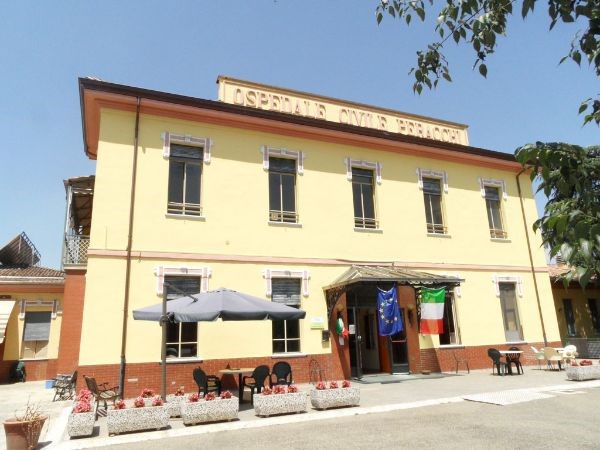
So, you’ve just experienced the euphoria of freedom to now finding yourself thrown back into the Lions Den of Fontanellato! Which by now is full of angry Germans who have just been betrayed and let down by the Italians. And very soon you’re lying in a bed in the Ospedale Peracchi on the outskirts of Fontanellato, only a few hundred yards from the orfanotrofio (Orphanage) which we now know to be the site of PG 49.

And suddenly I’m jumping on to my computer to see if I can establish if this Ospedale, or Hospital, exists. And sure enough a quick Google search comes up trumps. Sitting at Via XXIV Maggio 16 it’s just an 8 minute walk from Via IV Novembre 21 where the building housing PG 49 can also be found.

Now this I have to see one day!

Reading Books

One of the first books that I came across while researching my father’s time in Italy was “Love and War in the Apennines”, by Eric Newby, which enabled me to immerse myself in the “Life and Times” of a POW “On the Run”.

The peasants are the great sanctuary of sanity, the country the last stronghold of happiness. When they disappear there is no hope for the race.

Virginia Woolf

“In 1943, Eric Newby escaped from the Italian prison camp in which he had been held for a year. Evading the German Army, he was sheltered by an informal network of Italian peasants. Love and War in the Apennines is Newby’s tribute to these selfless and courageous people and their bleak and unchanging way of life.”

Publishers – HarperCollins

To all those Italians who helped me, and thousands like me, at the risk of their lives, I dedicate this book.

Eric Newby

“Shivers running up and down my spine”

I have been very fortunate to have been provided with access to a book written by Keith Killby entitled “In Combat, Unarmed” and I was immediately gripped when I read the Foreword, written by Sir Nicholas Young, Chairman of the Monte San Martino Trust, in which he explained how he had been introduced to Keith Killby at a fairly informal gathering of men who had all been POW’s in Italy in World War II.

As he explained, most of them had all been in the camp (PG49) at Fontanellato where both my own father, and Nick’s, had been a POW, except Keith who had been in PG59 at Servigliano, and, on reading this excerpt, I too imagined myself in the same room “keeping very quiet, ears pinned back listening, shivers running up and down my spine.”

And how familiar the following words were to my ears when Nick Young went on to write….

“My father, at that time 12 years dead, had also been in Fontanellato; these men had known him, talked with him, escaped into the Italian countryside with him. He had never seen them again, had told hardly a soul indeed about his adventures.”

Copyright © Monte San Martino Trust, 2013
Printed in Great Britain by TJ International Ltd, Padstow, Cornwall
Published by Monte San Martino Trust
Registered Charity No. 1113897
msmtrust.org.uk

How I wish I had been in that same room and, I’m sure like Nick, how I wish that my father had been amongst this small group of men that we could have all shared in their joint stories of life in those camps, maybe how they had all been captured and all their adventures after being released from prison at the time of the Italian Armistice. As well as all the mishaps of their journeys through Italy and, in my father’s case, his recapture and imprisonment in Stalag VIIA, Moosburg in Southern Bavaria, Germany.

So now my task is to find these missing pieces of the jigsaw and piece them all together hopefully so that, one day, I will be able to tell my Dad’s story of his participation in World War II.

How it all Started…..

It was long after my father died that I started to become seriously curious about his involvement in World War II. I wonder in hindsight whether it was because I had instictively felt uneasy about raising or rather confronting him with these memories. Better still to leave sleeping dogs lie?

And it was only when my mother started having some real issues with her memory that I realised that I had to act urgently before it was too late.

It was about the same time that I was able to talk with my eldest brother Graham about what he knew of our parents past and he very fortunately was able to provide me with digital copies of some of their very many photographs. So it was that I was able to see, possibly for the first time, my Dad soon after he had left school and at the age of 21 at his parents home in Clandon shortly before heading out to Ceylon to start a fascinating career in the Tea Industry.

Clandon 1937

As I recently wrote to Nick Young at MSMT describing my efforts to extract information from my Mum… “.. I am so grateful that I was able to extract that one place name from my Mum as she was slipping into dementia before she died. At the time that she told me that Dad was at Fontanellato I half imagined that she was mixing it up with some delicious Italian ice cream that she and Dad had both enjoyed!” But it has been the one singular word that has led me to so much.

In fact it initially led me to the Monte San Martino Trust, but it was actually my brother Graham, again, who unearthed the most astonishing fact, or rather facts, that Dad appeared in several of their documents when he used their search engine and typed in “Willis”.

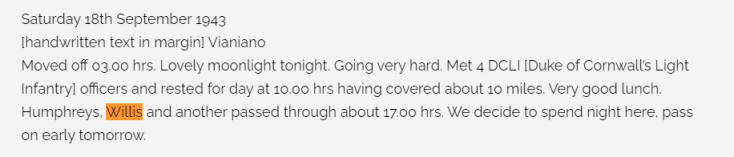
The first story to pop up was that of Major Leslie Young of the 2nd Battalion Beds and Herts Regiment, none other than the father of Nick Young the Chairman and Trustee of the Monte San Martino Trust, in which Nick’s Dad wrote a diary entry simply stating “Willis and another passed through about 1700 hrs”. My very first evidence that Dad had been a POW in PG49 and was “On the Run” in Emilia-Romagna in September of 1943.

But was this my Dad? And who is Humphreys? The one fact I’m clinging to is I’m guessing that Keith Kilby, Founder of the Monte San Martino Trust and the person resonsible for initiating the collection of all of this information, had endeavoured to list all the names that appeared in the transcript and, thankfully, he had somehow established that this Willis was indeed Willis, 2nd Lt A – p.10. And continuing the investigation of the Archive only one other Willis pops up and appears to be that of Derek Willis who was in Padula (PG.35?) with Leslie Nathanson and Sulmona (PG.78) with Alan Hurst-Brown. So maybe it is my Dad!

But the second really worthwhile entry was that of Mike “The Forger” Goldingham (18 Cavalry, Indian Army) whose diary entries were compelling and re-inforced my few memories that I had of my Dad enjoying happy days with one particular Italian family during which he thoroughly enjoyed the grape harvest and treading the grapes with his bare feet!

An extract from Mike’s Diary:-

“This is the place to introduce you to the ‘Contadini’ without whose help, no POW would have been able to manage. Living in squalid farmhouses, with a few acres of land hacked out of the mountain side – a cow, sheep and hens, the Contadino is nearly self provident for his, often, large family. His wife — the women are the backbone of the country – rules the home and, with the children, works in the field equally hard as the men, and for the same hours. They are peasants, dirty, poor and ignorant, but they have the generosity of the east, so embarrassing to the Englishman. Many a time we have been forced to eat the family’s hot evening meal, while they contented themselves with dry bread.

We were four, all Indian Army, who stayed for six weeks in a small village near Bardi. We slept in a hay barn and fed with six families vying with each other in hospitality. As the Fascist Govt was extinct, the contadinis had not sent in their quota of flour, and there was plenty of bread. Gnocchi, Macaroni, pasta-asciutta, polenta, fungi, milk, grapes, chestnuts and cheese resulted in our fattening visibly in a short time. During the day we “helped” in the fields: (we could watch the main road, half a mile below, for a danger sign): hoeing potatoes, ploughing, cutting wood, collecting fungi or bringing in the grape harvest and squashing them with bare feet in a coffin-shaped vat. They were happy, sunny days.

We got on well with our hosts, and being able to draw a little, we had many female sitters. They made us realise that the term “a complexion like a peach” was not hearsay. To have put cosmetics on their cheeks would have been sacrilege. Our great friend was Marco, the village loper, who used to lock us in his cellar and force wine on us till we could take no more. We called wine “benzino”, saying we could not work without it. When hoeing, we put the bottle ahead of us, dig hard till level with it, and flop down with cries to our pretty companion, of “Maria, Benzino!” She produces glasses, serving us with smiles and charming courtesy, till we are ready to start again.

The cheese here was delicious – mostly Parmesan and a type of Gorgonzola. But to the Ites, the real delicacy is a cheese (we named it ‘Formaggio Artillieri’) that after three months becomes a squirming mass of worms. You can see and hear them jumping about (often amazing distances). A gourmet will go miles for a good mouthful of worms! A common dish is “polenta”, made from “grano turco” – Indian corn – mixed with milk and water, and cooked. When hot, the result, not unlike Yorkshire Pudding on a vast scale, is thrown bodily onto the wooden table-top, grated cheese and tomato sauce added, and we all sit round the mass, and plunge, every man for himself, into it with forks. It is rather tasteless, but excellent when made from chestnuts.

Nearly all the elder peasantry in the valley, and indeed throughout Italy, have either been to England or America, or have relations there. Our village boasted many who had been waiters, chefs, etc. in London, and in most houses the cutlery bore the names ‘Savoy Hotel’, ‘Piccadilly Hotel’ or ‘Romanos’! On Sundays, always heavy drinking days, used to be heard, from the cellars, snatches of “Rule Britannia” and “It’s a long way to Tipperary” sung with a strong Italian accent. Marco, when foxed, and consequently the children, used to shout, “Mussolini, Goddam, bloody, son of a bitch!”, the only English he knew! They all regard England and more so USA, as the land of milk and honey.

After six weeks of good feeding, drinking and laughter, we were no nearer freedom. Winter was coming and unless we moved over the mountains, we would get caught by the snow and be unable to move south till April. In addition, the Fascists were gaining power and prisoners their special quarry — only recently two officers with their 75 year old host were taken above this village. Our hosts were in worse danger than us, and four extra mouths was a lot to feed. The BBC was misleading – every day we expected the big attack and landings – and despite our hosts’ dissuasions and tears, John Meares and I left for the south. Paddy Bruen, whose boots were bad, and Andre Willis stayed behind. We heard, in July, that they got re-captured going to Switzerland.”

And thus my own journey began!

Website Built with WordPress.com.

Up ↑