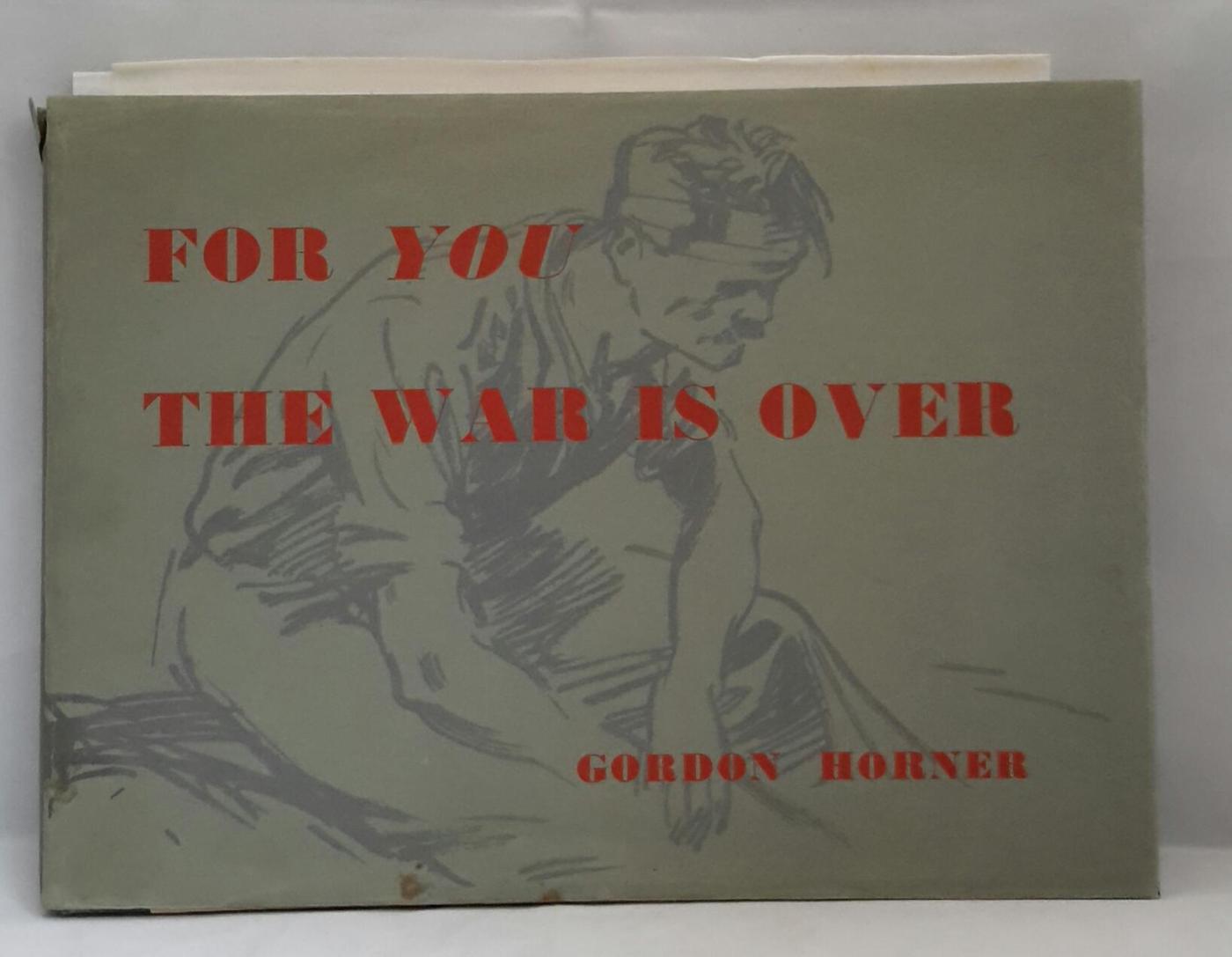
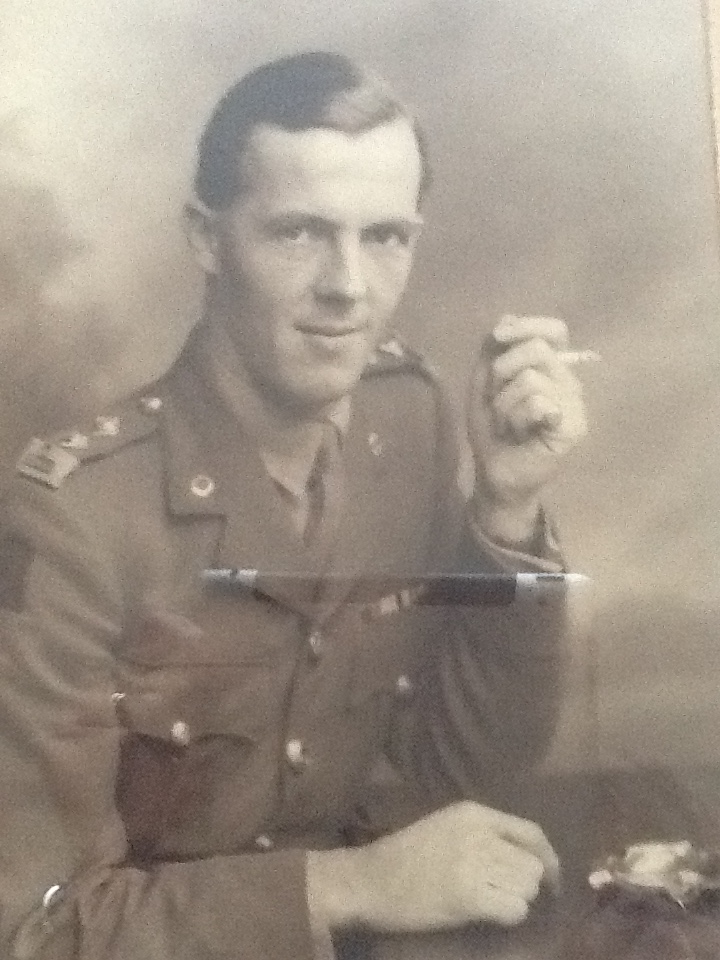
My father, Andre Graham Romain WILLIS, was a 2nd Lieutenant with the 11th Sikh Regiment of the Indian Army and taken prisoner of war during the Desert Campaign in North Africa and held in Prigione di Guerra (PG 49) Fontanellato during the Second World War.
Dubbed “The Most Hospitable Camp in Italy” the Fontanellato camp, situated in the Emilia-Romagna region of Italy, was opened using the local orphanage in the Spring of 1943 to detain Allied officers.
Prior to being captured at Deir el Shein in July 1942 and transported to Italy to end up at PG 49 at Fontanellato, my father managed to escape being captured at the fall of Benghazi in January 1942.
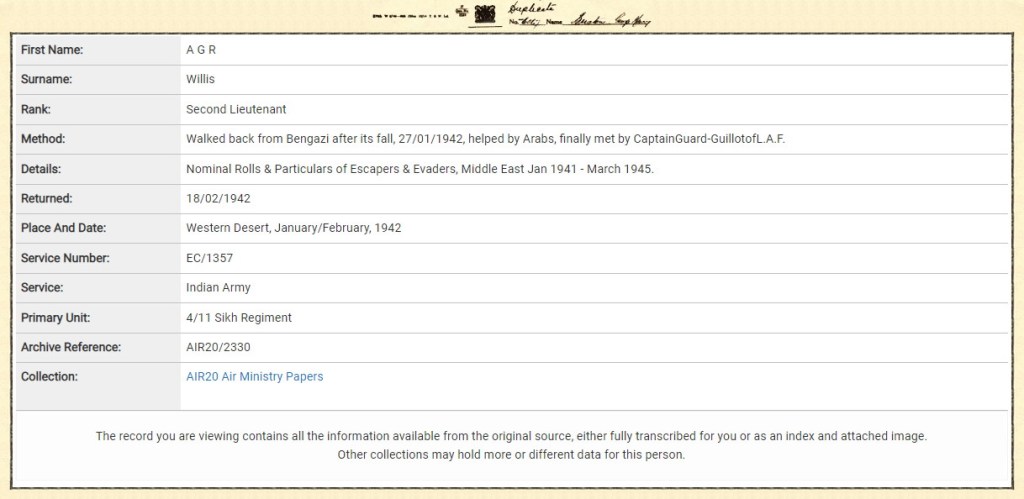
And he was also ‘Mentioned in Despatches’ –
SUPPLEMENT TO THE LONDON GAZETTE, 15 DECEMBER, 1942 (p. 5445)
War Office, 15th December, 1942.
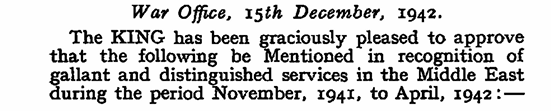
The KING has been graciously pleased to approve that the following be Mentioned in recognition of gallant and distinguished services in the Middle East during the period November, 1941, to April, 1942: —
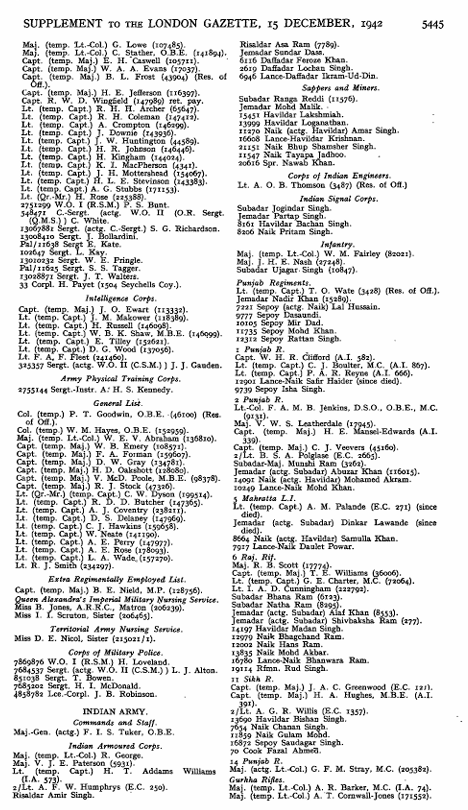
11th Sikh Regiment.
Capt. (temp. Maj.) J. A. C. Greenwood (E.C. 121).
Capt. (temp. Maj.) H. A. Hughes, M.B.E. (A.I. 391).
2/Lt. A. G. R. Willis (E.C. 1357).
13690 Havildar Bishan Singh.
7654 Naik Chanan Singh.
11859 Naik Gulam Mohd.
16872 Sepoy Saudagar Singh.
70 Cook Fazal Ahmed.
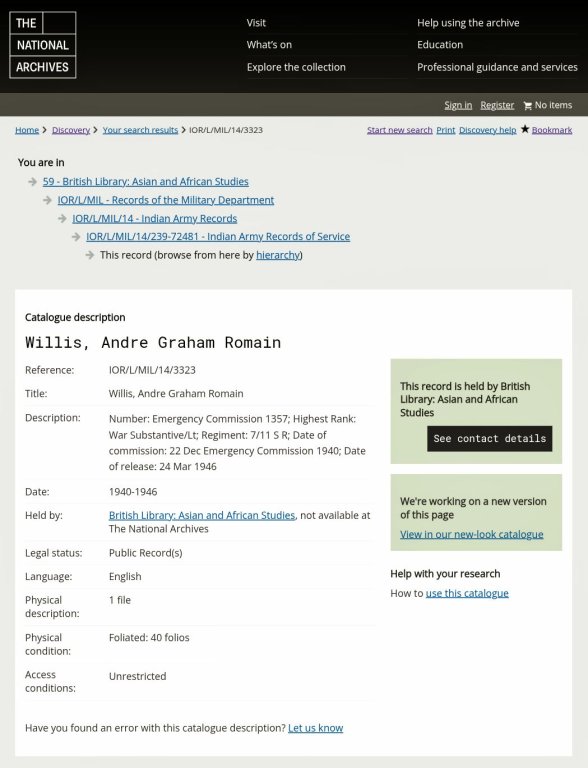
On 1st July 1942 I believe my father was captured by the Germans at Deir el Shein and later, on 19 July 1942, there is mention of him becoming a Temporary Captain under Emergency Commissions. Hopefully I will one day find some evidence of both these events, possibly at the British Library or even in the London Gazette?
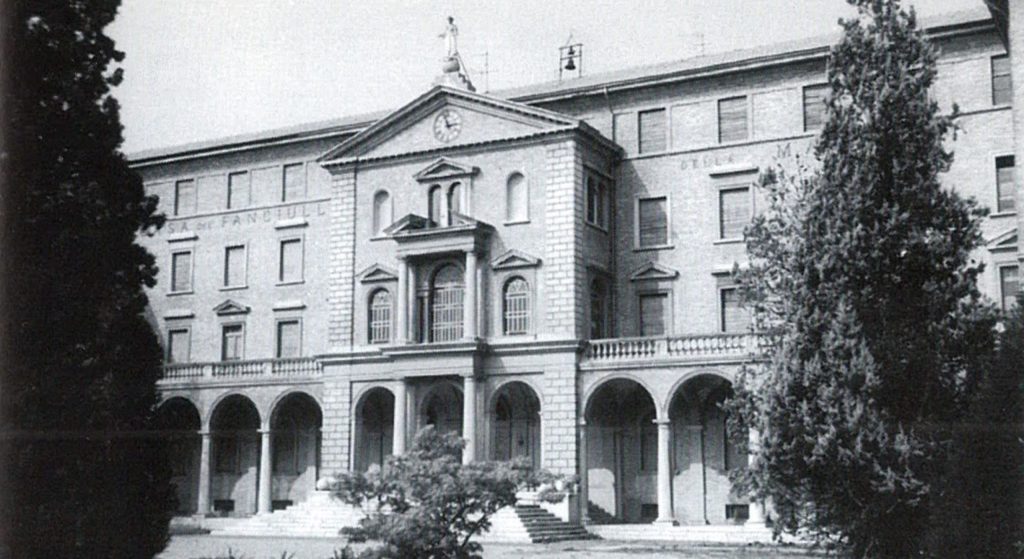
He escaped from the camp, together with around 600 other Allied Soldiers, in September 1943, shortly after Italy signed the armistice with the Allies on 8 September 1943.

Although the Italian government had capitulated, much of Italy was still held by the Germans. Escapees from prison camps across central and northern Italy found themselves on the run in enemy-occupied territory—and were at the mercy of local Italians for protection.
The Italians themselves were divided between Fascists, who cooperated with the Germans, and Partisans, who fought for liberation of their country. Rural laborers and farmers, the contadini, were faced with an ethical dilemma when ragged POWs turned up at their doorsteps asking for food, shelter, or directions.
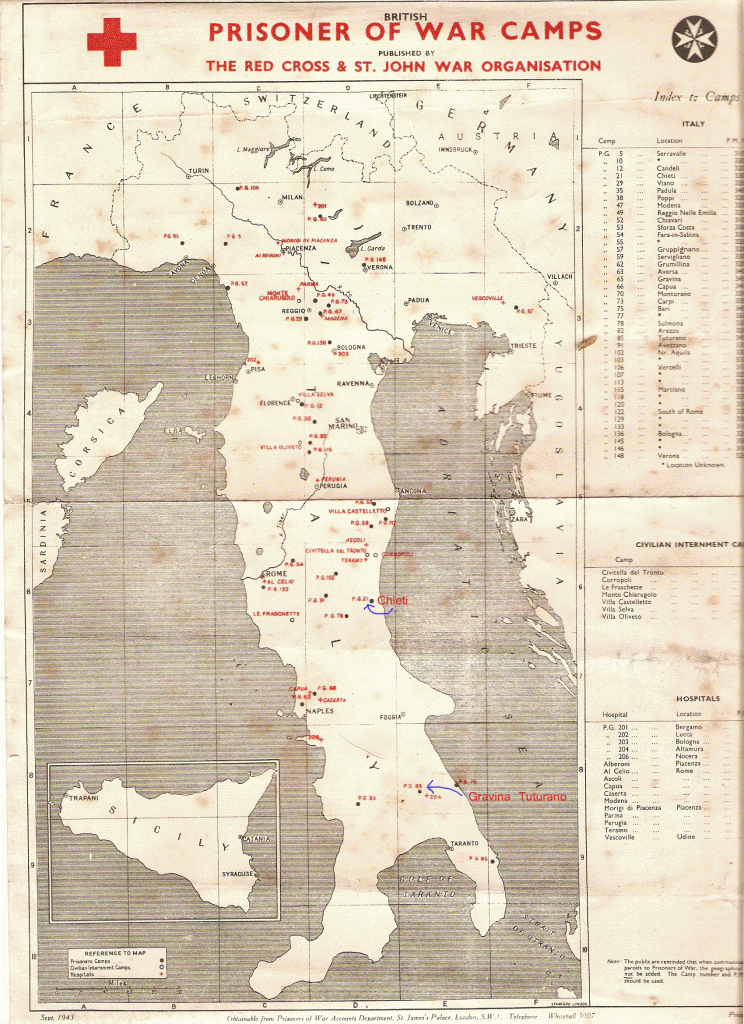
My father was helped by local Italians—he was fed, sheltered, given directions, and warned of impending dangers. His experience with the local Italians was not at all unusual, and this Weblog hopes to document and centralise, some of the stories I have encountered in researching my father’s experiences during this period. And the fascinating stories of some of these men who were released from this POW Camp and who were attempting to make their way home, either to the north and the safety of Switzerland or to the south where the Allied forces were advancing through Italy.
When I was a child, I briefly recall my father telling me about the difficulty he had after his release from P.G.49 at Fontanellato telling the difference between the Italian people he could trust and those that were still loyal to the Germans and the Italian fascist regime. Prior to the outbreak of war it had been simple to spot the fascist uniform, whether it was the Black Shirts of Mosley in England or the Brown Shirts of Hitler in Germany. But in the Italian countryside, whilst it was blindingly obvious that they needed to avoid running into those uniformed German forces who were hunting them down, it was far more difficult to spot which Italians were still sympathetic to those fascist ideals.
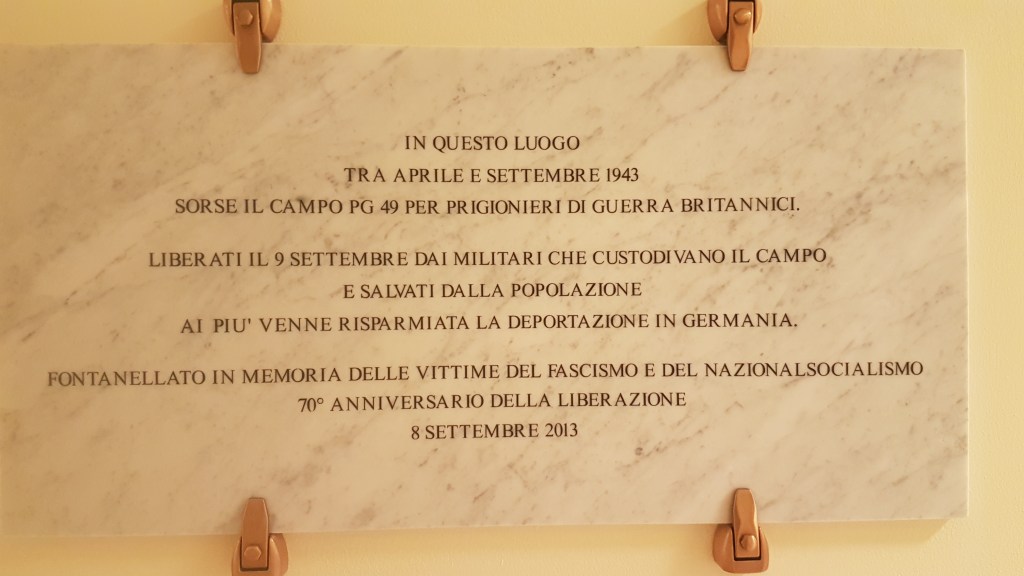
A number of commemorations have taken place in Fontanellato in recent years, not only to remember the fortitude of these men as they attempted to reach the safety of either neutral Switzerland to the north or the Allied advance through Italy from the south, but also the many acts of bravery of the local population in helping them survive.
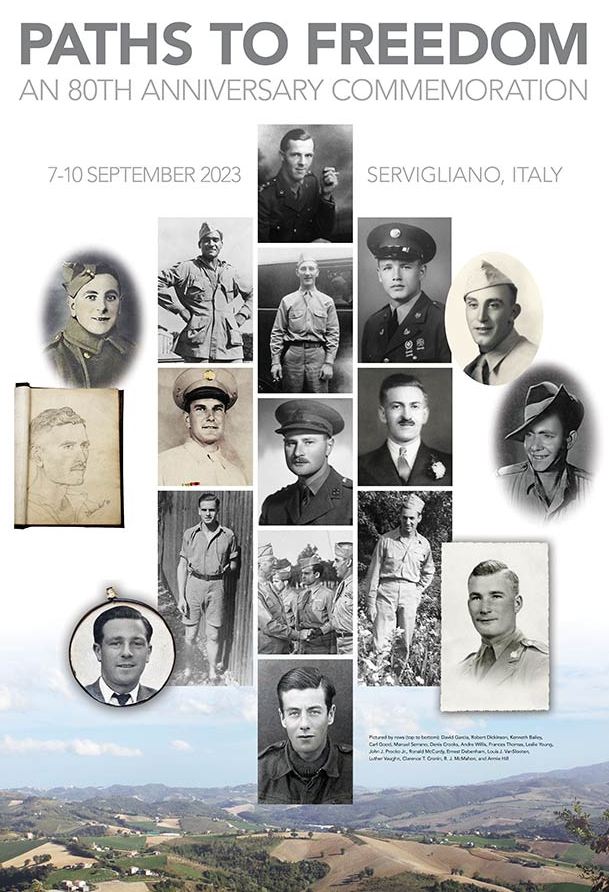
[In 2023 the 80th Anniversary of this event was organised in the Le Marche region of Italy, co-sponsored by UK-based Monte San Martino Trust and the Escape Lines Memorial Society (ELMS), in conjunction with Casa della Memoria in Servigliano.]
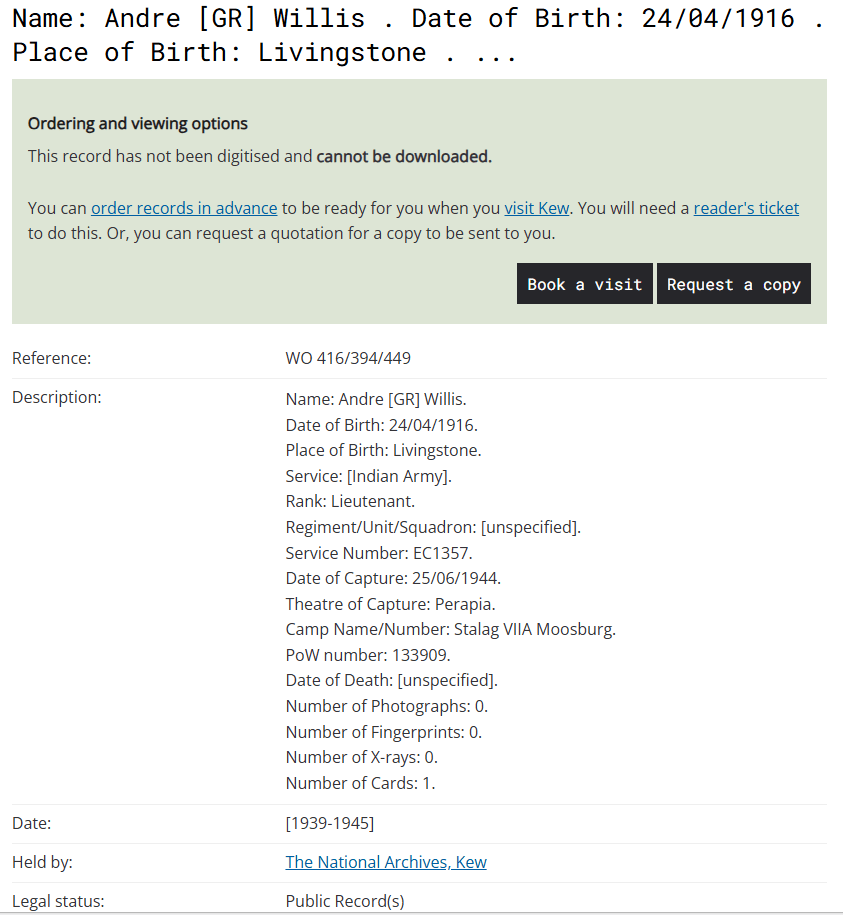
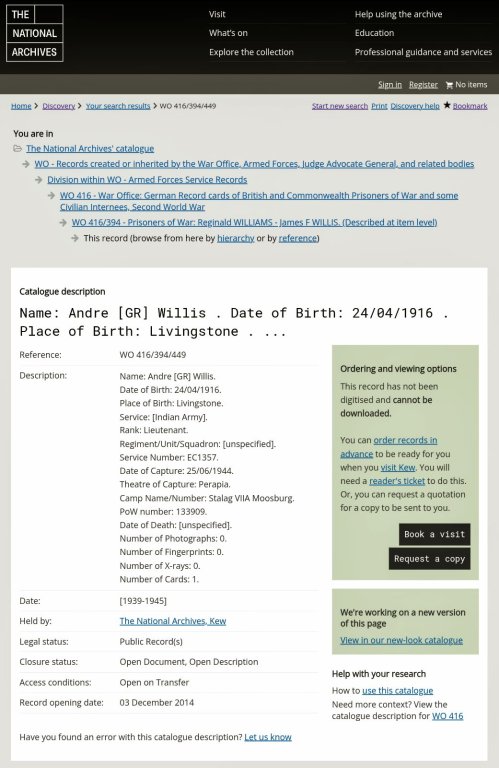
Name: Andre [GR] Willis. Date of Birth: 24/04/1916. Place of Birth: Livingstone
Whilst he had spent a most enjoyable period in the safety of one Italian family, I recall my father saying that some time later he had been recaptured by the Germans and spent some time in Milan Prison before being transferred to Germany where I know he was held in Stalag VIIA near Moosburg.
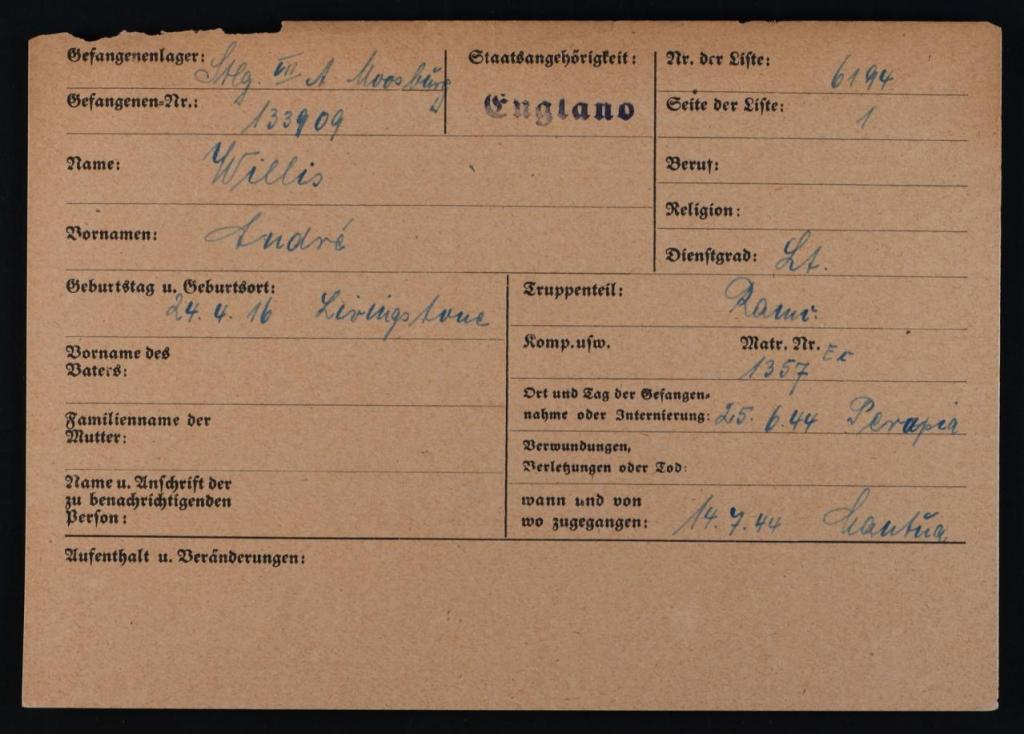
AI Overview – Translation
- Gefangenenlager: Prisoner of War Camp
- Gefangenen-Nr.: Prisoner No.
- Name: Surname
- Vornamen: First Name
- Geburtstag u. Geburtsort: Birthday and Place of Birth
- Vorname des Vaters: Father’s First Name
- Familienname der Mutter: Mother’s Maiden Name
- Name u. Anschrift der zu benachrichtigenden Person: Name and Address of Person to be Notified
- Aufenthalt u. Veränderungen: Location and Changes
- Staatsangehörigkeit: Nationality
- Nr. der Liste: List Number
- Seite der Liste: List Page
- Beruf: Profession
- Religion: Religion
- Dienstgrad: Rank
- Truppenteil: Unit
- Komp.usw.: Company, etc.
- Matr. Nr.: Service Number
- Ort und Tag der Gefangennahme oder Internierung: Place and Date of Capture or Internment
- Verwundungen, Verletzungen oder Tod: Wounds, Injuries, or Death
- Wann und von wo zugegangen: When and from Where Received
The image shows a German prisoner of war record card for a British soldier captured during World War II. The document is a German Prisoner of War (POW) registration card for an Allied soldier captured during World War II. It contains detailed personal and military information recorded by the German authorities at Stalag VII-A, which was the largest POW camp in Germany.
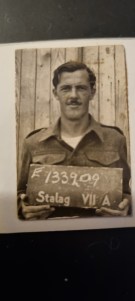
- Soldier: André Willis, born April 24, 1916, in Livingstone.
- Capture Details: He was a Lieutenant in the army, captured on June 25, 1944, in Perapia.
- Record Information: The card is listed on Page 1 of List 6194 and includes his prisoner number, 133909.
- Name: Willis, André
- Nationality: England (likely used generically for British Empire/Commonwealth forces)
- Prisoner Number: 133909
- Date & Place of Birth: April 24, 1916, in Livingstone (formerly Northern Rhodesia, now Zambia)
- Rank: Lieutenant (Lt.)
- Capture Information: He was captured on June 25, 1944, at a location that appears to be “Perapia” (possibly a phonetic spelling of a location in Italy or France during the Allied advances that summer).
- Camp:Stalag VII-A Moosburg, located in southern Bavaria, Germany. This camp was eventually liberated by General Patton’s 14th Armored Division on April 29
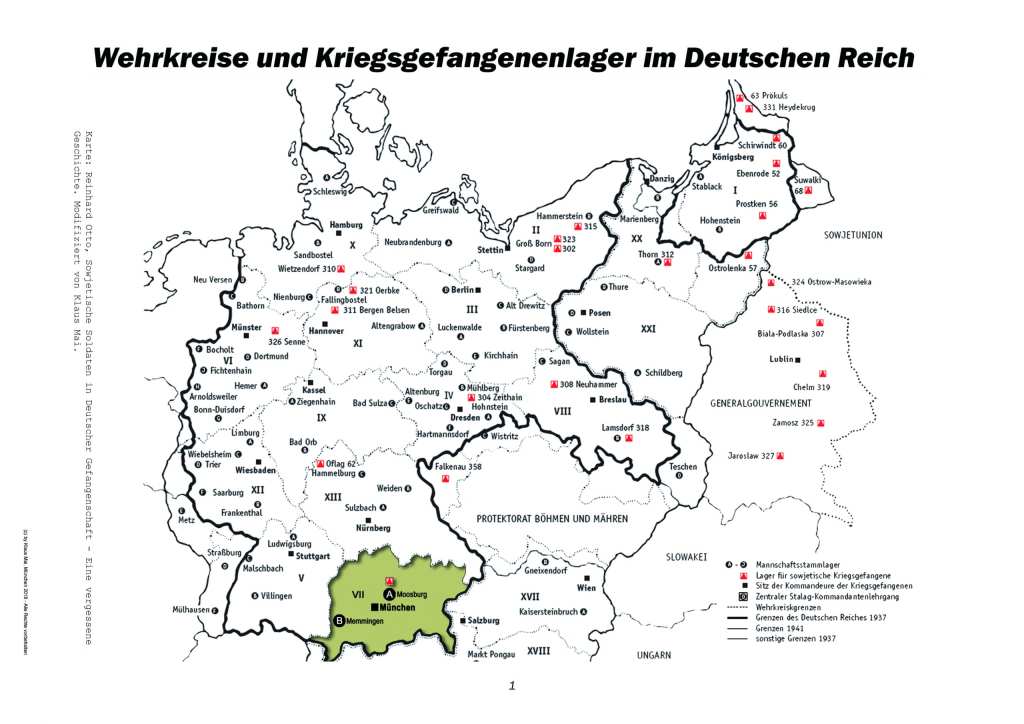
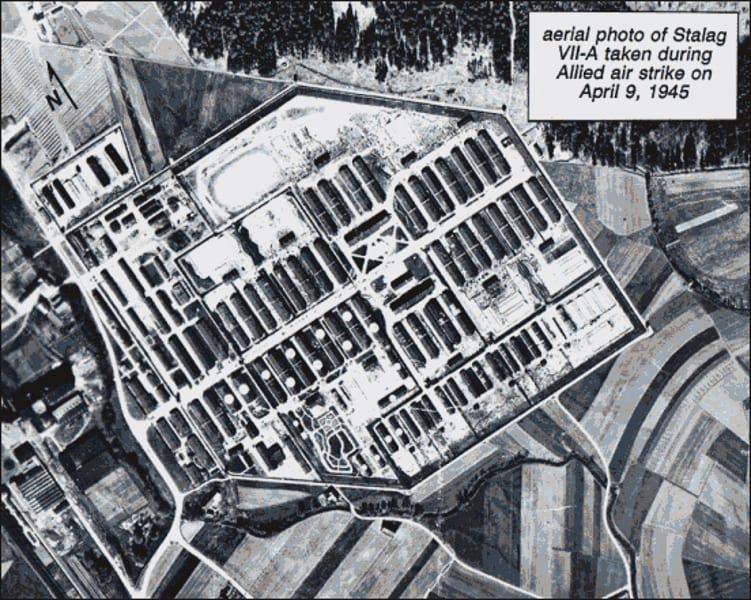
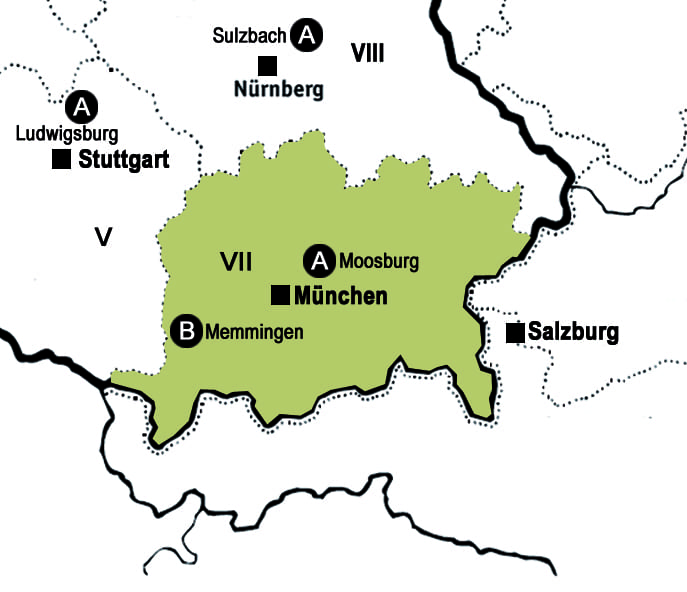
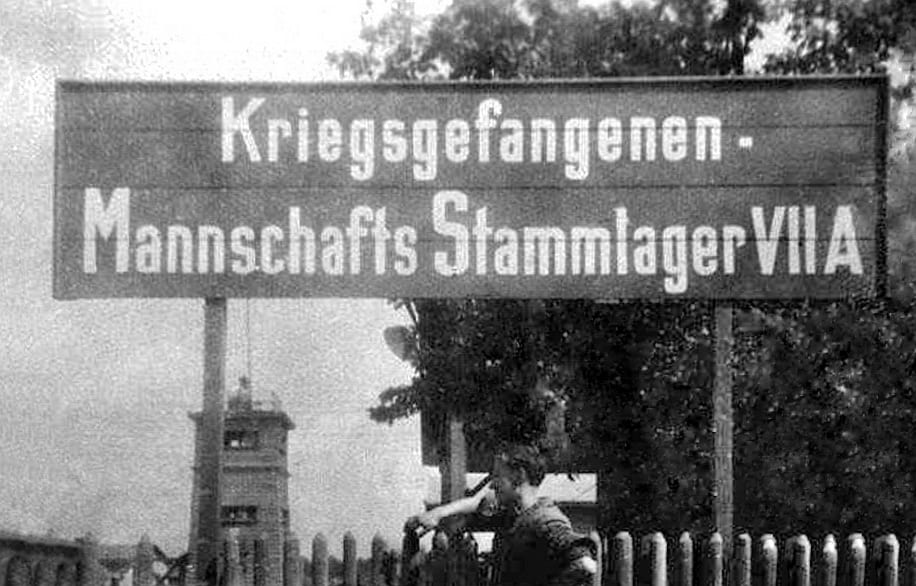
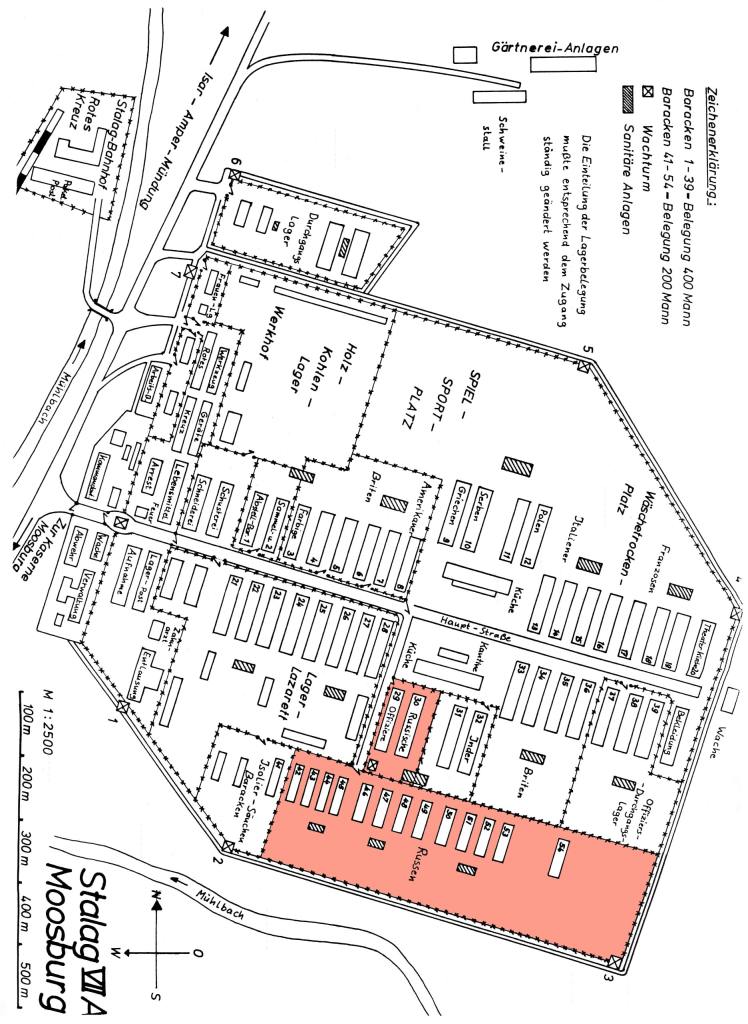
Stalag VII A in Moosburg was one of the largest German POW camps during World War II. More than 150,000 prisoners were registered there from 1939-45 and deployed in work commands in Wehrkreis VII (southern Bavaria).
On April 29, 1945, Moosburg and the local POW camp Stalag VII A were liberated by a unit of the 14th Armored Division of the United States Army. The handover of the camp by the camp commander, Colonel Otto Burger, took place without a fight and without bloodshed after a secret agreement with the approaching Americans.
 PG 49 at Fontanellato in Italy - The Story of allied servicemen who were held prisoner of war in this town in Italy in World War II