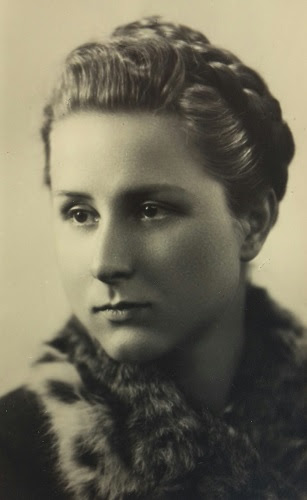
VICKERS, T.D. (Tom) – Lieutenant.

When I first found out that my father had been a POW in PG 49 at Fontanellato I immediately recalled that, during my childhood, he had briefly talked about living in the hills with an Italian family during a brief period of his wartime experience. But I knew nothing of how this had come about and so it is only when I come across some of the incredible stories archived by the Monte San Martino Trust written by others who were in the same Camp that I start to fully appreciate exactly when and how these events unfolded.

One such story is written by Lieutenant T.D. Vickers of the Coldstream Guards

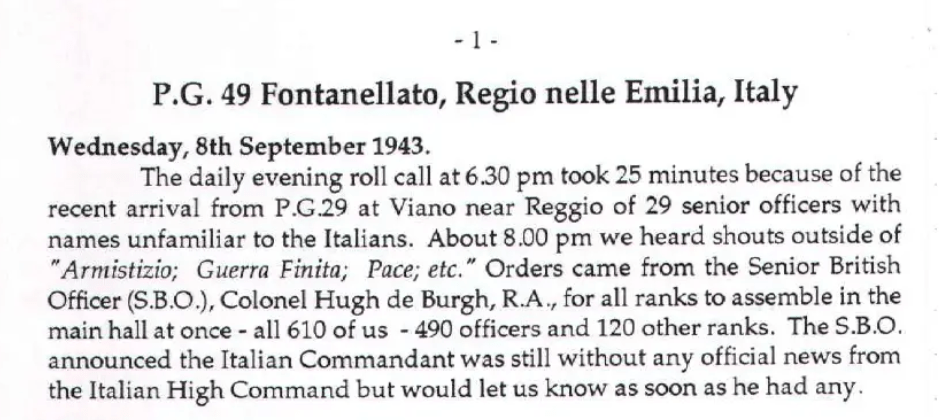
PG 49 Fontanellato, Reggio nelle Emilia, Italy

Wednesday, 8th September 1943.

“The daily evening roll call at 6.30 pm took 25 minutes because of the recent arrival from PG 29 at Viano near Reggio of 29 senior officers with names unfamiliar to the Italians. About 8.00 pm we heard shouts outside of “Armistizio; Guerra Finita; Pace; etc.” Orders came from the Senior British Officer (SBO), Colonel Hugh de Burgh, RA, for all ranks to assemble in the main hall at once – all 610 of us – 490 officers and 120 other ranks. The SBO announced the Italian Commandant was still without any official news from the Italian High Command but would let us know as soon as he had any.”

Thursday, 9th September 1943

“After breakfast we were all told to parade in the courtyard. This time the SBO’s news was not so good: the Commandant expected German troops to seize the camp. He had patrols out. We were to put on our battledress, pack our kit on our beds, draw 24-hour rations and be ready to move at five minutes’ notice. He had offered our help to defend the camp but the Commandant had politely declined it.

I left my greatcoat and service dress uniform in the wardrobe of Room 63 and packed only washing and shaving kit, a pullover, scarf, gloves and some letters and family photographs. From the basement I collected my emergency rations – a tin of service biscuits, a meat roll, 2 peaches and a small bar of ‘Motta’ chocolate. I also took the remains of my Red Cross food parcel – sugar, cocoa, nescafe and a large bar of chocolate – and some cigarettes for barter.

During the morning Colonel Hugh Mainwaring, RA (one of the 20 Old Etonians in Fontanellato) and Captain Prevedini, the camp’s Italian security officer and interpreter, returned from their two-hour recce for a suitable hide-out. It seemed strange to see the latter, an ambivalent character, on our side. Before the war he was on the staff of Thomas Cook and spoke fluent English.”

The next paragraph produces some fascinating information, and the introductory sentence brings a smile to my face. My Dad’s favourite Sunday lunchtime drink was Gin and Dubonnet (I know it was the Queen Mother’s too!)

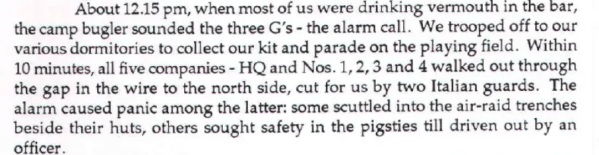
“About 12.15 pm, when most of us were drinking vermouth in the bar, the camp bugler sounded the three G’s – the alarm call. We trooped off to our various dormitories to collect our kit and parade on the playing field. Within 10 minutes, all five companies – HQ and Nos. 1, 2, 3 and 4 walked out through the gap in the wire to the north side, cut for us by two Italian guards. The alarm caused panic among the latter: some scuttled into the air-raid trenches beside their huts, others sought safety in the pigsties till driven out by an officer.”

The diary entry then goes on to explain in great detail with whom Tom was linked up with as they marched out of the camp:-

I was in No. 3 company, commanded by Lt. Colonel Peter Burne, 12th Lancers. My platoon commander was Major Donald Nott, DSO MC, of the Worcesters. Captain Ronnie Orr-Ewing (2nd Bn Scots Guards) was my section commander. Each section was in pairs – ours were Ronnie and Philip Kindersley (2nd Coldstream); Jack Younger (3rd Coldstream) and Richard Brooke (2nd Scots Guards); Carol Mather (Welsh Guards) and Desmond Buchanan (Grenadiers); and finally, Tony Kinsman (Grenadiers) and myself (3rd Coldstream). Between No. 3 Co. and No. 4 on our right rode Eric Newby in his Black Watch bonnet, riding on a fat horse led by an Italian soldier. Eric had fallen and broken his ankle two days earlier and could not walk. We crossed fields and vineyards and caught up with the SBO and his HQ party, moving on then into a sunken ditch below a grass bank and in thick undergrowth. This was the site chosen by Hugh Mainwaring. We spent the afternoon drying our sweaty shirts, eating grapes and waiting for news and orders.

We received our first news at about 4.00 pm and it was not good: 40 or so Germans had taken over the camp and captured the Commandant and all but two of his officers. They had seized all the livestock and then left. Jack Younger managed to use some of his escaping money to buy bread, eggs and wine from a nearby farm. Under cover of darkness a few officers decided to slip away despite the SBO’s advice to stay together.

Later that evening we learned that 200 German soldiers had raided the camp, eaten our lunch and thrown all our belongings out of the windows, auctioning what they did not eat, nor want to take with them. They had told the locals they would return in the morning to search for us.

Before dossing down for the night, we all moved further west into thicker cover. It was a very cold and sleepless night.”

  • Bardi
  • Ballantine?
  • Vianino
  • Varsi

Friday, 10th September

“We ‘stood to’ at first light and moved on to higher ground till we reached really good cover – high maize running right down to a hidden stream and ditch. We lay hidden there till dark and shaved in the stream. Donald Knott’s advice was to make for the hills and the Ligurian coast in the Spezia area. The SBO held a ballot to decide which Companies should leave that night and which should remain hidden for a while in local billets. Nos. 3 & 4 were to go and HQ and Nos. 1 and 2 were to be billeted.

Supper consisted of bread, eggs and vino. Pay slips organised by the camp bank were given out and 100 lire in cash to each pair. After my arrival in Switzerland, I learned that Ronnie Noble had obtained a camera and film from the Commandant and made a record of all he had done to help us.

At 8 o’clock all sections closed on Platoon HQ under Donald Knott, who after a personal recce during the day led the way by compass. We were to walk south-west towards Salso-Maggiore, cross the main railway line and the Via Emilia and then split up into two’s and three’s and head for the hills. We crossed both railway lines without difficulty and about midnight we reached the road. We trampled down the five foot high, chain-link fence like a herd of buffalo. In the ploughed fields beyond Donald gave us a final compass bearing and his best wishes. In the darkness I lost sight of Tony Kinsman and after waiting quietly for two or three minutes, I went off on my own.

The countryside was flat: ploughed land to begin with. By 2.00 am I felt the ground rising with vineyards and grapes to pick at will. In the early hours there was moonlight to make the going easier. Just as it was getting light, I decided to halt.”

Saturday, 11th September

“Below me was a sizeable farmhouse with a cypress tree on either side of its front gate. I remembered from “Perfume from Provence” by Lady Fortescue, that they stood for “Peace” and “Prosperity”. A recce before anyone was astir revealed notices “Viva Vittorio Emmanueli and “Viva Pace”. Hiding in the vines, I found a laden apple tree to provide an early breakfast. Then a peasant appeared driving his ox team across the ploughed fields – “Vola! Vola!” Then women and children came out of the house with a woman in white accompanying the children to play in the garden.

I went up to the house to announce myself in Italian as the women on the balcony stared half-frightened, half hostile, before reappearing with an old man to whom I again explained myself and what I wanted. Eventually, I was taken into the kitchen for some wine and bread. One of the young women explained her brother was a POW in the UK. The old man told me a neighbour, Giovanni Ampolini, had a wireless and that he lived near the church.

I decided to retreat under cover till dark. I awoke to find two decidedly dirty Italian peasants sitting on the grass beside me. I eventually accepted their invitation to go home (“a casa”) with them. “Andiamo!” (“Let’s go”).

After some ten minutes’ walk we came to a largish, pink-coloured farmhouse opposite the one I had visited that morning. The peasants explained that the padrone’s son was an army officer, who could speak English and would be back home later. I was shown into the kitchen to meet his wife and their three small sons – Antonio, with a badly swollen leg from an adder bite, Franco and Berto. They were very poor and had no fuel for their lamp. I was taken round to the padrone’s end of the house and shown into his parlour. The padrone and his son had left Parma for the country. The soldier son was on sick leave and his English proved a complete myth. They offered no help and went on about the Germans being so “duri” and had seized their guns. But they had kept a small pistol hidden in a flask.

The five of us sat down to a supper of soup, rabbit and finally chicken. Disguised as it was by thick, dark gravy, I mistakenly chose the bird’s head! I quickly returned it, whereupon the old lady gobbled it up with evident relish. Waste not, want not!”

Sunday, 12th September

“Breakfast of ersatz coffee and bread with the older of the two peasants, followed by a second one brought to me by the wife of the younger one. Their end of the house housed two families; the young one below and the old one above with his four children. All of them were most friendly. Aida, the daughter, aged 14 was an attractive girl in a pretty flowered dress ready to go to Sunday Mass. She explained marriage at 16 was quite usual.

I returned to the padrone for lunch, where there were the other guests, a greasy-faced youth and his heavily painted girlfriend. Aida, on the other hand, was most ready to help and produced an old shaving mirror for me.

After lunch I helped to load bags of maize – half for the padrone and half for his tenants- on to the ox-cart. Several Italian deserters passed by – two soldiers from Civita Vecchia, four sailors from Spezia and finally, a cousin of the family on a white pack-horse from Genoa. All were on their way home – “a casa”. They repeated that all the Ligurian ports were full of Germans and suggested I should make for Pellegrino and thence for Bardi, where many of the locals could speak English.

I had supper of fried potatoes and rabbit with the two peasant brothers and left my own remaining food – some biscuits and my bully beef -with my original host. I left at dusk and continued to walk south-west until the road stopped near Pellegrino. On the track through the woods I had a five-minute halt beside a log pile for a few more grapes. I heard steps approaching and saw two tall figures in the dark – Philip Kindersley and Ronnie Orr-Ewing. They had begun their walk on a most encouraging note – kindness and plenty of vino all round. They had encountered an old man drawing water from a well, who had taken them to a young grass-widow, Lucia Sbottone, who had put them up since the Saturday. Besides excellent food, she had produced a map and the address of her brother, Guiseppe Dotti, in a hill village called Monastero di Gravago near Bardi. He had money and a wireless set. We agreed to join forces with my limited Italian to help us along.

The path took us along a stream bed to a little white cottage in the trees, where a young woman said she had two other escapers asleep in an outhouse. We decided not to wake them! Another hour or more further on we ran into Ballantine of the 17th/21st Lancers and Tony Kinsman. We compared notes and then continued our march into the higher hills. At about 3.00 am, when it was almost light, we found a hay loft and climbed up the ladder with the noise and smell of the cows below.”

Monday, 13th September

A friendly farm boy woke us up and showed us to his gnarled, old grandmother. She gave us an excellent breakfast with most delicious cheese. After that we had a wash and shave in the farmyard water trough. An older son then took us up to the priest’s house some ten minutes’ walk up the hill. His housekeeper met us and told us to wait for him in the church. The priest proved very helpful and clear in his directions, after Philip had shown him our map and I had explained we were making for Bardi. He showed us both on the map and on the ground that our route should be to Mariano and then through the valley to Vianino and Varsi. In the distance was the Monte D’Orsa and Monastero di Gravago on its lower slopes.

Now that we were up in the hills, we decided it was safe enough to walk by day and set off at about 10 o’clock. At one farm a nice-looking woman in a white, silk blouse produced just what we wanted – fresh milk to drink ad lib. We had a steep scramble down a gorge and up the other side to near Vianino. A friendly farmer invited us to eat our fill of his grapes. After some discussion we decided to by-pass the village. Next, we came across a group of villagers, who told us two other escapers were lying up in the vicinity. A boy on a bicycle offered to show us the way. He was lost in admiration for our “ammo” boots. Footwear of any kind was virtually unobtainable by the civilian population. The boy confirmed that we would find many friendly ‘ladies’ in Bardi! By now the river Ceno was a quarter of a mile away on our left. We had a bathe and “dejeuner a l’herbe” of the hard-boiled eggs, bread and cheese given to Philip and Ronnie by their very kind weekend hostess, Lucia Sbottone.

Philip nearly lost his signet ring during his bathe in the muddy waters of the Ceno. Fortunately, he found it. The locals gathered round to watch the strangers and one old man among them, who had worked as a tile-maker near King’s Cross, asked us in for a drink. His name was Virgilio and he spoke a little English. To our further good fortune, the local electricity company’s engineer looked in on the party complete with purple uniform, bicycle and tools. He knew Giuseppe Dotti in Monastero and expected to see him that evening. He would give Giuseppe warning of our impending arrival the following day.

We had supper in a meadow by the bridge over the river and finished our bully beef. A nearby farmer’s daughter gave us some tomatoes to go with it. We set off as dusk fell, Philip and I in front with Ronnie and the girl behind for about half an hour or so. When Ronnie re-joined us on his own, he came in for a good deal of chaffing! We next stopped a little way short of Varsi to talk to a group of girls. Suddenly a man rushed up to say there had been a telephone call from Varano to say that three lorryloads of Blackshirt Militia were expected shortly in Varsi. We had to leave the road at once and retreat into the cover of the wooded hillside.

The women at the hill farm we chose were very nervous but did agree we could sleep outside in the loft. Our form of introduction on such occasions ran like this – “Siamo officiale inglesi. Tempo fa prigionieri di guerra in Italia. Adesso, grazia a nostro gentile commandante italiano siamo liberi. Aspettiamo l’arrivo delle nostre truppe. Prego dormire qui stanotte”. We knew it by heart!”

Tuesday, 14th September

“We did not wait to be called but were off at first light on the track towards Gravago. The road was below us and beyond it the river with hamlets dotted over the opposite hillsides. A guide took us round the steep Rocca Varsi and showed us the collar we had to make for and the church spire at Tosca. Just short of the church we came across a bullock sledge cart full of maize cobs. (There were no wheeled vehicles on those steep, rock paths). The cart blocked the path and the peasant and his wife were busy picking the cobs in the adjoining field. Both were friendly and gave us grapes. His name was Bernardo Gianelli. He had worked as a vegetable cook at the Cecil and the Savoy Hotels in London before the war. He invited us into his tiny house among a cluster of old farm houses higher up the hill for food and drink. Such a feast! His salami was out of this world and his cheese and wine were also excellent. He had fled from Paris in 1940 to escape the German Army and longed to return there. During lunch an Italian sailor and his fair, and rather fat girl-friend joined us. She was evidently not a local country girl and explained that she had lived with her parents in London. She gave us a letter to deliver to them in their little restaurant, when we got back to England. Another girl in an adjoining house had a brother, who before the war worked in a bar in Earl’s Court. They reckoned we should reach Monastero di Gravago in another two hours.

We soon had our first view of Bardi over on the far side of the river. A neat, little town clustered round its mediaeval castle, which stood guard over the river and bridge. An old woman confirmed that we were on the right path to Gravago, which turned left, i.e. southwards, away from the main river valley and up a smaller one.

We found a convenient, wayside halt between two farmhouses overlooking a village called Castagneto. We asked for a drink of water and the way to the house of Giuseppe Dotti in Monastero. A friendly, middle-aged man, named Giacomo Restegini (“Jacko” to us) volunteered to take us over there after a brief halt at his own house under the spreading chestnut trees. Hence the name of the hamlet.

Monastero di Gravago, which we reached at about 5 o’clock, proved to be a very old village of stone-built houses, built on a rocky hillside with just a steep, cobbled path as its roadway. Jacko led us to a house with new paintwork and a superior air. Signora Dotti was a thin, rather care-worn woman of about 35 years, with many gold fillings in her teeth and an American accent. Unlike most of the married women we met she was not wearing black but a coloured dress. She was not pleased to see us and led us up steps into her kitchen and through to the parlour. This was well furnished: a large Kennedy wireless set stood on a side table. About 5 o’clock, Giuseppe Dotti himself appeared. He too was not pleased to see us, unlike his sister, Lucia Sbottone, near Fidenza. His English was poor but he could understand us well enough. Before the war he had been a chef in Boston, USA, and had married there. The Dottis had three children, Dino, Rita and Gino, the latter a terrible fidgety Phil over whom his mother had no control.

We explained that we planned to stay in Monastero for a few days to see which way the wind was blowing. Could he find us billets? Rather grudgingly he said he thought he could and went off to look for some. Meanwhile his wife started to get supper ready. While we waited a thin, wasted girl called Aida, whose parents had owned two restaurants at Shepherds’ Bush, called to see the “inglese “. It was extraordinary to find a young woman with a cockney accent in this remote, hill village. Her husband was a Government forester. Giuseppe returned in due course to say that Jacko, his uncle, could fix us up. Signora Dotti was a good cook and gave us an excellent supper – mountains of pastasciutta and plentiful wine. More inquisitive locals, including the parish priest, then began arriving to take a look at us and to listen to the wireless. Jacko joined the gathering and was to prove one of our most trusted and ever helpful allies. A little monkey of a man of about 55, he had worked in America years ago.

Then we all sat round the parlour table for the evening news bulletins; first the “Voice of America” in Algiers and the BBC in London at 8.30 and 9.00 pm respectively. “Ascoltate la voce del America, una delle Nazione Unite. Ecco le ultime notizie.” Then to our even greater excitement we heard the strokes of Big Ben and the familiar tones of the BBC news reader: “This is the BBC Home and Overseas Service. Here is the 9 o’clock news and this is—reading it.”

We learned that the battle at Salerno was critical. Jacko showed us into a spare room in his old nearby stone house with a bed, straw and two rugs. Philip, as the oldest, had the bed with a mattress and a small, yellow quilt on it. Ronnie and I had the stone floor to sleep on. The room had wooden shutters and no glass in the window. Beyond it was Jacko’s restaurant/bar.”

Wednesday, 15th September

“We had the first of many hospitable breakfasts in Castagneto on the edge of the chestnut woods beside Gravago. Jacko had two houses, an old one by the path and a newer one 20 yards below. He was better off than some of the other peasants: he had made money, when he was in America, and from his restaurant/bar in peacetime. His wife had been dead for a long time. So his 22 year-old daughter, Maria, a plump, good-natured girl with a row of perfect dentures was in charge of the household. His 16 year old son, Lazaro, had recently left school. The fourth member of the household was a serving girl, Angelina, from nearby Tosca. She was very strong and Philip called her (in private!) the “horse”. Maria cooked and did the indoor housework; Angelina worked outside. The kitchen had the usual type of range with a tall chimney pipe and room for two large pots. Beyond it was the parlour, with the usual religious pictures on the walls and a large photograph of all the 1914-18 ex-servicemen from the Commune of Bardi. There was a dresser with the builder’s name and date stamped on it and an alarm clock. A small scullery adjoined one side of the parlour. Breakfast was cafe au lait with bread and cheese.

Monastero di Gravago was some 300 feet above the dry bed of the river Ceno at Noveglia on the road to Bardi. We spent that first morning stripping leaves for cow fodder during the winter. During our task, Jacko’s aunt Zia, Luigia Bergassi, came up to inspect us. Luigia was a bright-eyed little woman of about 73 and was accompanied by her dotty brother with a patch over one eye and an insatiable curiosity with the other. He examined Ronnie’s pipe and all the rest of our few belongings with minute care. For lunch we had minestra. After it we picked white beans, pulling up their support stakes as we went. In the evening we walked over to Giuseppe Dotti’s to listen to the evening news. We heard of the announcement by the German High Command that anyone finding any escaped POWs was to report them to the authorities at once. Those helping them would be liable to summary execution. This news carried considerable alarm, especially with Signora Dotti. So to bed at Jacko’s, thinking we must move on right away. But, first we needed money. Tomorrow, Thursday, would be market day in Bardi. We would ask the ever helpful Jacko to try and sell Philip’s gold signet ring and my Parker fountain pen. But I would keep my precious Benson wristwatch bought from “Opportunities Ltd” the exchange shop run by “the Baron”, an American POW, in the camp.

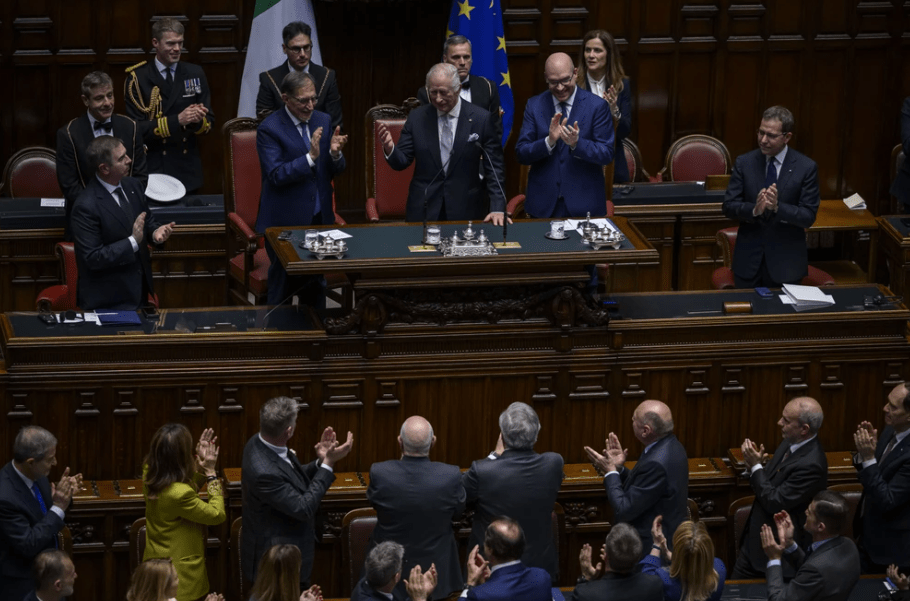
King Charles III addresses the Italian Parliament in Rome

Wednesday 9th April, 2025

“Let me also record our profound gratitude to the many hundreds of brave Italian civilians who gave refuge to British and Allied soldiers, thereby risking their own lives.”

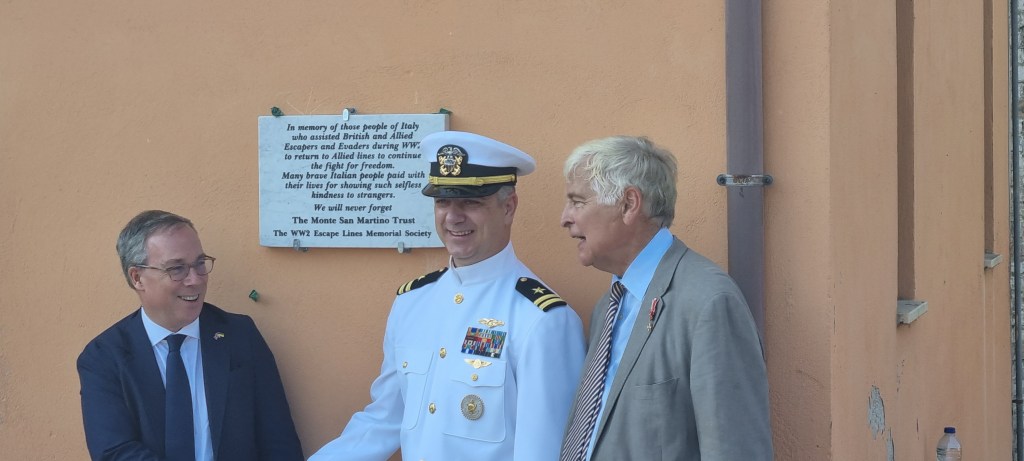
In 2023 I was privileged to attend the 80th Anniversary of the Italian Armistice which had resulted in a number of P.O.W. camps in Italy releasing their prisoners into what was still then German occupied Italy. This event took place in Servigliano and the Monte San Martino Trust, so ably headed by Sir Nick Young, played host to the celebrations at P.G. 59 which was attended by The Rt Hon Edward Llewellyn, O.B.E., British Ambassador to Italy and San Marino, as well as many Italian dignitaries and relatives of those who had been prisoners during World War II.

In referencing the bravery of the Italian people who helped Allied soldiers like my father, Andre Willis, after they were released into the Italian countryside after the Armistice in September 1943, King Charles said – “Tomorrow in Ravenna, as King of the United Kingdom and of Canada, I will have the great honour of commemorating the eightieth anniversary of the liberation of that province, together with President Mattarella, in which British and Canadian Forces played a key role. And, as Head of the Commonwealth, it will be my signal privilege to recall the indispensable role played by many troops from the Commonwealth, as well as other Allied nations.

“And we remember, too, the terrible suffering of the Italian civilian population – as well as the heroism of the resistance, including Paola Del Din, trained by the Special Operations Executive and dropped by parachute to carry out her mission in support of the Allies eighty years ago today.”

Charles continued: “I know that we are all thinking of Paola, now 101, on this day – and salute her courage. Let me also record our profound gratitude to the many hundreds of brave Italian civilians who gave refuge to British and Allied soldiers, thereby risking their own lives. Today, sadly, the echoes of those times – which we fervently hoped had been consigned to history – reverberate across our continent. Our younger generations can now see in the news every day on their smartphones and tablets that peace is never to be taken for granted.”

FINDING GENEALOGY GOLD #3

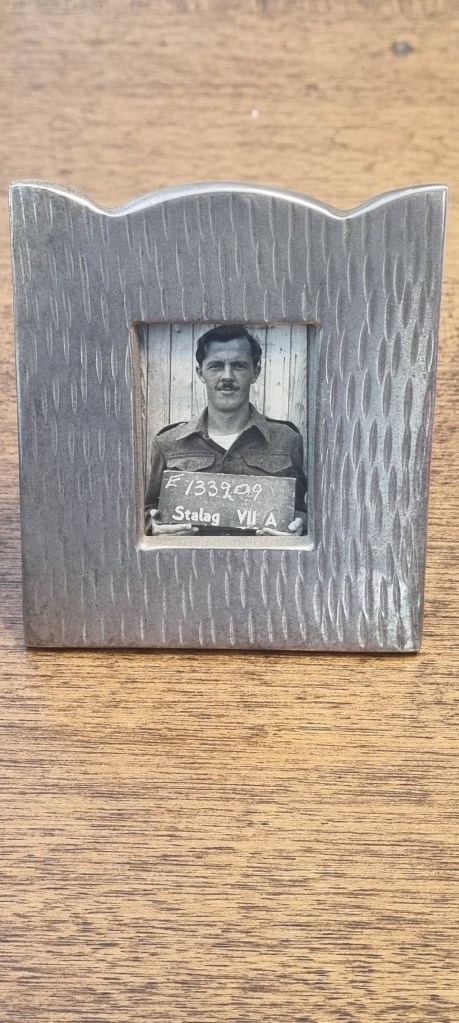
Part 3 – Stalag VII A

My third piece of Genealogy Gold was a gift from my niece who had been in possession of a photograph of my father which she had inherited, I think sometime after my mother had died. It had been contained in an old wooden box that had the Willis Family Crest engraved on it and, whilst the frame that it was contained in was extremely heavy, the picture itself was small…… but didn’t it pack a punch!

FINDING GENEALOGY GOLD #2

Part 2 – My Mum’s Notebook from 1952

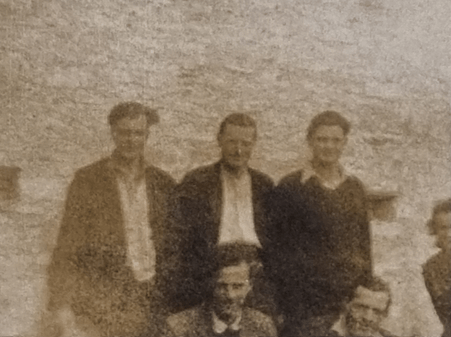
Having just found two Black and White photos of what appeared to be Allied POW’s in civilian clothes and that 5 of those names were seemingly associated with men who were listed as being in PG 49 at Fontanellato, it was only when I came across my second piece of Genealogy Gold that answers to my questions started to materialise. And it was to be only a short time later that same evening that my brother handed me my second big find.

Ever since my mother’s death in 2014 I had been asking my brother if he had come across a diary that she may have kept of a visit I knew she and my father had made to Italy sometime after WWII. It had almost become a standing family joke that my mother insisted on being given a Diary every Christmas so that she could record family events and, latterly, all her forthcoming golf tournaments. I have to confess that there were a couple of Christmases that shopping inspiration deserted me and I had very quickly rushed into Boots the Chemist to buy Mum’s Diary for the following year and thereby have at least one member of the family that I didn’t have to torture myself worrying what the hell I was going to buy them for Christmas. So I was convinced there had to be something somewhere which provided some sort of clues as to when and where she and Dad had visited Italy.

My brother Graham had given some thought to the year they might have made the trip and, by process of his own recollections of periods of leave my father had enjoyed and associated holidays in the UK, Graham had concluded that it must have been somewhere around 1952. About 4 years before I was born.

So when Graham handed me a little brown notebook with my Mum’s handwriting jumping out of the first few pages, it was almost a relief to see that she had entered the DATE, MILEAGE and GALLONS for what looked like a car trip starting on 14th Jan 1952. And I didn’t even have to turn the page to notice that, whilst they had started their journey in Dorset and travelled to Folkestone, presumably then across the English Channel through France to Geneva, Milan and, you guessed it, PARMA! BINGO!

The hairs had already started to tingle up my neck. Parma is only a stones throw from Fontanellato! And yet there was no mention of Fontanellato. And nothing significant or useful had come out of this information, other than they appeared to have driven to an area of Italy that my father and his POW colleagues had been released into after being released from PG 49. Nevertheless, I decided to photograph the pages so that I could look at them and perhaps scrutinise them more closely when I returned to New Zealand.

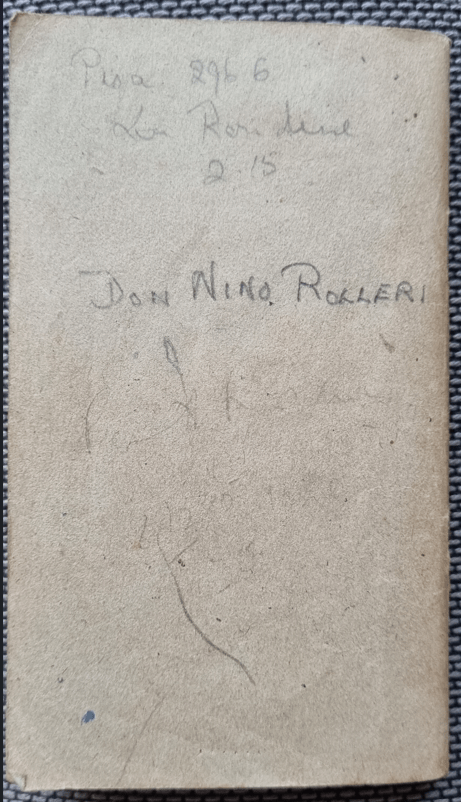
In doing so I had thrown the booklet onto my bed and on returning with my phone to take the pictures of the three pages of information at the front of the notebook, I noticed that there was some writing on the back.

The first was a little tricky to read but looked something like “Pisa 296 6, La Rondine 2.15” and I didn’t think that was going to offer up any clues. But the second entry in my Dad’s handwriting looked like “DON NINO ROLLERI”. Even at this point I didn’t connect this name with the name on the earlier photograph. But my curiosity and excitement was already building and I couldn’t stop myself from typing the name into Google.

At this point I have to admit that I did start to feel as if I had actually found a nugget of gold as the first hit that I came across read as follows:-

“Don Nino Rolleri, born on 17 August 1916 (the same year as my Dad) in Varsi, in the Province of Parma (PARMA was screaming out at me but so was VARSI!), was a partisan (did that just read PARTISAN!?) priest from the Parma mountains.”

I’m starting to find this very difficult to read without shaking a little. What am I just reading here? Am I jumping to the weirdest conclusions? Why is this man’s name on my mother’s notebook?

The GOOGLE entry goes on to read “He was part of the Single Command of Parma from 4 April 1944 to 25 April 1945 and was chaplain of the 31st Garibaldi Brigade, Val Ceno Division.”

Now, my History Teacher from King’s Canterbury will confirm that I was not his best History Student, but there’s something telling me in the back of my head that this Garibaldi Brigade were not just a bunch of peasants with a few pitch forks. These guys sounded to me like hard core partisans looking to free their country from the fascists and I’m starting to feel a little nervous.

I’m not entirely sure what happened next but at some stage I must have picked up the booklet but, instead of opening it at the front as I did the first time, something made me open it up at the back.

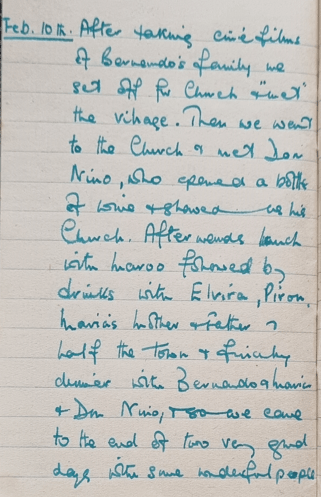
BOOM!!! If I thought I had just found a gold nugget I suddenly realised I had now actually hit the Motherlode. And my Mum hadn’t let me down. Even opening up these pages some months later I still burst into tears. And I can’t really explain why. It seems like only a couple of years since I had started searching for something like this and now suddenly here it was.

And again I’m skimming through the pages as they visit friends in Switzerland and then Italy and suddenly they’re in Parma after visiting “Andre’s old prison camp at FONTANELLATO, staying at the “Button Hotel”. We went straight out to VARSI and met Bernardo at 9 p.m.”

By now I’m a complete mess standing in front of Rex and Grum and Pat in their sitting room in Shoreham, but I can’t seem to speak. My mouth is opening and closing, a little like a goldfish, and nothing is coming out!

But I’m reading on and find myself thinking “Who the hell is Bernardo?” And the next thing there’s mention of Maria, Bernardo’s wife, and Mum and Dad are staying with them at VILLORA and then someone called Marco joins them at VARSI and their bags are carried on a 2 hour walk down the mountain across the valley and up the other side and Mum and Dad are given a reception by the two families. What two families?!

This is almost too much to take in. This actually happened. And this is the first time I’ve ever heard about it, let alone read it in black and white. At this point it becomes quite obvious to me that I’ll need to spend some time after we’ve returned to New Zealand to sit down and transcribe all this information as it is clear that I now have in my possession some very strong indicators as to who looked after my Dad for a short period in his life when he was on the run in Nazi occupied Italy. And boy am I going to enjoy following up on this!

Further Research – https://anpiparma.it/pietre-della-memoria/canonica-di-specchio/

Also in Facebook – https://www.facebook.com/search/top?q=associazione%20nazionale%20partigiani%20cristiani%20-%20parma

FINDING GENEALOGY GOLD #1

Part 1 – Two Miniature Black and White Photos

In 2023 Rex Blanchette and I embarked on our first Holiday to Europe since the arrival of Covid to our shores and the appearance of Cancer in my life. And our aim? To achieve the following goals:-

  1. Return to Rome to see a few places we missed in 2019
  2. Visit our friends Wuz and Lyn in Sarnano
  3. Take part in the 80th Anniversary of the Italian Armistice in Servigliano
  4. Visit Florence for the first time
  5. Return to Paris to tick off a few more sights
  6. Tour some of the Battlefields of the Western Front in search of Family
  7. Visit Le Quesnoy and view the new NZ Museum – Te Arawhata
  8. Visit Caen and Etretat to follow up some research on Maimie and Grandpa Harry
  9. Visit Coutances to see where Rex’s French family originated from
  10. Visit Mont St. Michel and Cancale
  11. Return to Jersey to catch up with family and friends
  12. Visit family and friends in England
  13. Undertake a 2 week narrowboat cruise on the Langollen and Shropshire Union canals

Sadly we had to forego Goal Number 8 as we lost a day in France when we incurred a flat tyre at Quarry Cemetery just after finding the grave of LEWIS JARDINE.

But you’d think that all of that would have been enough! Yet there were three separate additions to our holiday that were to become Genealogy Gold for me.

The first was when I was given a pile of old family photos to wade through by my brother Graham when we stayed with him and his wife Pat in Shoreham. Now I’m pretty sure that I had previously rummaged through all these old photos on at least two other occasions. Once in 2017 and again in 2019.

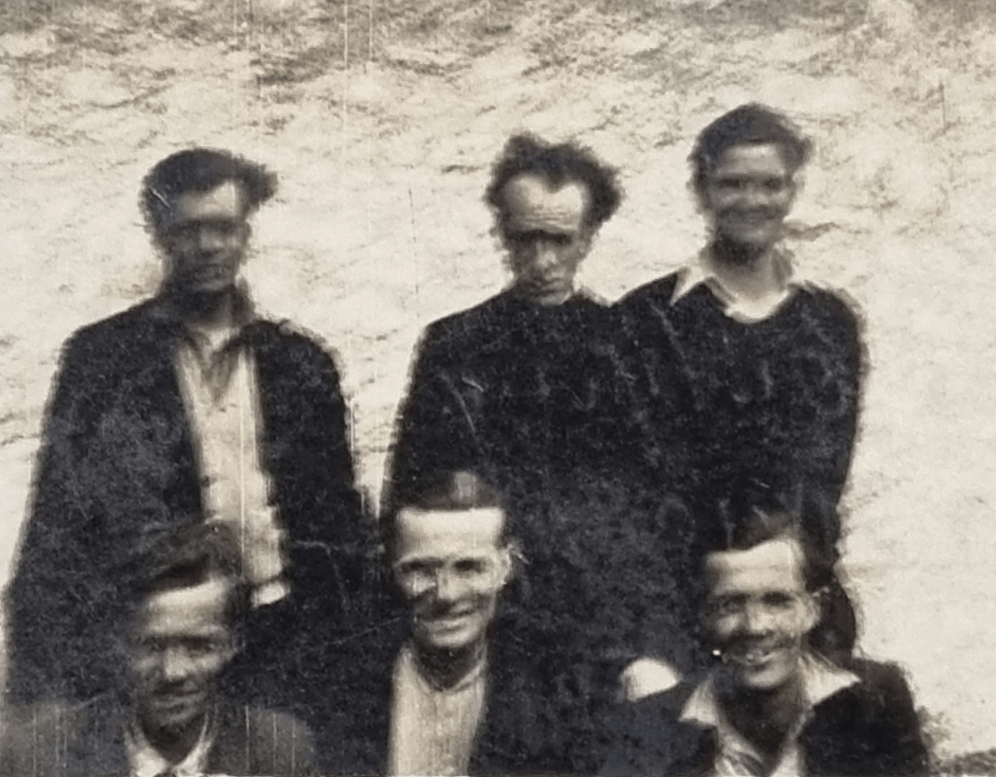
So I was quite surprised when my eye caught a glimpse of two very miniature black and white photos that were of quite poor quality and needed closer inspection because there was something about them that reminded me of some pictures I had recently seen in a museum that was being created in Servigliano in Italy in honour of Italian families that had assisted POW’s that had been released into the Italian countryside after the Italian Armistice in September 1943.

The 2 pictures depicted a group of men who all appeared to be enjoying a nice day out in the countryside, and one of the men (at bottom right) appeared to look like my Dad. But who were these men and where were the photos taken? Fortunately, on the reverse of one of the photos was some writing which appeared to answer the first question, and I have attempted to decipher the handwriting which appears to be written by six different people and, dare I say it, not by an educated hand? Certainly not my Dad’s handwriting.

FINDING FONTANELLATO

Finding Fontanellato was a bit like “Finding Nemo”. Yes, I had always known that my father had been in a POW Camp in Italy during WWII. Mainly because I knew that he had been told that his father had died on 10th March 1943 when he was a prisoner of war. But for the best part of half a century I had no idea Where in Italy? What Town? What did the Camp Look Like? Was it Still There? What had it been like Being Imprisoned There? Where did they go after being Liberated at the time of the Armistice? Question after question kept popping into my head.

After establishing in early December 2018 that my father had indeed been in PG49 in Fontanellato I couldn’t think of anything other than finding this place.

It was about this same time that my partner, Rex, and I had started to plan a trip to Europe to catch up with family and friends. Plans started to formulate in early 2019 and soon we had our itinerary set for stops in London, Malaga, Granada, Rome, Sarnano (to visit friends), Lucca (a pilgrimage for Rex to pay homage to Puccini), Verona (for an Opera at The Arena) and Venice before embarking on a memorable Cruise around the Baltic on the Queen Victoria.

London saw us take in the incredibly acerbic and riotously irreverent musical comedy “The Book of Mormon” at The Prince of Wales Theatre and the gloriously melodramatic Opera of “Tosca” at Covent Garden. That set us up for the most incredible journey into the Moorish Architecture and Arabic World of The Alhambra in Granada which is an experience I would recommend to anyone. But it was on returning from The Alhambra in Granada with my brother Graham and his wife, who had both brilliantly organised our glimpse into The Arabian Nights, to their holiday home in Estepona that the most incredible thing happened. As you can imagine both he and I had recently stumbled on this treasure trove of information on PG49 at Fontanellato, as provided by the Monte San Martino Trust. And consequently, all these questions which had been bouncing around in my head suddenly had a sounding board, which probably only succeeded in creating yet more questions.

Then, out of the blue, Graham said…. “I think you need to read this.”

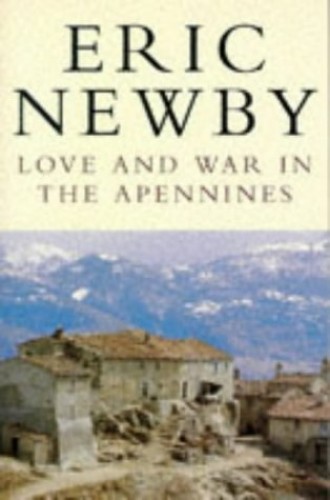
Eric Newby’s lifetime exploits are well documented (see Books) and none more so in relation to PG49 at Fontanellato than “Love and War in the Apennines”.

And what an extraordinary revelation it was. Not only was this man, Eric Newby, writing about his wartime experiences and capture off the coast of Sicily in August 1942. But he very soon afterwards pops up in PG49 at Fontanellato when he starts describing some of his experiences and life within the Camp. And suddenly I’m there……

“The prison camp was on the outskirts of a large village in the Pianura Padana, the great plain through which the river Po flows on its way from the Cottian Alps to the sea. The nearest city was Parma on the Via Emilia, the Roman road which runs through the plain in an almost straight line from Milan to the Adriatic.”

So now I know Where it Is! But there’s more!

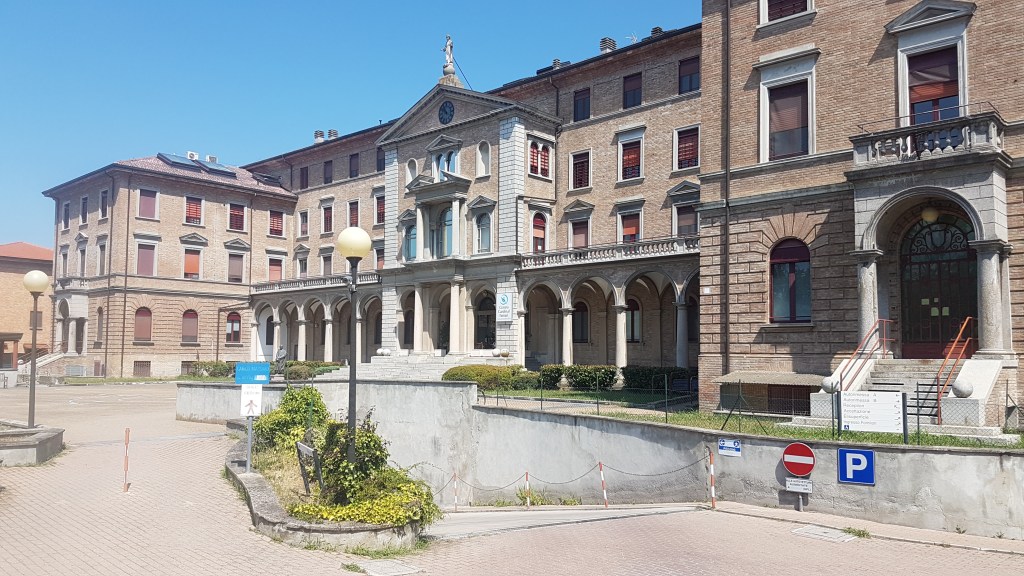
“The building in which we were housed had originally been built as an orfanotrofio, an orphanage…The foundations had been laid back in 1928, but the work had proceeded so slowly that the war began before it could be completed, and it remained empty until the spring of 1943 when it became a prisoner of war camp for officers and a few other ranks who acted as orderlies.”

And I now also know that it was a building! And it wasn’t just my Dad who was there! Yet more disconcertingly….

“It was a large, three storeyed building with a sham classical façade, so unstable that if anyone jumped up and down on one of the upper floors, or even got out of bed heavily, it appeared to wobble like a jelly.”

So, was it still there? Now I really HAD to find this place. It was at this point that I started trying to figure out if our carefully planned route through Italy could squeeze in an interloper. It wasn’t long before I worked out that our route from Lucca to Verona HAD to go in a certain direction. A quick check on Google Maps meant that our journey would no longer go via any of Florence, Bologna or Modena but instead go via Spezia, Parma, Cremona and Brescia. And only 40 minutes added to the planned 3 hour drive to our next destination!

Lunch in Fontanellato was on!

“Shivers running up and down my spine”

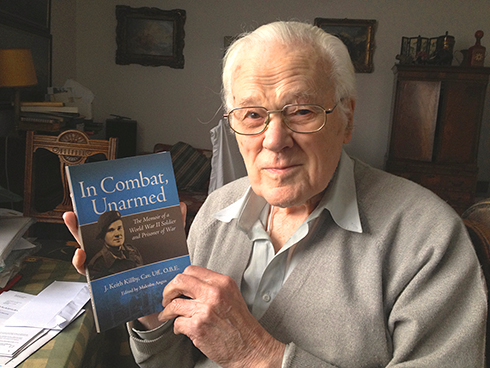
I have been very fortunate to have been provided with access to a book written by Keith Killby entitled “In Combat, Unarmed” and I was immediately gripped when I read the Foreword, written by Sir Nicholas Young, Chairman of the Monte San Martino Trust, in which he explained how he had been introduced to Keith Killby at a fairly informal gathering of men who had all been POW’s in Italy in World War II.

As he explained, most of them had all been in the camp (PG49) at Fontanellato where both my own father, and Nick’s, had been a POW, except Keith who had been in PG59 at Servigliano, and, on reading this excerpt, I too imagined myself in the same room “keeping very quiet, ears pinned back listening, shivers running up and down my spine.”

And how familiar the following words were to my ears when Nick Young went on to write….

“My father, at that time 12 years dead, had also been in Fontanellato; these men had known him, talked with him, escaped into the Italian countryside with him. He had never seen them again, had told hardly a soul indeed about his adventures.”

Copyright © Monte San Martino Trust, 2013
Printed in Great Britain by TJ International Ltd, Padstow, Cornwall
Published by Monte San Martino Trust
Registered Charity No. 1113897
msmtrust.org.uk

How I wish I had been in that same room and, I’m sure like Nick, how I wish that my father had been amongst this small group of men that we could have all shared in their joint stories of life in those camps, maybe how they had all been captured and all their adventures after being released from prison at the time of the Italian Armistice. As well as all the mishaps of their journeys through Italy and, in my father’s case, his recapture and imprisonment in Stalag VIIA, Moosburg in Southern Bavaria, Germany.

So now my task is to find these missing pieces of the jigsaw and piece them all together hopefully so that, one day, I will be able to tell my Dad’s story of his participation in World War II.

How it all Started…..

It was long after my father died that I started to become seriously curious about his involvement in World War II. I wonder in hindsight whether it was because I had instictively felt uneasy about raising or rather confronting him with these memories. Better still to leave sleeping dogs lie?

And it was only when my mother started having some real issues with her memory that I realised that I had to act urgently before it was too late.

It was about the same time that I was able to talk with my eldest brother Graham about what he knew of our parents past and he very fortunately was able to provide me with digital copies of some of their very many photographs. So it was that I was able to see, possibly for the first time, my Dad soon after he had left school and at the age of 21 at his parents home in Clandon shortly before heading out to Ceylon to start a fascinating career in the Tea Industry.

Clandon 1937

As I recently wrote to Nick Young at MSMT describing my efforts to extract information from my Mum… “.. I am so grateful that I was able to extract that one place name from my Mum as she was slipping into dementia before she died. At the time that she told me that Dad was at Fontanellato I half imagined that she was mixing it up with some delicious Italian ice cream that she and Dad had both enjoyed!” But it has been the one singular word that has led me to so much.

In fact it initially led me to the Monte San Martino Trust, but it was actually my brother Graham, again, who unearthed the most astonishing fact, or rather facts, that Dad appeared in several of their documents when he used their search engine and typed in “Willis”.

The first story to pop up was that of Major Leslie Young of the 2nd Battalion Beds and Herts Regiment, none other than the father of Nick Young the Chairman and Trustee of the Monte San Martino Trust, in which Nick’s Dad wrote a diary entry simply stating “Willis and another passed through about 1700 hrs”. My very first evidence that Dad had been a POW in PG49 and was “On the Run” in Emilia-Romagna in September of 1943.

But was this my Dad? And who is Humphreys? The one fact I’m clinging to is I’m guessing that Keith Kilby, Founder of the Monte San Martino Trust and the person resonsible for initiating the collection of all of this information, had endeavoured to list all the names that appeared in the transcript and, thankfully, he had somehow established that this Willis was indeed Willis, 2nd Lt A – p.10. And continuing the investigation of the Archive only one other Willis pops up and appears to be that of Derek Willis who was in Padula (PG.35?) with Leslie Nathanson and Sulmona (PG.78) with Alan Hurst-Brown. So maybe it is my Dad!

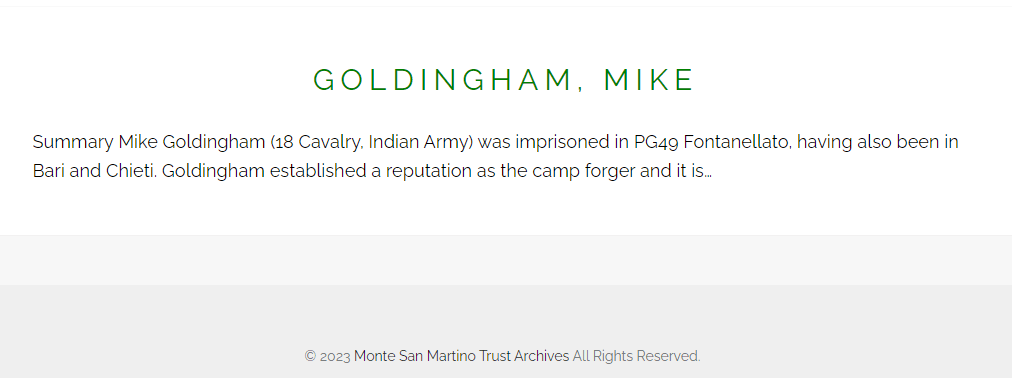
But the second really worthwhile entry was that of Mike “The Forger” Goldingham (18 Cavalry, Indian Army) whose diary entries were compelling and re-inforced my few memories that I had of my Dad enjoying happy days with one particular Italian family during which he thoroughly enjoyed the grape harvest and treading the grapes with his bare feet!

An extract from Mike’s Diary:-

“This is the place to introduce you to the ‘Contadini’ without whose help, no POW would have been able to manage. Living in squalid farmhouses, with a few acres of land hacked out of the mountain side – a cow, sheep and hens, the Contadino is nearly self provident for his, often, large family. His wife — the women are the backbone of the country – rules the home and, with the children, works in the field equally hard as the men, and for the same hours. They are peasants, dirty, poor and ignorant, but they have the generosity of the east, so embarrassing to the Englishman. Many a time we have been forced to eat the family’s hot evening meal, while they contented themselves with dry bread.

We were four, all Indian Army, who stayed for six weeks in a small village near Bardi. We slept in a hay barn and fed with six families vying with each other in hospitality. As the Fascist Govt was extinct, the contadinis had not sent in their quota of flour, and there was plenty of bread. Gnocchi, Macaroni, pasta-asciutta, polenta, fungi, milk, grapes, chestnuts and cheese resulted in our fattening visibly in a short time. During the day we “helped” in the fields: (we could watch the main road, half a mile below, for a danger sign): hoeing potatoes, ploughing, cutting wood, collecting fungi or bringing in the grape harvest and squashing them with bare feet in a coffin-shaped vat. They were happy, sunny days.

We got on well with our hosts, and being able to draw a little, we had many female sitters. They made us realise that the term “a complexion like a peach” was not hearsay. To have put cosmetics on their cheeks would have been sacrilege. Our great friend was Marco, the village loper, who used to lock us in his cellar and force wine on us till we could take no more. We called wine “benzino”, saying we could not work without it. When hoeing, we put the bottle ahead of us, dig hard till level with it, and flop down with cries to our pretty companion, of “Maria, Benzino!” She produces glasses, serving us with smiles and charming courtesy, till we are ready to start again.

The cheese here was delicious – mostly Parmesan and a type of Gorgonzola. But to the Ites, the real delicacy is a cheese (we named it ‘Formaggio Artillieri’) that after three months becomes a squirming mass of worms. You can see and hear them jumping about (often amazing distances). A gourmet will go miles for a good mouthful of worms! A common dish is “polenta”, made from “grano turco” – Indian corn – mixed with milk and water, and cooked. When hot, the result, not unlike Yorkshire Pudding on a vast scale, is thrown bodily onto the wooden table-top, grated cheese and tomato sauce added, and we all sit round the mass, and plunge, every man for himself, into it with forks. It is rather tasteless, but excellent when made from chestnuts.

Nearly all the elder peasantry in the valley, and indeed throughout Italy, have either been to England or America, or have relations there. Our village boasted many who had been waiters, chefs, etc. in London, and in most houses the cutlery bore the names ‘Savoy Hotel’, ‘Piccadilly Hotel’ or ‘Romanos’! On Sundays, always heavy drinking days, used to be heard, from the cellars, snatches of “Rule Britannia” and “It’s a long way to Tipperary” sung with a strong Italian accent. Marco, when foxed, and consequently the children, used to shout, “Mussolini, Goddam, bloody, son of a bitch!”, the only English he knew! They all regard England and more so USA, as the land of milk and honey.

After six weeks of good feeding, drinking and laughter, we were no nearer freedom. Winter was coming and unless we moved over the mountains, we would get caught by the snow and be unable to move south till April. In addition, the Fascists were gaining power and prisoners their special quarry — only recently two officers with their 75 year old host were taken above this village. Our hosts were in worse danger than us, and four extra mouths was a lot to feed. The BBC was misleading – every day we expected the big attack and landings – and despite our hosts’ dissuasions and tears, John Meares and I left for the south. Paddy Bruen, whose boots were bad, and Andre Willis stayed behind. We heard, in July, that they got re-captured going to Switzerland.”

And thus my own journey began!

Website Built with WordPress.com.

Up ↑