FINDING FONTANELLATO

Finding Fontanellato was a bit like “Finding Nemo”. Yes, I had always known that my father had been in a POW Camp in Italy during WWII. Mainly because I knew that he had been told that his father had died on 10th March 1943 when he was a prisoner of war. But for the best part of half a century I had no idea Where in Italy? What Town? What did the Camp Look Like? Was it Still There? What had it been like Being Imprisoned There? Where did they go after being Liberated at the time of the Armistice? Question after question kept popping into my head.

After establishing in early December 2018 that my father had indeed been in PG49 in Fontanellato I couldn’t think of anything other than finding this place.

It was about this same time that my partner, Rex, and I had started to plan a trip to Europe to catch up with family and friends. Plans started to formulate in early 2019 and soon we had our itinerary set for stops in London, Malaga, Granada, Rome, Sarnano (to visit friends), Lucca (a pilgrimage for Rex to pay homage to Puccini), Verona (for an Opera at The Arena) and Venice before embarking on a memorable Cruise around the Baltic on the Queen Victoria.

London saw us take in the incredibly acerbic and riotously irreverent musical comedy “The Book of Mormon” at The Prince of Wales Theatre and the gloriously melodramatic Opera of “Tosca” at Covent Garden. That set us up for the most incredible journey into the Moorish Architecture and Arabic World of The Alhambra in Granada which is an experience I would recommend to anyone. But it was on returning from The Alhambra in Granada with my brother Graham and his wife, who had both brilliantly organised our glimpse into The Arabian Nights, to their holiday home in Estepona that the most incredible thing happened. As you can imagine both he and I had recently stumbled on this treasure trove of information on PG49 at Fontanellato, as provided by the Monte San Martino Trust. And consequently, all these questions which had been bouncing around in my head suddenly had a sounding board, which probably only succeeded in creating yet more questions.

Then, out of the blue, Graham said…. “I think you need to read this.”
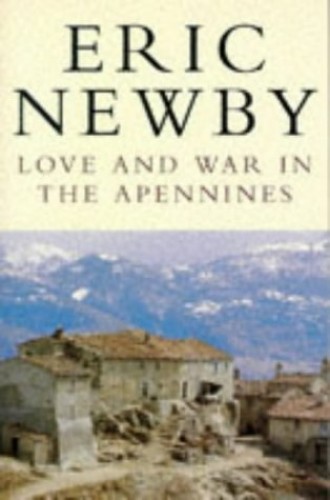
Eric Newby’s lifetime exploits are well documented (see Books) and none more so in relation to PG49 at Fontanellato than “Love and War in the Apennines”.

And what an extraordinary revelation it was. Not only was this man, Eric Newby, writing about his wartime experiences and capture off the coast of Sicily in August 1942. But he very soon afterwards pops up in PG49 at Fontanellato when he starts describing some of his experiences and life within the Camp. And suddenly I’m there……

“The prison camp was on the outskirts of a large village in the Pianura Padana, the great plain through which the river Po flows on its way from the Cottian Alps to the sea. The nearest city was Parma on the Via Emilia, the Roman road which runs through the plain in an almost straight line from Milan to the Adriatic.”

So now I know Where it Is! But there’s more!

“The building in which we were housed had originally been built as an orfanotrofio, an orphanage…The foundations had been laid back in 1928, but the work had proceeded so slowly that the war began before it could be completed, and it remained empty until the spring of 1943 when it became a prisoner of war camp for officers and a few other ranks who acted as orderlies.”

And I now also know that it was a building! And it wasn’t just my Dad who was there! Yet more disconcertingly….

“It was a large, three storeyed building with a sham classical façade, so unstable that if anyone jumped up and down on one of the upper floors, or even got out of bed heavily, it appeared to wobble like a jelly.”

So, was it still there? Now I really HAD to find this place. It was at this point that I started trying to figure out if our carefully planned route through Italy could squeeze in an interloper. It wasn’t long before I worked out that our route from Lucca to Verona HAD to go in a certain direction. A quick check on Google Maps meant that our journey would no longer go via any of Florence, Bologna or Modena but instead go via Spezia, Parma, Cremona and Brescia. And only 40 minutes added to the planned 3 hour drive to our next destination!

Lunch in Fontanellato was on!
“The book which triggered one of the most thrilling adventures in detection of my life.”

Following my re-reading of Eric Newby’s book entitled “Love and War in the Apennines” I was reminded about a wonderful opportunity I was given as I was recovering from an operation I underwent in December 2020 to listen in on a Zoom meeting held by the Monte San Martino Trust on 16th May 2021 to commemorate the 50-year Anniversary of the book.

Professor Robert Tregay follows Eric Newby’s travels through Italy

The travel writer Eric Newby’s memoir Love and War in the Apennines was first published in 1971 and has been in print ever since. The book tells the dramatic story of Newby’s capture in Sicily in 1942, while on a commando raid, his time as a prisoner of war in Italy and on the run in the autumn of 1943 after the Italian armistice. He wrote the book as a tribute to the Italian people who risked their lives to assist him. To celebrate the 50th anniversary of the book’s first publication, Nick Young, chair of the Monte San Martino Trust, a charity founded by former British prisoners of war in Italy, hosted a discussion with Eric Newby’s daughter, Sonia Ashmore, and Professor Robert Tregay, who has researched the people and locations Newby describes.

The extraordinary thing I now realise with hindsight is that the opening words by Professor Robert Tregay in introducing his own book describing Eric Newby’s ‘Escape from Fontanellato’ was that I too was in the throes of being diagnosed with cancer and recovering from all sorts of hellish treatments and surgeries to ensure that I had a few more years left on this mortal coil to finish the journey I had commenced, prior to my diagnosis, of finding out about my Dad’s wartime exploits.

I have already wondered while reading this book myself, just what other relatives of POW’s are thinking when they have read it, but then I found out that someone else, who has no connection with Fontanellato or any other wartime exploits as far as I know, is as gripped by the story as I am and, like me, just wants to find out what actually happened. Or in my case where did my Dad go, and who was it that provided him with food and shelter, and what happened to some of the people he knew and met?

It was when I started reading the following extract from Professor Tregay’s summary of his investigations that I realised I was not the only person on the planet that was intrigued by this extraordinary period in time –

“Recovering from an operation six years ago, I was given Eric Newby’s book, Love and War in the Apennines, to read. “It’s my favourite novel,” my friend said, and it became for me the book which triggered one of the most thrilling adventures in detection of my life.

Professor Robert Tregay – The True Story of Eric Newby’s “Love and War in the Apennines”.

Hobbling and on the run!

It’s been about 4 years since I first read Eric Newby’s book entitled “Love and War in the Apennines” so I’ve decided to see if I can refresh my memory of the very feelings I had when I first read it.

And before very long you’re immersed in another world. And most importantly I’m aware that my own Dad was alive and experiencing the exact same circumstances that Eric Newby is describing. And you’re there. You’re walking the same corridors. Marching the same roads. Playing in the same exercise yard. And eating and drinking, yes drinking, wine and vermouth in the same rooms. My Dad’s favourite drink on a Sunday lunch after a few hours in the garden when we were living in Jersey, was a Gin and Dubonnet.

 Actually, I think he used to say that it was the Queen Mother’s favourite tipple, but I now wonder if this taste for vermouth first came from his imprisonment in PG 49 at Fontanellato?

Whilst immersed in this book I start wondering if other relatives of these inmates at PG 49 have felt the same feelings that I am now experiencing once again. For suddenly you’re in Fontanellato. And not only that but you’re the one unfortunate who has broken his ankle, just two days before being released from captivity. As Eric Newby explains…

“….on the seventh of September, 1943, the day before Italy went out of the war, I was taken to the prison hospital with a broken ankle, the result of an absurd accident in which I had fallen down an entire flight of the marble staircase which extended from the top of the building to the basement while wearing a pair of nailed boots which my parents had managed to send me by way of the Red Cross.”

Hold on. Rewind! Did he just say “marble staircase”! What sort of POW Camp is this? And it’s only once you have seen it in real life, not just pictures from the Internet, that you get to appreciate the elegance of this grand old building. So how come my Dad didn’t mention any of this?

But this story of “Love and War in the Apennines” doesn’t end there obviously and, without going into a spoiler alert, it’s fascinating to learn that soon after sampling the intoxicating emotion and joy of being set free from captivity, Eric then faces what must have been an intolerable dilemma. Just a day after being set free from PG 49 at Fontanellato, he receives the worst possible news.

“Around eleven o’clock an Italian doctor arrived in a Fiat 500.He was an enormous, shambling man with grizzled hair, like a bear and one of the ugliest men I had seen for a long time.

He examined my ankle, which was rather painful after the strains to which it had been subjected, raised his shoulders, made a noise which sounded like urgh and went off to have a conference with the capitano.

‘The doctor says you must go to the hospital,’ the capitano said, when they emerged from their conclave.

‘But that means I shall be captured again,’ I said.

‘You’ll be taken away if you don’t…….. The doctor can get you into a hospital in Fontanellato. No one will think of looking for you there.’”

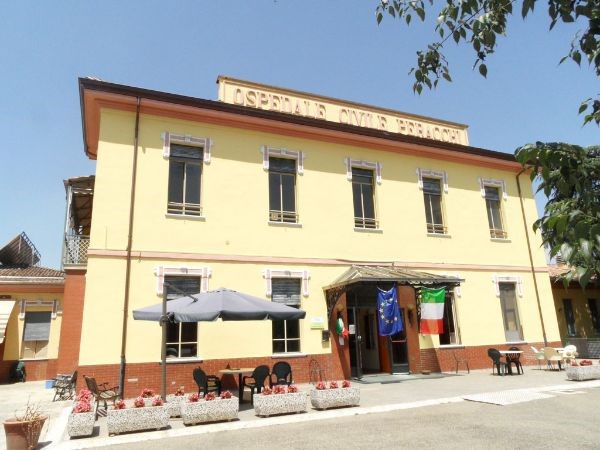
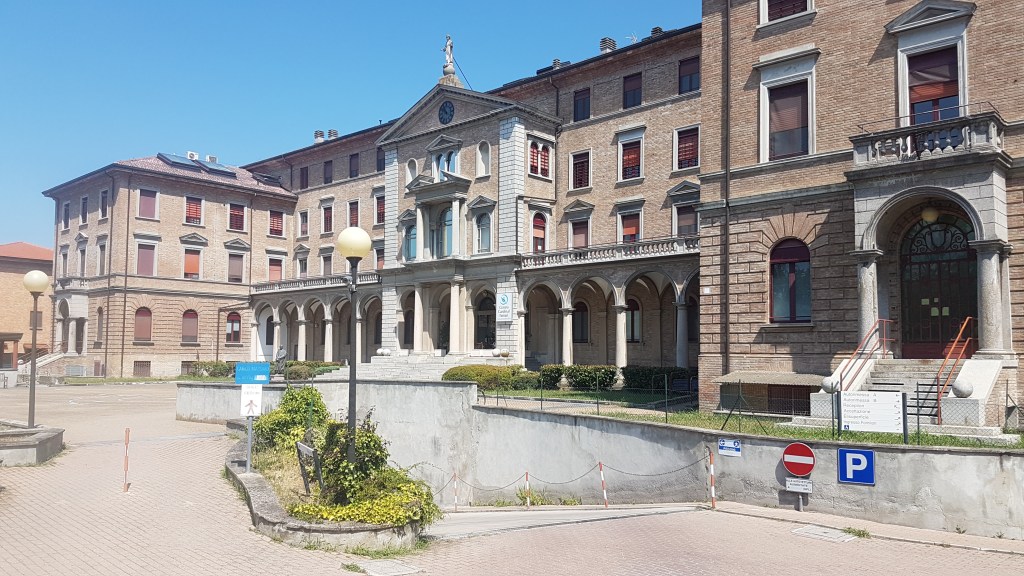
So, you’ve just experienced the euphoria of freedom to now finding yourself thrown back into the Lions Den of Fontanellato! Which by now is full of angry Germans who have just been betrayed and let down by the Italians. And very soon you’re lying in a bed in the Ospedale Peracchi on the outskirts of Fontanellato, only a few hundred yards from the orfanotrofio (Orphanage) which we now know to be the site of PG 49.

And suddenly I’m jumping on to my computer to see if I can establish if this Ospedale, or Hospital, exists. And sure enough a quick Google search comes up trumps. Sitting at Via XXIV Maggio 16 it’s just an 8 minute walk from Via IV Novembre 21 where the building housing PG 49 can also be found.

Now this I have to see one day!

Reading Books

One of the first books that I came across while researching my father’s time in Italy was “Love and War in the Apennines”, by Eric Newby, which enabled me to immerse myself in the “Life and Times” of a POW “On the Run”.

The peasants are the great sanctuary of sanity, the country the last stronghold of happiness. When they disappear there is no hope for the race.

Virginia Woolf

“In 1943, Eric Newby escaped from the Italian prison camp in which he had been held for a year. Evading the German Army, he was sheltered by an informal network of Italian peasants. Love and War in the Apennines is Newby’s tribute to these selfless and courageous people and their bleak and unchanging way of life.”

Publishers – HarperCollins

To all those Italians who helped me, and thousands like me, at the risk of their lives, I dedicate this book.

Eric Newby

Website Built with WordPress.com.

Up ↑