The men on this page are those I have been able to identify as being held in P.G. 49 during the Second World War. I have attempted to record their names, military ranks and units, and notes concerning capture, internment, escape, and repatriation. The PG 49 site as a whole contains much more information—interviews, photos, and newspaper stories—on many of these fellows in individual posts. Use the site’s search feature to hunt for more information on any individual P.O.W.
Following on from my first Post about Deir el Shein and, as I continue to stumble upon fragments of my father’s wartime story, I’m starting to piece together the lives of so many men that he was ultimately to become associated with in PG 49 at Fontanellato. But how had it amounted to this?
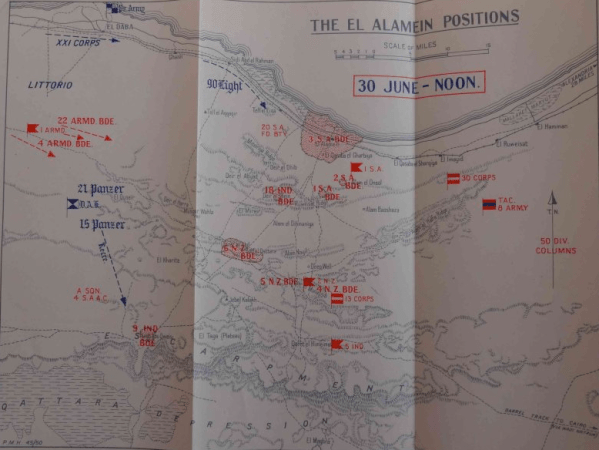
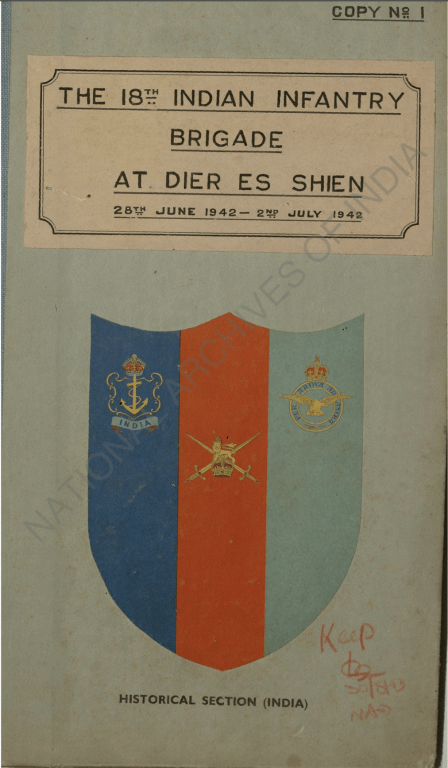
“When General Norrie assumed command of the [Alamein] Line, after handing over Matruh on 23 June, he was disturbed by the wide gaps between the three fortified positions, but could do little with the troops at his disposal. Even the original boxes could not be adequately held, but he did try to fill the gap between El Alamein and Bab el Qattera by the establishment of a new position at Deir el Shein, which he assigned to 18th Indian Infantry Brigade…” – From Crisis in the Desert, p.272
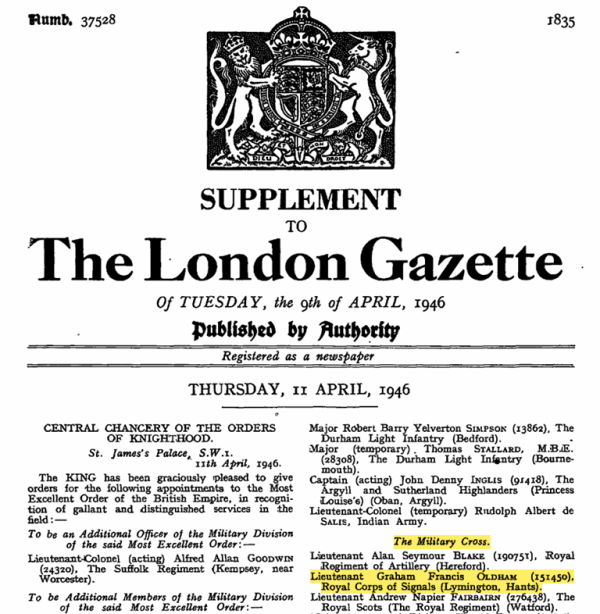
“Officer Commanding 18th Indian Infantry Brigade Signal Section. WWII. Western Desert Campaign. Published citation: In recognition of gallant and distinguished services in the field. No recommendation—For his conduct at Deir el Shein on 1 July 1942 in the First Battle of El Alamein during the Western Desert Campaign prior to being captured when the brigade was overrun.” From a footnote:Captured in the Western Desert on 1 July 1942 and held in Italy at Campo 49 (Fontanellato) and at Oflag 79 atBrunswick, in Lower Saxony, Germany. (LG 11 April 1946; 37528, p. 1835.)
“So, was this when my Dad was captured in the Desert too?”
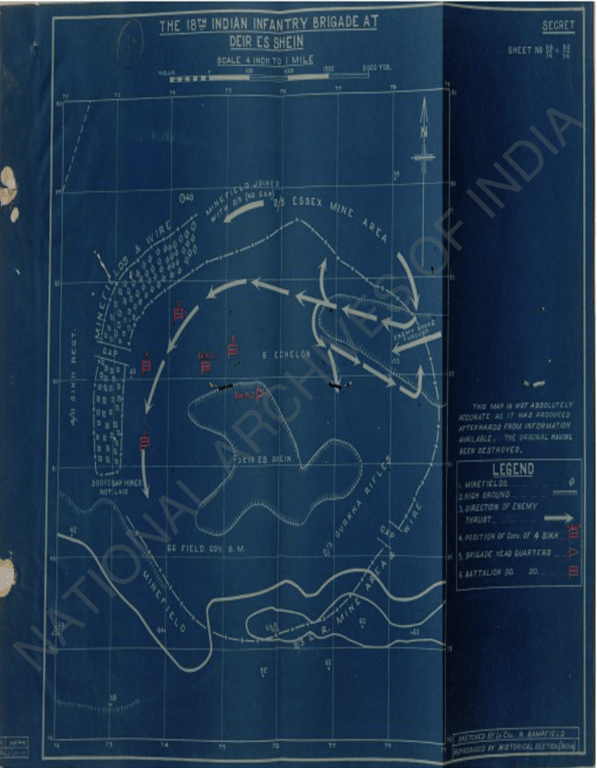
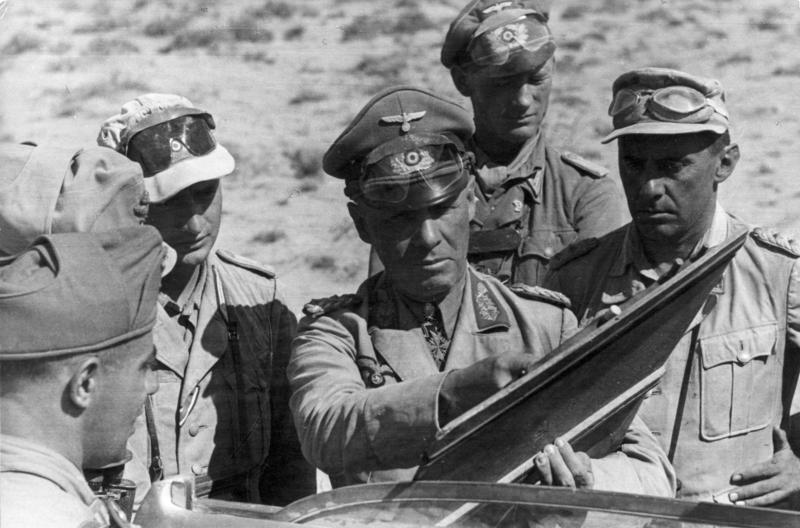
It’s very clear that 4/11 SIKH REGT is at the North West corner of this “Box” at Deir El Shein, 16 miles south of El Alamein, and I’m getting the distinct impression that my Dad is at the sharp end of an inevitable thrust by the Desert Fox, Erwin Rommel, himself.
A further Google search brought up something called the Feldgrau Forum providing information about:-
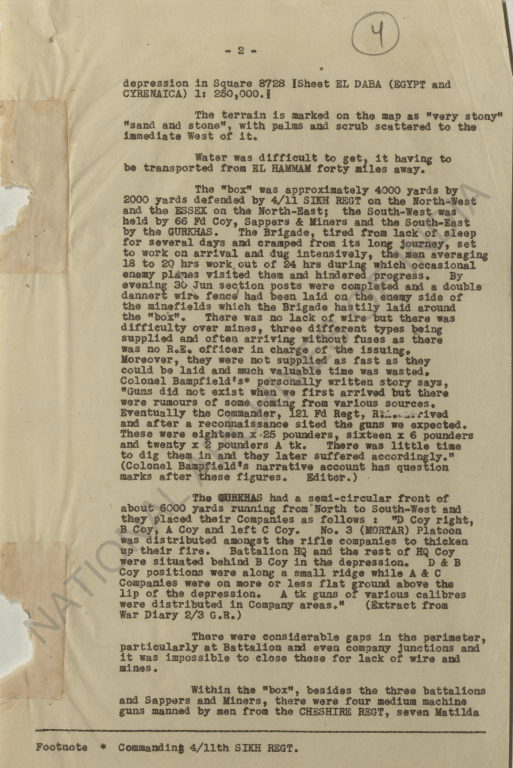
“As for the 18th Brigade at Deir el Shein, the 4/11th Sikhs were on the NW of the box, the 2/5 Essex on the NE, the 2/3 Gurkhas on the E in a semi circle, and the 66th Field Company of Sappers & Miners on the SW. They were supported by 7 Matildas of the 42nd Royal Tank Regiment, 4 medium machine guns of the Cheshire Regiment, 2-pounders and 6 pounders manned by South African and Welsh units. Oh, and the 32nd Field Ambulance had an Advanced Dressing Station too. Sorry, I don’t really remember all the other units outside of the main battalions of the 18th Brigade since there was a huge mess in setting up the box, the 18th Brigade had no signal equipment, very little ammunition, and the supporting artillery came in too late and because the area of Deir el Shein was bedrock, there was not enough time to dig the guns in. As for the result of the battle, the Sikhs were overrun at 1730 hours, the Gurkhas at 1900 hours and Essex by 1930 hours. The Sikhs lost 3 officers and 370 other ranks with 7 officers and 500 other ranks missing. The Gurkhas lost 12 officers and 580 men, not sure of how many missing, but their commanding officer was captured.” – by DocAmerica Sun Aug 28, 2011: Moderator John W. Howard
One of my few recollections of my Dad talking about his wartime experiences was a very brief reference to suddenly being surrounded by German forces somewhere in the middle of the desert, ultimately leading to becoming a Prisoner of War in Italy. But that was it and how I wish I had pushed for more information then rather than looking now for lots of little needles in this vast haystack.
I already know that the very first post written by Tom O’Brien on Deir el Shein sources – July 1942 had identified the following list of 10 British Officers present with the Battalion on the midnight of 30/6/42. Sourced from WO169/7773 – The Battalion Diary of 4/11 Sikh Regiment. Commanding Officer – Lieut. Col. R. Bampfield.
So, of the 10 British Officers of the 4th Battalion 11th Sikh Regiment listed above only 3 officers, together with 370 Other Ranks, were recorded as being present at Amriya on 2nd July 1942 when the Roll Call was carried out. And these appear to have been:-
T/ Capt. Simon Anthony Cunningham (S.A.C.) Trestrail2
2/ Lieut. Alan Cadell Barnes (A.C.B.) Wimbush
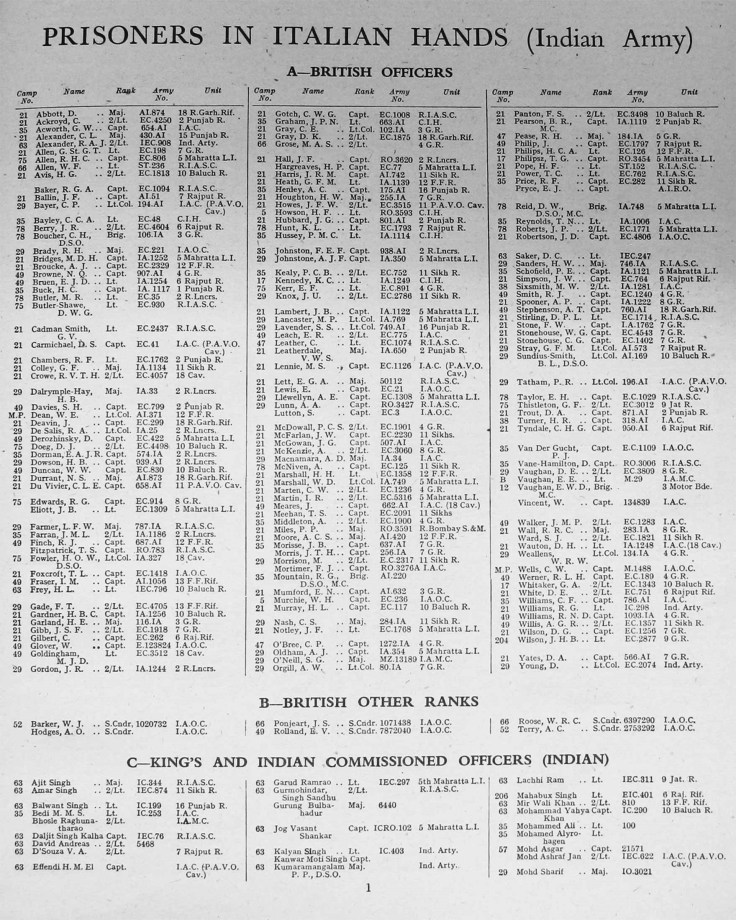
So, from that do we have to deduce that the following 7 British Officers were captured at Deir el Shein by the German forces on 1st July 1942? It certainly makes sense and when we look at the list of POW’s held in Italy what do we find?
A/Major G.F. Colley (M.C.) IA. 1134 – is at PG 21 Chieti in the Abruzzo region
A/Capt. J.R.M. Harris AI. 742 – is also at PG 21 Chieti in the Abruzzo region
2 Lieut. M. Morrison EC. 2317 – PG 29 Viano near Reggio
2/Lieut. S.J. Ward EC. 1821 – ??
2/ Lieut. J.U. Knox EC. 2786 – PG 29 Viano near Reggio
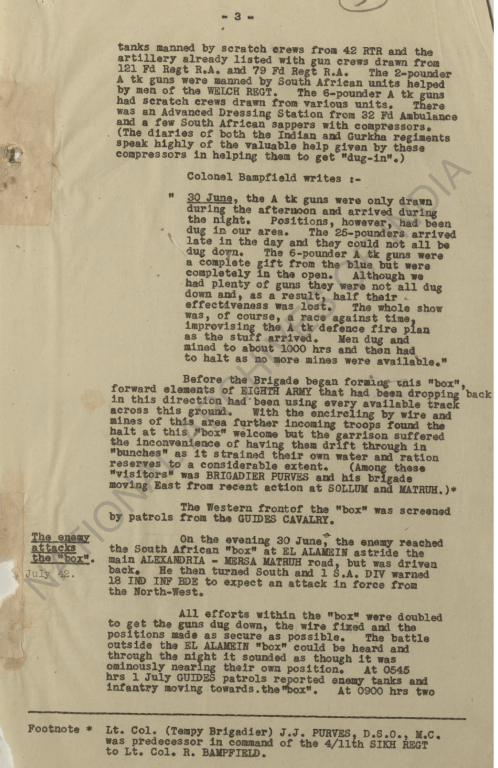
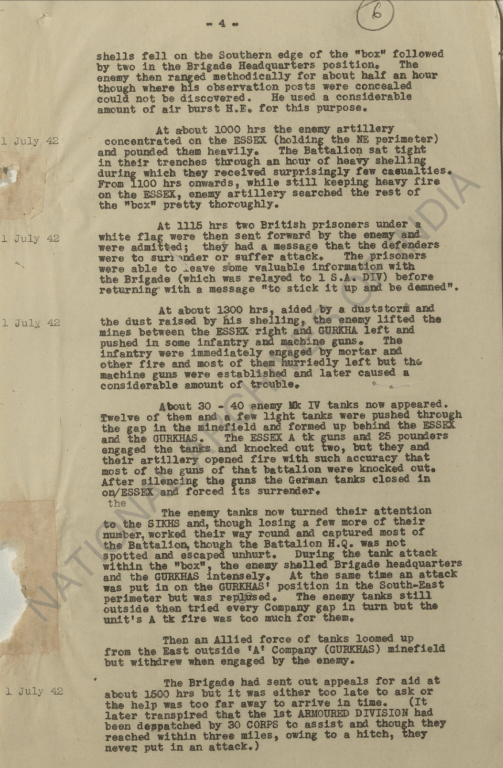
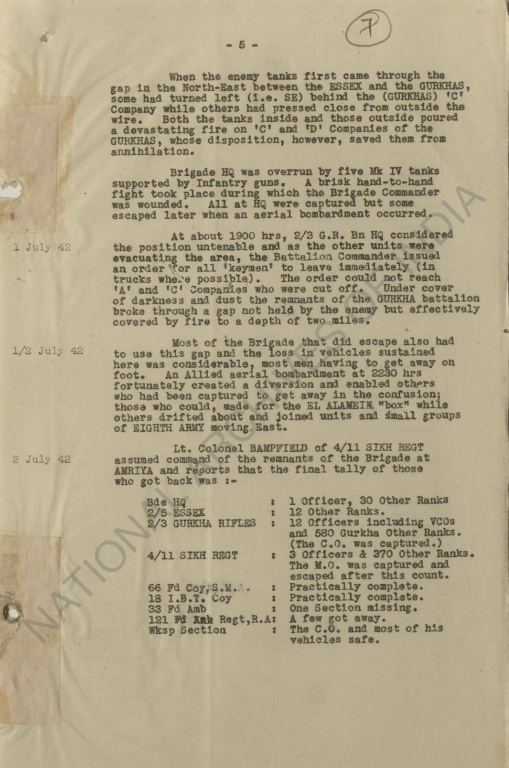
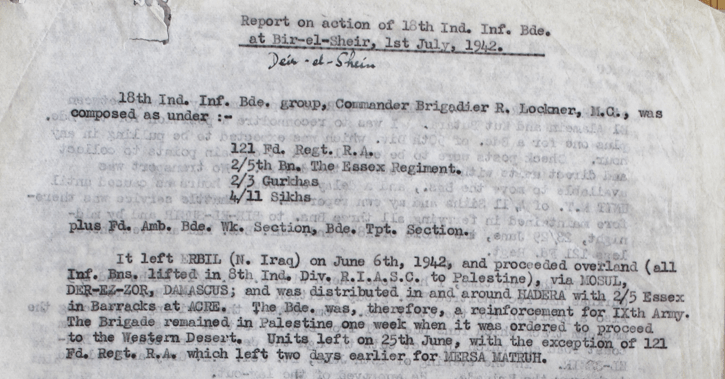
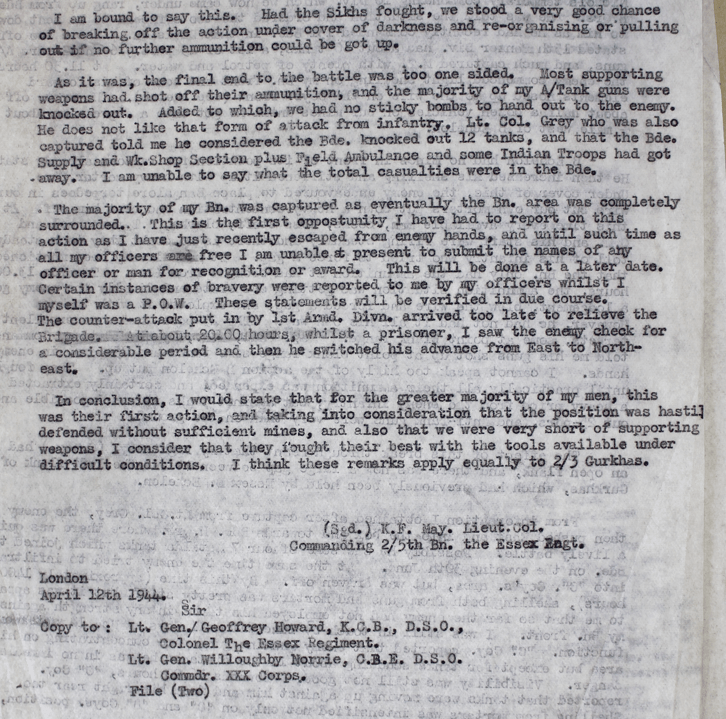
Having established that 2/5th Battalion the Essex Regiment were also present at Deir el Shein as part of the 18th Indian Infantry Brigade, I feel honour bound to post a document that I was lucky enough to come across in Post #19 on the WW2Talk website as part of the Thread relating to Deir el Shein sources – July 1942. A transcript was kindly provided and very much mirrors the Battalion Diary of 4/11th Sikhs that I first came across and posted under Another piece of the Jigsaw:-
……. although I’m pleased that some comments questioned the criticism levelled at the Sikh Regiment towards the end of the report.
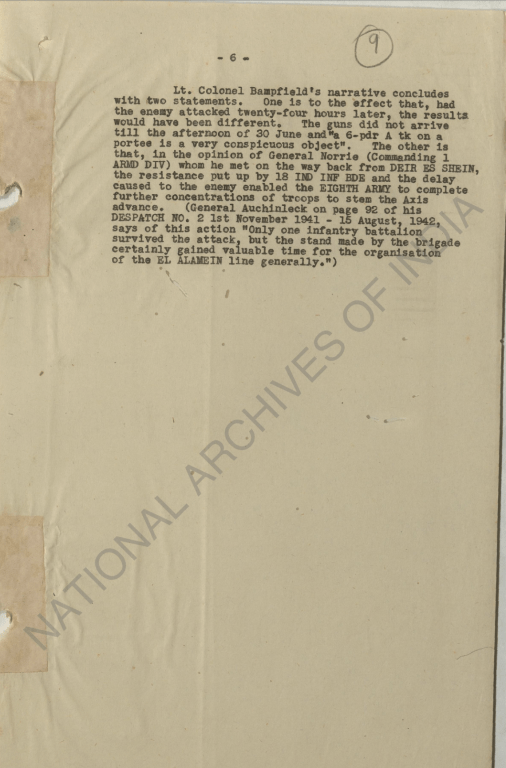
Auchinleck’s Despatch No.2 (1/11/41-15/8/42) says on pg. 92 of the action:
‘Only one infantry battalion survived the attack, but the stand made by the Brigade certainly gained valuable time for the organization of the El Alamein line generally’.
Richard Bampfield (13th August 1898 – 11th August 1964) was an English first-class cricketer and an officer in the British Indian Army. Bampfield was born at Frome in August 1898. He was educated at St Edward’s School, Oxford. From there, he went to British India to attend the Cadet College at Wellington, graduating from there into the British Indian Army as a Second Lieutenant in June 1917, with him seeing action in the final fifteen months of the First World War. By December 1919, he held the rank of Lieutenant and acted in the capacity of an aide-de-camp until February 1920. Promotion to Captain would follow, with a further promotion to Major coming in June 1935. Bampfield was a member of the 11th Sikh Regiment and spent time as an instructor at the Indian Military Academy beginning in July 1937. Bampfield would serve with the 11th Sikh in the Second World War, seeing action in the Middle East campaign for which he was mentioned in despatches in December 1941. He was promoted to Lieutenant-Colonel during the war in June 1943. He retired from active service in September 1948, three years after the end of the war and a year after Indian Independence; the latter event had seen him transferred to the specialist list of the British Army. Bampfield died at Rustington on 11th August 1964, two days before his 66th birthday. ↩︎
When I first started to find stories written by Servicemen who had been POW’s during World War II, I was immediately disappointed that I had never come across anything put in writing by my father. That’s not to say that he didn’t put pen to paper, but I’ve certainly not found anything so far and it seems unlikely that I ever will.
But, whilst it has been thrilling to stumble upon numerous tales, either written in the form of books or reports and even diaries, I’m beginning to realise that there are probably more stories that haven’t been told or passed on to the families of these men. And it’s only when I receive notification from my website that there are others, like me, who never knew or talked about their father’s involvement in this moment in history that I realise that I am not alone. None more so than the notification I received recently from Nigel Collins:-
“Hi – I have just discovered your website. I have no idea if this information will be of any use or interest.
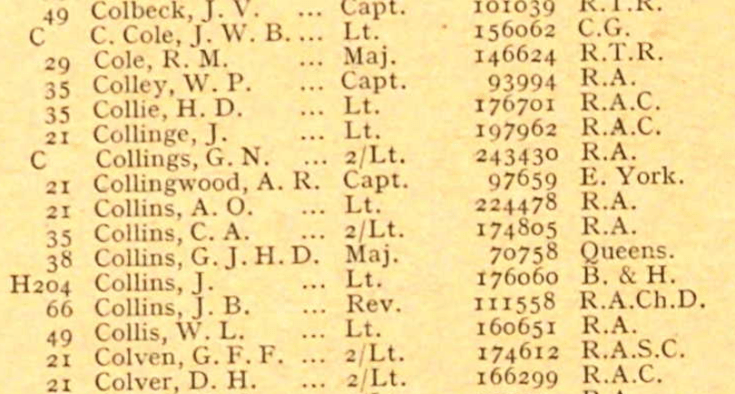
My father, Major Geoffrey (GJHD) Collins was in PG 49 Fontanellato having been taken prisoner in North Africa. My knowledge is a bit sketchy, as, like so many servicemen who fought in WWll, he didn’t talk about it much.
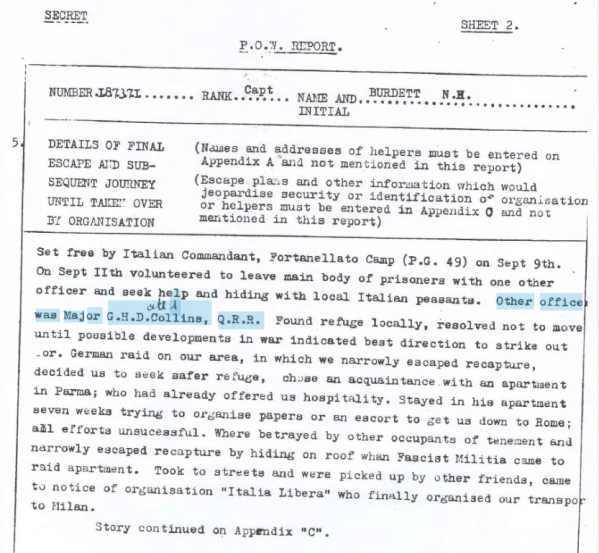
I do know that at the time of the Armistice he travelled north with fellow prisoner Noel Burdett, eventually reaching Switzerland. The stories of that time are fragmented; I know they were sheltered by a man called Nando (?) and his family (in Parma itself I think). There were a lot of scrapes on the way – hiding under things in lorries, in ditches, cornfields, jumping on to the roof – and crossing the Alps in snow, which as a schoolboy learning Latin, I was disappointed to find was not quite the same as Hannibal’s trip! He stayed in Switzerland until he returned to England in March 1945, and I have no idea what he did there. My mother thought it was something to do with Intelligence, but I have been unable to find out anything. Snippets of his story appear in the book Home by Christmas? edited by Ian English which was published in 1997, sadly some years after my father’s death.“
My immediate thought when I received this correspondence was that I needed to see if Nigel’s father appeared on my site, but a quick search drew a blank, which I thought was odd. So, I decided to search for his “fellow prisoner Noel Burdett” and I was quite surprised to find that I had previously stumbled upon his story under the Monte San Martino Trust Archives. And sure enough, a quick search on that story indicated that a Major G.H.D Collins. Q.R.R. [Queens Royal Regiment] had been a travelling companion of Noel Burdett following the release of the POW’s from PG 49 at Fontanellato at the time of the Italian Armistice. Surely this must be Nigel’s father? So, I wrote back to Nigel with my find, thanking him for reaching out to me about his Dad:-
“I couldn’t find your Dad initially when I looked under my Roll Call (I assumed he was British Army) but then I searched through my list of Italian POW’s and found that he was listed as being in PG 38 when that document was compiled, so it’s now useful to know that some prisoners came from Poppi, near Arezzo, in the Tuscany Region of Italy. I hadn’t heard that before so that’s another piece of the puzzle as to how the numbers grew to over 600 at Fontanellato at the time of the Armistice.“
“I was also unaware of Noel Burdett’s story – thanks for the link. There were certainly bits in there which chimed with what I had heard; the jumping on to the roof, and hiding in a furniture lorry, and getting frostbite in the Alps for instance. The bit about concealment in charcoal drums was news, and I must say I’m a bit confused about that one! It was interesting to see their correspondence too.“
I’ve no doubt that Nigel and I will continue to correspond as it appears that we have so much in common. Especially as it appears that not talking about this period in their lives appears to be a very common theme amongst these men. And I’m guessing that all of them would be incredibly surprised to learn that we really would have loved to have heard more. Especially with regard to who all these wonderful Italian people were who helped them in what can only be described as harrowing times, often under threat of being shot for aiding and abetting prisoners on the run.
So, for the moment I close by saying…
“I’m thrilled that we are in touch and so pleased to hear that you had not come across the Noel Burdett story on the MSMT site. I haven’t managed to read through it all myself, but I thought it fascinating that there were communications exchanged between him and your Dad. So much more to find out about the whole North Africa shemozzle for these 2 men in our lives and what effect it had on them both.”
Officer Commanding 18th Indian Infantry Brigade Signal Section. WWII. Western Desert Campaign. Published citation: In recognition of gallant and distinguished services in the field. No recommendation—For his conduct at Deir el Shein on 1 July 1942 in the First Battle of El Alamein during theWestern Desert Campaign prior to being captured when the brigade was overrun. LG 11 April 1946; 37528, p. 1835. From a footnote:Captured in the Western Desert on 1 July 1942 and held in Italy at Campo 49 (Fontanellato) and at Oflag 79 atBrunswick, in Lower Saxony, Germany.
My extraordinary friends on WW2Talk keep coming up with mouth watering snippets of information, but it was only when I picked up on the last sentence of this entry that I started wondering….
“Was this when my Dad was captured in the Desert too?”
So, what was Oldham doing and where exactly was he when he was captured? The Citation above tells us that he was
Officer Commanding 18th Indian Infantry Brigade Signal Section
It was WWII
Taking part in the Western Desert Campaign
And he was awarded the Military Cross in recognition of gallant and distinguished services in the field….
Prior to being captured when the brigade was overrun.
One of my few recollections of my Dad talking about his wartime experiences was a very brief reference to suddenly being surrounded by German forces somewhere in the middle of the desert, ultimately leading to becoming a Prisoner of War in Italy. But that was it and how I wish I had pushed for more information then rather than looking now for lots of little needles in this vast haystack.
My contact at WW2Talk had identified that Graham Francis Oldham (151450) was a Cadet from an Officer Cadet Training Unit and had been Commissioned on 15.10.1940. But how are the Officers from the Royal Corps of Signals distributed around the various Allied forces? For now I’m pleased to know that on 1st July 1942 he was part of the 18th Indian Infantry Brigade. And the very first post written by Tom O’Brien on Deir el Shein sources – July 1942 had identified the following list of British Officers present with the Battalion on the midnight of 30/6/42. Sourced from WO169/7773 – The Battalion Diary of 4/11 Sikh Regiment. Commanding Officer – Lieut. Col. R. Bampfield.
It’s very clear that 4/11 SIKH REGT is at the North West corner of this “Box” at Deir El Shein, 16 miles south of El Alamein, and I’m getting the distinct impression that my Dad is at the sharp end of an inevitable thrust by the Desert Fox, Erwin Rommel, himself and I’m going to have to leave Oldham here for now, although it appears he ends up at Fontanellato with Dad at some point, and try and pursue this thread of information under the Tribute to my Dad’s page.
Another Google search brought up something called the Feldgrau Forum providing information about:-
“As for the 18th Brigade at Deir el Shein, the 4/11th Sikhs were on the NW of the box, the 2/5 Essex on the NE, the 2/3 Gurkhas on the E in a semi circle, and the 66th Field Company of Sappers & Miners on the SW. They were supported by 7 Matildas of the 42nd Royal Tank Regiment, 4 medium machine guns of the Cheshire Regiment, 2-pounders and 6 pounders manned by South African and Welsh units. Oh, and the 32nd Field Ambulance had an Advanced Dressing Station too. Sorry, I don’t really remember all the other units outside of the main battalions of the 18th Brigade since there was a huge mess in setting up the box, the 18th Brigade had no signal equipment, very little ammunition, and the supporting artillery came in too late and because the area of Deir el Shein was bedrock, there was not enough time to dig the guns in. As for the result of the battle, the Sikhs were overrun at 1730 hours, the Gurkhas at 1900 hours and Essex by 1930 hours. The Sikhs lost 3 officers and 370 other ranks with 7 officers and 500 other ranks missing. The Gurkhas lost 12 officers and 580 men, not sure of how many missing, but their commanding officer was captured.” – by DocAmerica Sun Aug 28, 2011: Moderator John W. Howard
Set out below is the text written by the anonymous author of the story that had been posted by the creator of The Pegasus Archive who I contacted to establish if he had any further information contained in the Exercise Books that he had been given access to by Ambrogio “Getto” Ponzi that might help to identify the author or any of the names that appeared in the documents.
Mark Hickman, the Author of the Italian POW Camps I had stumbled upon, returned my e-mail enquiry very promptly and indicated that he was happy for me to use the story on my website though, as I quite understood, he always deferred to the person who sent it. So, without further ado I present what I consider to be a fascinating description of life in an Italian Prisoner of War camp at the time of the Italian Armistice in September 1943. And my Dad was there!
“It happened on the evening of September 8th. I was seated on the wooden trestle table in our messroom of P.G. 49, sipping a bottle of iced orangeade, thinking of nothing in particular except perhaps that the evenings were beginning to be of a temperature rather more bearable than they had been throughout the summer months, & also perhaps, looking at the grubby table tops, that Griffiths wasn’t worrying too much about maintaining their cleanliness, he having just taken the job from me. C.P.G. 49 was a converted orphanage situated on the outskirts of the “Paese di Fontanellato”, a small but seemingly important centre for farmers living over a fair area around, judging by the crowds that always appeared on ‘festa’ days, & the truck & wagons that were always in & out through the working days. As I gazed through the window on this particular evening, just before 8 o’clock, the scene was much the same as on any other. People – mostly women & girls, strolled slowly, arm in arm, along the road by the camp, occasionally one of them just before rations behind the hut, risking a sly wave across, in response to the group of ladykillers, the same little group to be seen sitting outside against the wire every other night since the camp had opened six months before. One or two bicycles weaved their way slowly through those walking, as they always did, there being apparently no law to keep pedestrians on the side of the road to allow free passage for wheeled traffic. It had always amused me how, a heavy lorry or a bus (one bus passed the camp four times a day) invariably went through the village without reducing speed, & sounding its horn, without a break, starting a kilometre before the village finishing a kilometre after, the pedestrians parting slowly, without excitement or harsh word, before the onrushing vehicle. Much the same thing happens with a car but somehow was never as amusing to me.
Farther down the table to my right an argument was in progress between a group of would-be Generals on the where-a-bouts of the main German line of advance in Calabria. They paused and all bent over a map – cut from the “Caurier della Sera” – and then all began talking at once – just as they always did. At the table behind was another argument, somebody said “There is no reason why the war shouldn’t end Tomorrow.” & a dismal voice drawled back “No! Another two years at least.” But you met them like that in prison camps too many of them. At the other end of the mess a disappointed winefly roared at the fellow selling wine, for selling it at all too early. Above the buzz of many conversations & argument through the door came alternately a squeak & croak resembling a cat & a porker – the cat having its toe trodden on & the porker being towed by its ears. The trumpet toying [?] a bit of a combination in preparation for Tomorrow’s lunchtime ½ hr of dance music by the camp orchestra. It was just after 8 o’clock. Looking through the window an Italian soldier appeared at the door of the hut: with a grin which divided his face in two, his fists were clenched as he semi crouched in the doorway. Suddenly he was rudely catapulted from where he stood tense & out tumbled five or six more from behind him. Some of them looked in our direction & stuck two thumbs in the air, others ran in the direction of their sleeping quarters, shouting as they went, the rest kicked their steel helmets high in the air. Looking past the hut to the road, life was being speeded up: cyclists put on speed, those that had been strolling began to run, & in a very short time a cloud of dust lay over the road, stirred up by madly careering cyclists & others running as hard as they could go. Inside the messroom arguments eased up & one or two were larking out inquiringly. One of the lady killers also seeing that something was on risked jail & called to the sentry on the tower asking what all the excitement was about. He replied “Tutti finito.” “What’s that mean?” somebody asked, everybody thinking, but not daring to suggest that he might mean the war, for to be wrong about anything regarding the war news would bring endless rebukes & sneers from all directions.
The excitement spread. Somebody who had been speaking to the guard on the gate came in and said that the war was over. Immediately myself & some others went outside where we met two Carabinieri but they knew nothing & they passed out only to return very shortly to say that there was an armistice. I said, thinking of the Germans “Why the ______ don’t they open the gates,” but nobody replied.
I went upstairs to the room I shared with thirty others at the top of the building. I opened the door. It was quiet inside: everybody either reading sleeping or mending, talking softly. I said in a voice as normal as I could make it “Pack your gear Gents – going home.” as if I was just reminding them “Porridge for breakfast in the morning.” as I had often done before. The silence continued. One or two that had looked up when I spoke went on with what they were doing. “No Skylark” I continued. Someone who had been looking out of the window said “Something’s on anyway, the It’s have all gone barmy outside”. Then everybody seemed to wake up together. Golden came in & said it was all balls. Everybody was talking. More came in. Some went to the windows & were waved back by the Italians some of whom pointed rifles up at the windows which they always did when they were excited. I left the room again & went downstairs to the main hall expecting something to happen there (although I wasn’t sure exactly what nature). Every night in this hall bridge is played & tonight they had began as usual after supper. But everybody had the same idea as myself & a regular stream flowed in through both doors. The bridge enthusiasts soon forgot their enthusiasm & the diehard’s were forced to, by people pressing about the table & by the time the S.B.O. mounted the table to speak, it seemed that every one of the six hundred P.O.W.’s were wedged in the hall to listen to him. I don’t remember exactly what he said, but it was something about having seen this happen at a previous camp. This when Mussolini packed up. He had spoken of it to us before. Apparently a number of officers at this previous camp had started kissing Carabinieri thinking the war to be over. Of course he hadn’t seen anything like it before actually he must have known this. He also said that an armistice meant absolutely nothing & that hostilities were likely to recommence at any moment. Well, a nation would be disappointed. Events lately proved this to be so. He finished by telling everybody to continue as usual as if nothing had happened which of course was asking rather a lot. He had only been in the bag a few months.
As I left the hall to go upstairs again, I heard somebody say that the ‘gen’ that the Gerries were pulling out & the via Imelia was choked with vehicles going north, that a Carabinieri had brought in that morning must have been correct. Events proved the first part to be entirely wrong & that the Carabinieri didn’t know north from south. Later when the excitement had died down and & one was able to think more clearly, it seemed ridiculous to suppose that the Germans would retreat in this manner allowing the British Force to reach the threshold of Germany with only fighting a rearguard action. But I’ve no doubt it was, the excitement of the moment and this false gen, that drew my first doubts as to what the Germans would do about it.
Only a few days before the armistice, in reply to a question that an officer had asked me regarding when we would be going home, I said “it depends on what all these Gerries are doing here. If it is a military occupation, you can expect to be in Germany very soon.” (After the resignation of Mussolini German troops poured into Italy & were to be seen up & down the road past the camp all day – every day on bicycles, horses & carts, two stroke m/cycle, cars & coaches, lorries, everything, whereas previously, in two & a half years I had seen only two German soldiers, in Piacenza, while en route from Rezzanello to Fontanellato). He had laughed & said that he didn’t think so. And I went to bed that night & thought no more of Germans.
Talking to Les Woodward & John Rogers just before turning in I said “I feel as if something ought to happen. It’s too quiet.” When I saw John Rogers about a week later he reminded me of these words. He wasn’t so happy then, after sleeping for three or four nights under the [stars?] on a very damp river bank without groundsheets, & only half a blanket.”
So this was the day before everything would change! But who are Woodward and Rogers. They certainly don’t appear on my Roll Call pages! But the story moves on…
September 9th 1943
“I awoke on this morning, just as it was breaking daylight at about six o’clock. As I lay awake thinking of turning out I became conscious of many explosions taking place in the distance. Later we learned it was a battle between the Germans & Italians for Parma Railway Station. Everything went as usual until just after rollcall had been sounded.
While on my way down to the usual spot for rollcall I was turned back & told to form up as the back of the building instead of at the side. Everybody seemed to be making for the same spot & when we had eventually sorted ourselves out into threes, the S.B.O., mounted the steps & delivered his second speech in twelve hours. He started by telling us that the Italian Commandant had said that he would defend the camp should it be attacked. “My first inclination,” he went on “was to ask if we could assist: but on second thought I decided that we were still at war with Italy & it was not up to us to interfere.” After a pause he went on to say that the Italian Commandant was prepared to liberate us should the necessity arise. “Everybody must be prepared to leave at five minutes notice.” & went on with his plan for the evacuation of the camp. “The alarm will be a series of “G’s” sounded on the trumpet. Apart from haversack rations, which will be prepared you will go exactly as I’m dressed here now in Battledress.” He finished with his plans for dividing the camp into Companies, Platoons & Sections emphasising the fact that discipline must be maintained at all times. When the alarm was sounded we were to march down & form up in our respective platoons – Companies etc in the field. We were given to understand that we would probably be back in the camp for supper. And so we all went & changed into Battledress.
I borrowed some Lira & tried without success to purchase a Dunhill pipe which I knew to be loafing in the canteen. There was a queue outside the Tobacco store of individuals drawing their hoarded tobacco & and another outside the officers food store drawing haversack rations. The Mess & kitchen staffs went about their task of preparing lunch which they completed & had nicely laid out on the tables but it was never eaten, at least by the P.O.W.’s.
By midday most of the rush & tear had died away again but not for long. Just after twelve I was in the room, looking down on to the road. I saw an Italian walking along the road away from Fontanellato. He stopped suddenly & looked down the road, shouted something to one of the Italian soldiers standing by the Interpreters office & then took a header over the hedge. The Soldier took one look down the road shouted something to the Guard Commander standing by the Guardroom & then turned & ran to his sleeping quarters. I saw him half an hour later in civilian clothes riding a bicycle away from the camp. I thought “That’s the [?]”, & without waiting for the “G’s” went over to my bed picked up my haversack, which I had packed earlier with the rations provided, a spare pair of socks & shaving gear, completely forgetting my pipe and quarter lbs of Dunhill tobacco I had had given me during the morning, & went downstairs & stood on the top of the steps leading down to the yard. Then the alarm was sounded.
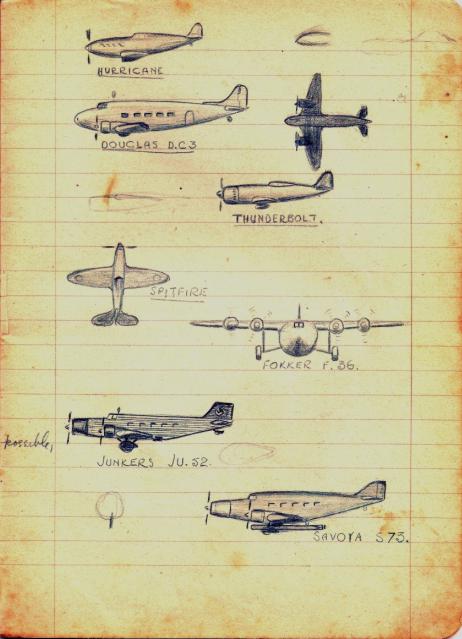
Only a few people had found their way outside when there was a roar & a Ju.52 appeared from behind the trees & flew low over the building. I looked up at it doubtfully, & was ready to jump in a small gap between the steps of the building, several more standing by, had the same idea apparently, for one or two edged over to the parapet wall. But nothing happened & in ten or fifteen minutes everybody was in threes in their respective sections, platoons, etc., & the roll called ready to march through the gap in the wire previously cut by the Italians.
It was about half past twelve when the first Company marched out through the gap with News hound [?]’s camera an’ all, recording forever that great event. How the Germans didn’t catch the whole batch that afternoon is something I don’t suppose anybody will ever know. Six hundred marched in threes across a main road to a previously arranged rendezvous on a river bank three miles N.W. of the camp. And how they didn’t catch them there is another mystery, for it was two days before the order was given to disperse, although many including myself pushed off on their own accord beforehand.
By the orders we received that afternoon one would imagine that we had the support of a couple of armoured divisions & ourselves armed to the teeth with automatic weapons. Sections were sent on patrols covering all the roads round about. But for some reason or other nobody saw any Germans, at least I never heard of anybody having seen any, which was lucky for us. Most of the information, in fact all of it, I think, came from Italians, among which was the news that back at the camp the Germans were selling our gear to the Italians. I decided after this that there was no point in returning to the camp, and looked about for a companion who was prepared to take a stroll south, but at this time nobody seemed to think it was necessary. This was about four in the afternoon. It will probably never go down in History, but it can truly be said I think, that six hundred Officers & O.R’s took the commune of Fontanellato in the face of the German Army, without guns, ammunition, or loss to themselves.
The Italian civilians greeted us with great enthusiasm & many wanted to do something to help us. They produced slowly six hundred cut civilian suits of some sort & fed everybody. But there was far too many just hanging around for any comfort. They looked at us in awe as if we were animals of some rare species that had just escaped from the zoo. But I didn’t mind that. It was the fact that they just stood in a crowd on a bank which if, in itself, didn’t attract attention & give the game away, I thought it quite reasonable to suppose that there would be at least one black sheep among them who would “blow the gaff” to the Gerries.
When it began to get dark all the patrols were called in & we were told to make preparations as if to stay the night, but at nine o’clock we were to move on farther. This was an effort to evade the civilians a little. I had nothing to make a bed with – not even a Great Coat, & I didn’t see much point in sleeping on a wet river bank when there was so many dry barns about, & I decided that after the move came off, I would climb into the nearest one. As things turned out I was in one quicker than I thought. It was almost dark when a lad of about twelve years rode a bicycle into the camp in a very excited condition & said that the Germans were a kilo away coming down the road in our direction. Quite a number decided then that it was time they went, & a crowd of about twenty, myself included went off down the river bank. Later I met S.S. somewhere near Bardi who said that he had given a youth some lira to come into our midst & start a panic to provide an excuse to go.
I soon decided that the crowd was too big so I nudged L.W. & went over the bank & L.W. followed. Shortly after larking around in the dark on the other side we saw a pair of white trousers walking across the field & a closer inspection proved them to belong to J.B. We three decided that the thing to do was to get our heads down somewhere. So we walk on a bit & after five or ten minutes saw a dim light through the grape vines. J.B. volunteered to investigate so L.W. & myself waited under the vines. After what seemed an hour but was only about ten minutes the pair of white trousers came walking out of the darkness once again. He reported that the light came from a cow stall inside of which three S. Africans. G.L. & V.G. Bros, were consulting maps torn from an ordinary school atlas. None of them turned out to be much good. We decided to go in & have a look, & it was here that I first regretted not having learned Italian. The S.A. G.L. seemed to manage all right, J.B. managed with a struggle to make himself understood but V.G. Bros, L.W. & myself were starting from scratch. We messed about in this stall for a time getting nowhere but when G.L. asked the contadino if we could sleep in his barn, he refused & said something about the Germans concentrating forty divisions in Italy & that it was too dangerous. We learned afterwards that he had been a big fascist.
However leaving him six of us crossed the river to try the other side. The first place we tried we were lucky. Five of us stayed at the house of G.P. & F.C. for three weeks. The sixth caused the remainder a certain amount of worry by pushing off the next morning dressed in G.P.’s Sunday suit, sunday shoes & his wife’s bicycle & we never saw him again although after two weeks & much bother retrieved the clothes & bicycle. Both G.P. and F.C. agreed to let us stay & there & then produced bread & cheese & wine – white bread, the first we had seen in two & a half years.”
So these SIX must have consisted of: the ANON Author; L.W.; J.B.; + 3 South Africans – (G.L. & V.G. Bros.?) and it seems it was not long after leaving Fontanellato that the six found themselves at the house of G.P. ( “Getto” Ponzi?) and F.C. and 5 of them stayed there for three weeks.
“G.P. told us he was Carabinieri & that when the armistice was arranged decided he didn’t like the Carabinier any more & came home. F.C. was much older told us how when he heard the armistice he had drunk more than his ration of vino & on his way home had fallen from his bicycle & knocked his front teeth out. We sat up in this hayloft talking, eating & drinking until about eleven o’clock, of course G.L. doing most of the talking. So we spent our first night in the hay. It was the next morning that G.L. donned G.Ps Sunday suit & disappeared into Fontanellato.
For three weeks all but a day we stayed working in the fields trying to make up our minds whether to go south or wait.
The condition of the Italian people, by condition I mean principally their education and morale or general outlook, after twenty years of Fascism, is such as to constitute a menace to the prosperity & peace of Europe. To begin with the majority of Italians believe that the streets of London really are paved in 21 K gold blocks. This is due largely to Italians that emigrate to England & return after ten or fifteen years loaded down with money, and also possibly the fact that those Italians in Italy find it easy to part English tourists from their money. Although I am quite certain that very often in these cases the Italian could show far more money than the English tourist, although it would be difficult to convince the Italian of this.
When one tries to explain to an Italian that in England, to play games or to have a holiday of some sort from which only amusement and not money is derived, is something that nearly everybody has, from the poorest to the richest, he looks at you doubtfully & says “yes but Italy is a poor nation.” which is quite right, but not in the sense that he means. The average Italian has no idea how to play games in spite of large stadiums built by Mussolini for the people in which to play. But this was all a part of the gloss to hide the dust & dirt underneath. Very impressive in photographs but Mussolini never made any attempt to teach the people how to use the sports stadium, in fact he made no attempt to teach the people anything except to have faith in him, in this he succeeded.
Where as in England the people believe in working a part of the time & then having some form of a hobby at which to amuse themselves, in Italy due probably due to the insecurity of life a large surplus of labour in the country a love for gold. An Italian is prepared to & does work all day & half the night for practically nothing, eating the very minimum of food value, & walking about in rags, having possibly one decent suit which he wears to church Sunday morning, changing back to his rags immediately on his return. He never spends a cent, & his house is barely furnished with primative benches & stools. It is easy to see how an Italian makes money in England, & without thinking of what he is doing to the living standard of English workers.“
The Allied advance eventually overtook the area and the unknown prisoner of war returned home. He left the following note in one of his notebooks to ask that the family be compensated for the loss of their house and business in several bombing raids in 1944.
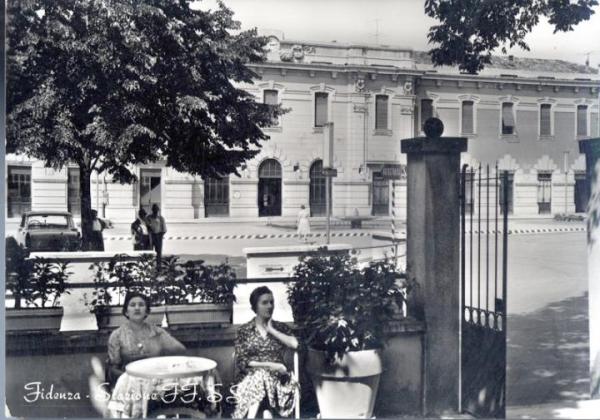
July The payment of Italian civilians for maintenance of Ex P.O.W’s in German occupied territory. This is to certify that the undermentioned family, has, at great risk to themselves, provided me with a billet, food & clothing, maintaining me in every possible way from 15th November onwards. This family, last November accepted me into their house at a period when all the communes in the mountains were garrisoned by very aggressive Fascist troops. Due to this the majority of the Italians were too terrified to have the ex-p.o.w’s even near their house; also there was some disappointment in the progress of the Allies in Italy who were at this time just across the Volturno River. This family accepted the risk & gave me a good suit of clothes & a bed. On May 2nd, their house was flattened when Allied planes bombed Fidenza. Eleven days later on the 13th May their business was lost in a second Allied bombardment. In spite of this & many [?] by Fascist & German troops I have never been asked to leave the house. Having no other means of living, it is vital that the business in Fidenza, the “Cafe Ballila” be opened again as soon as. Since the bombardment they have lived on capital it would be appreciated if a part or all of any payment forthcoming be made in stock for the café.
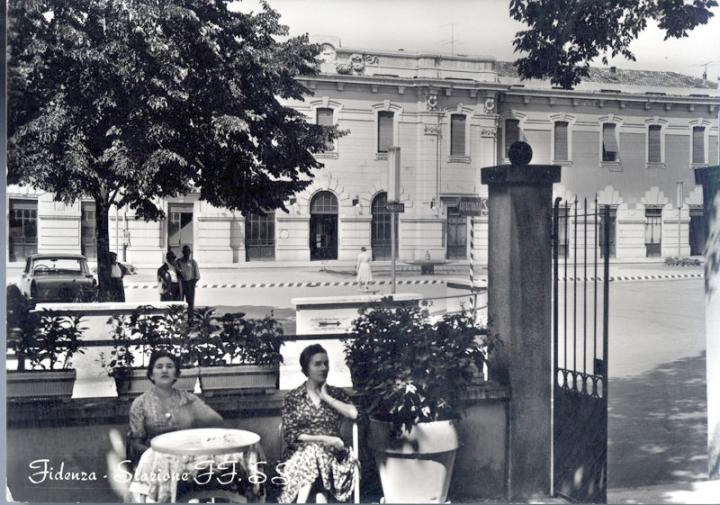
Contained in the ANON post were a number of photos, including a photo which described the Cafe Ballila strangely in Fontanellato whereas the picture clearly states that it is in Fidenza which ties in with the note above.
The Cafe Ballila in (Fontanellato?) Fidenza. Copyright: Ambrogio Ponzi.
Also contained in this ANON post was the following letter which again, frustratingly, gives no clue as to the Author. Although it does provide his Address and also an Address for ‘Patrizio’. Could this possibly be Major Patrick Voltelin de Clermont the Irishman Mark Hickman indicates in his intro who was with the 8th King’s Royal Irish Hussars?
31, Union Road, West Croydon, Surrey, England.
27th November 1946,
Dear Maria and Family,
Many thanks for all your cards, your letters and the photograph of Getto and Franca. I sincerely hope that Albertina is in better health. Give her my regards and tell her I hope that she will soon be well.
I am very sorry at not having written before, but so much has happened during the last few months, the most important being my demobilisation from the forces. I am now a civilian and working for my living(?), and do not particularly like it, however, one must live. In spite of a restless feeling I am managing to settle down and often when sitting in my stuffy office, I wish I were back on top of those mountains above Bardi.
Being of a naturally lazy disposition, lack of correspondence does not mean I do not think of you. My Italian is quickly leaving me: when recently I visited an Italian Restaurant, Genero’s in Soho, London, I found it very difficult to understand the Italian waiters, who spoke too quickly for me now. I did enjoy my plate of pasta suita though.
Beniamino Gigli has been singing in London recently but I was unable to get seats for any performance. There is also the San Carlo Opera Company from Naples touring England and we saw I Pagliaci and Cavaliera Rusticana, which were both excellently performed.
I have not heard from Giuseppe, Patricio or Giovanni for some considerable time now, but I suspect they are still about somewhere, either in Europe or the Pacific.
Egito and Franca didn’t seem to have altered much. In the photo Getto seems to be growing up – he will be too heavy for a ride “in gruppo” soon.
Sorry to hear that the price of everything is so high in Italy. In England too everything is getting more expensive everyday, although the price of food is maintained fairly steady, it is only because of rigid price controls and large sums of money being payed out by the government.
I am sorry I cannot send you Patrizio’s address because I do not know it, but you could address a letter to:-
Major P. De Clermont, The Cavalry Club, Piccadilly, London.
I believe it would find him.
My parents send their kindest regards and sincerely hope this finds all my friends well, in Italy. Sorry that I was unable to visit you this year but will try again next year.
All good wishes, Very sincerely yours,
As concluded by Mark Hickman in his ANON post, my thanks to Ambrogio Ponzi (“Getto”, as mentioned in the above letter) for this account.
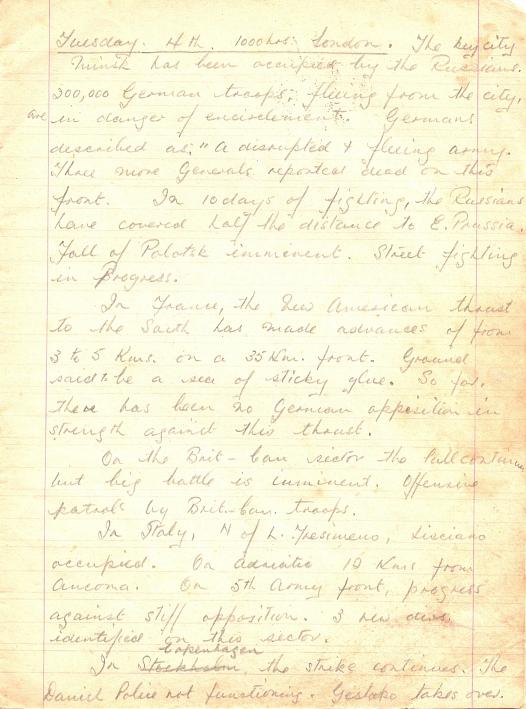
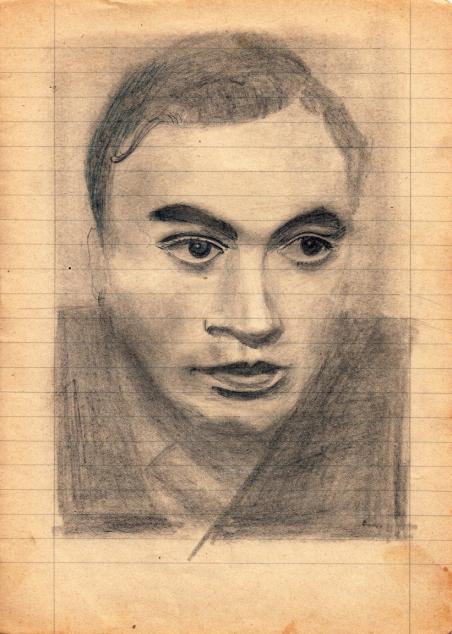
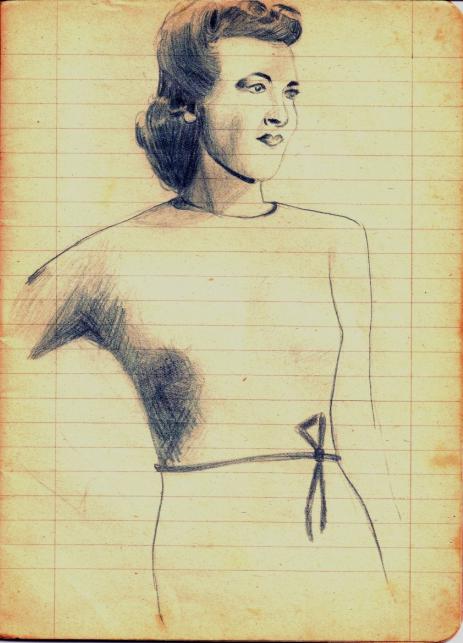
An example of the news reports from the exercise booksA sketch from the exercise booksA sketch from the exercise booksSketches of aircraftAll images Copyright: Ambrogio Ponzi
Finding Fontanellato was a bit like “Finding Nemo”. Yes, I had always known that my father had been in a POW Camp in Italy during WWII. Mainly because I knew that he had been told that his father had died on 10th March 1943 when he was a prisoner of war. But for the best part of half a century I had no idea Where in Italy? What Town? What did the Camp Look Like? Was it Still There? What had it been like Being Imprisoned There? Where did they go after being Liberated at the time of the Armistice? Question after question kept popping into my head.
After establishing in early December 2018 that my father had indeed been in PG49 in Fontanellato I couldn’t think of anything other than finding this place.
It was about this same time that my partner, Rex, and I had started to plan a trip to Europe to catch up with family and friends. Plans started to formulate in early 2019 and soon we had our itinerary set for stops in London, Malaga, Granada, Rome, Sarnano (to visit friends), Lucca (a pilgrimage for Rex to pay homage to Puccini), Verona (for an Opera at The Arena) and Venice before embarking on a memorable Cruise around the Baltic on the Queen Victoria.
London saw us take in the incredibly acerbic and riotously irreverent musical comedy “The Book of Mormon” at The Prince of Wales Theatre and the gloriously melodramatic Opera of “Tosca” at Covent Garden. That set us up for the most incredible journey into the Moorish Architecture and Arabic World of The Alhambra in Granada which is an experience I would recommend to anyone. But it was on returning from The Alhambra in Granada with my brother Graham and his wife, who had both brilliantly organised our glimpse into The Arabian Nights, to their holiday home in Estepona that the most incredible thing happened. As you can imagine both he and I had recently stumbled on this treasure trove of information on PG49 at Fontanellato, as provided by the Monte San Martino Trust. And consequently, all these questions which had been bouncing around in my head suddenly had a sounding board, which probably only succeeded in creating yet more questions.
Then, out of the blue, Graham said…. “I think you need to read this.”
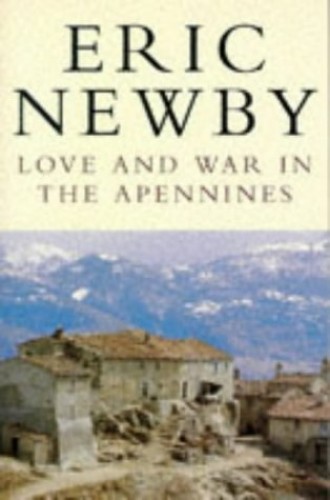
Eric Newby’s lifetime exploits are well documented (see Books) and none more so in relation to PG49 at Fontanellato than “Love and War in the Apennines”.
And what an extraordinary revelation it was. Not only was this man, Eric Newby, writing about his wartime experiences and capture off the coast of Sicily in August 1942. But he very soon afterwards pops up in PG49 at Fontanellato when he starts describing some of his experiences and life within the Camp. And suddenly I’m there……
“The prison camp was on the outskirts of a large village in the Pianura Padana, the great plain through which the river Po flows on its way from the Cottian Alps to the sea. The nearest city was Parma on the Via Emilia, the Roman road which runs through the plain in an almost straight line from Milan to the Adriatic.”
So now I know Where it Is! But there’s more!
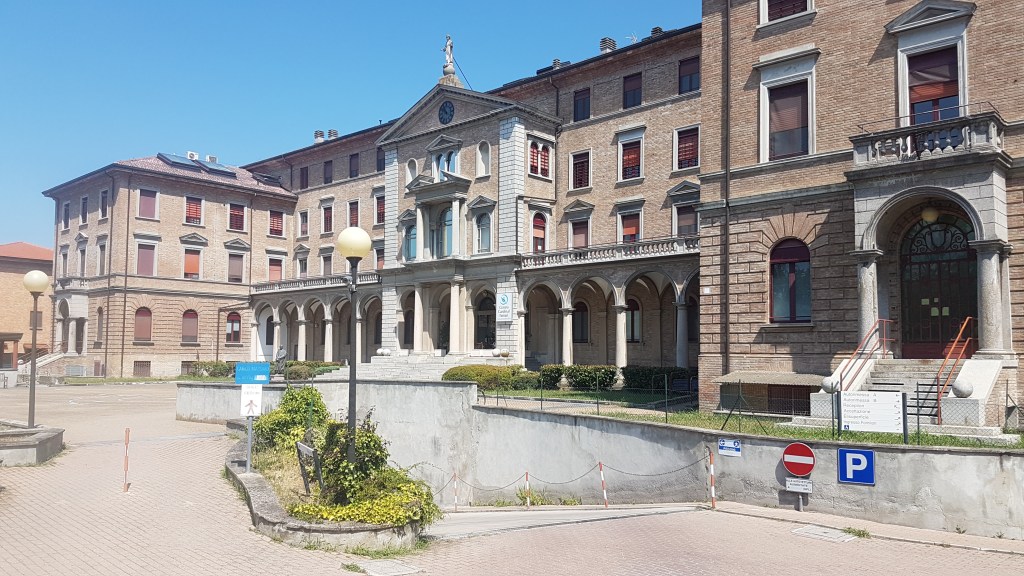
“The building in which we were housed had originally been built as an orfanotrofio, an orphanage…The foundations had been laid back in 1928, but the work had proceeded so slowly that the war began before it could be completed, and it remained empty until the spring of 1943 when it became a prisoner of war camp for officers and a few other ranks who acted as orderlies.”
And I now also know that it was a building! And it wasn’t just my Dad who was there! Yet more disconcertingly….
“It was a large, three storeyed building with a sham classical façade, so unstable that if anyone jumped up and down on one of the upper floors, or even got out of bed heavily, it appeared to wobble like a jelly.”
So, was it still there? Now I really HAD to find this place. It was at this point that I started trying to figure out if our carefully planned route through Italy could squeeze in an interloper. It wasn’t long before I worked out that our route from Lucca to Verona HAD to go in a certain direction. A quick check on Google Maps meant that our journey would no longer go via any of Florence, Bologna or Modena but instead go via Spezia, Parma, Cremona and Brescia. And only 40 minutes added to the planned 3 hour drive to our next destination!
Following my re-reading of Eric Newby’s book entitled “Love and War in the Apennines” I was reminded about a wonderful opportunity I was given as I was recovering from an operation I underwent in December 2020 to listen in on a Zoom meeting held by the Monte San Martino Trust on 16th May 2021 to commemorate the 50-year Anniversary of the book.
Professor Robert Tregay follows Eric Newby’s travels through Italy
The travel writer Eric Newby’s memoir Love and War in the Apennines was first published in 1971 and has been in print ever since. The book tells the dramatic story of Newby’s capture in Sicily in 1942, while on a commando raid, his time as a prisoner of war in Italy and on the run in the autumn of 1943 after the Italian armistice. He wrote the book as a tribute to the Italian people who risked their lives to assist him. To celebrate the 50th anniversary of the book’s first publication, Nick Young, chair of the Monte San Martino Trust, a charity founded by former British prisoners of war in Italy, hosted a discussion with Eric Newby’s daughter, Sonia Ashmore, and Professor Robert Tregay, who has researched the people and locations Newby describes.
The extraordinary thing I now realise with hindsight is that the opening words by Professor Robert Tregay in introducing his own book describing Eric Newby’s ‘Escape from Fontanellato’ was that I too was in the throes of being diagnosed with cancer and recovering from all sorts of hellish treatments and surgeries to ensure that I had a few more years left on this mortal coil to finish the journey I had commenced, prior to my diagnosis, of finding out about my Dad’s wartime exploits.
I have already wondered while reading this book myself, just what other relatives of POW’s are thinking when they have read it, but then I found out that someone else, who has no connection with Fontanellato or any other wartime exploits as far as I know, is as gripped by the story as I am and, like me, just wants to find out what actually happened. Or in my case where did my Dad go, and who was it that provided him with food and shelter, and what happened to some of the people he knew and met?
It was when I started reading the following extract from Professor Tregay’s summary of his investigations that I realised I was not the only person on the planet that was intrigued by this extraordinary period in time –
“Recovering from an operation six years ago, I was given Eric Newby’s book, Love and War in the Apennines, to read. “It’s my favourite novel,” my friend said, and it became for me the book which triggered one of the most thrilling adventures in detection of my life.“
Professor Robert Tregay – The True Story of Eric Newby’s “Love and War in the Apennines”.
It’s been about 4 years since I first read Eric Newby’s book entitled “Love and War in the Apennines” so I’ve decided to see if I can refresh my memory of the very feelings I had when I first read it.
And before very long you’re immersed in another world. And most importantly I’m aware that my own Dad was alive and experiencing the exact same circumstances that Eric Newby is describing. And you’re there. You’re walking the same corridors. Marching the same roads. Playing in the same exercise yard. And eating and drinking, yes drinking, wine and vermouth in the same rooms. My Dad’s favourite drink on a Sunday lunch after a few hours in the garden when we were living in Jersey, was a Gin and Dubonnet.
Actually, I think he used to say that it was the Queen Mother’s favourite tipple, but I now wonder if this taste for vermouth first came from his imprisonment in PG 49 at Fontanellato?
Whilst immersed in this book I start wondering if other relatives of these inmates at PG 49 have felt the same feelings that I am now experiencing once again. For suddenly you’re in Fontanellato. And not only that but you’re the one unfortunate who has broken his ankle, just two days before being released from captivity. As Eric Newby explains…
“….on the seventh of September, 1943, the day before Italy went out of the war, I was taken to the prison hospital with a broken ankle, the result of an absurd accident in which I had fallen down an entire flight of the marble staircase which extended from the top of the building to the basement while wearing a pair of nailed boots which my parents had managed to send me by way of the Red Cross.”
Hold on. Rewind! Did he just say “marble staircase”! What sort of POW Camp is this? And it’s only once you have seen it in real life, not just pictures from the Internet, that you get to appreciate the elegance of this grand old building. So how come my Dad didn’t mention any of this?
But this story of “Love and War in the Apennines” doesn’t end there obviously and, without going into a spoiler alert, it’s fascinating to learn that soon after sampling the intoxicating emotion and joy of being set free from captivity, Eric then faces what must have been an intolerable dilemma. Just a day after being set free from PG 49 at Fontanellato, he receives the worst possible news.
“Around eleven o’clock an Italian doctor arrived in a Fiat 500.He was an enormous, shambling man with grizzled hair, like a bear and one of the ugliest men I had seen for a long time.
He examined my ankle, which was rather painful after the strains to which it had been subjected, raised his shoulders, made a noise which sounded like urgh and went off to have a conference with the capitano.
‘The doctor says you must go to the hospital,’ the capitano said, when they emerged from their conclave.
‘But that means I shall be captured again,’ I said.
‘You’ll be taken away if you don’t…….. The doctor can get you into a hospital in Fontanellato. No one will think of looking for you there.’”
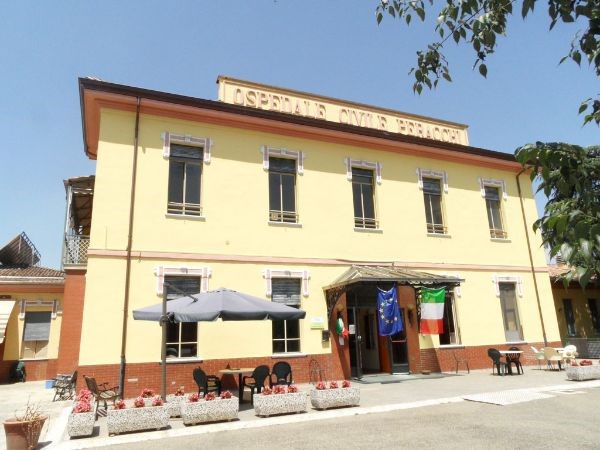
So, you’ve just experienced the euphoria of freedom to now finding yourself thrown back into the Lions Den of Fontanellato! Which by now is full of angry Germans who have just been betrayed and let down by the Italians. And very soon you’re lying in a bed in the Ospedale Peracchi on the outskirts of Fontanellato, only a few hundred yards from the orfanotrofio (Orphanage) which we now know to be the site of PG 49.
And suddenly I’m jumping on to my computer to see if I can establish if this Ospedale, or Hospital, exists. And sure enough a quick Google search comes up trumps. Sitting at Via XXIV Maggio 16 it’s just an 8 minute walk from Via IV Novembre 21 where the building housing PG 49 can also be found.
One of the first books that I came across while researching my father’s time in Italy was “Love and War in the Apennines”, by Eric Newby, which enabled me to immerse myself in the “Life and Times” of a POW “On the Run”.
The peasants are the great sanctuary of sanity, the country the last stronghold of happiness. When they disappear there is no hope for the race.
Virginia Woolf
“In 1943, Eric Newby escaped from the Italian prison camp in which he had been held for a year. Evading the German Army, he was sheltered by an informal network of Italian peasants. Love and War in the Apennines is Newby’s tribute to these selfless and courageous people and their bleak and unchanging way of life.”
Publishers – HarperCollins
To all those Italians who helped me, and thousands like me, at the risk of their lives, I dedicate this book.







 PG 49 at Fontanellato in Italy - The Story of allied servicemen who were held prisoner of war in this town in Italy in World War II