Flying up to Italy for the 80th Anniversary of the Italian Armistice that took place on (or about!) 8th September 1943 I was reminded of all the conflicts that had taken place in or around all the cities that kept popping up on my screen when I was checking on how our flight was progressing.
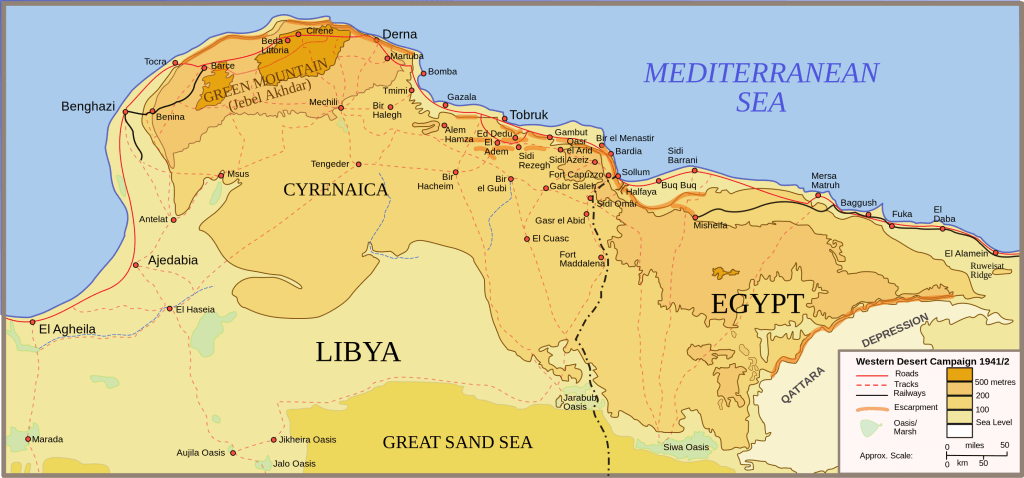
Most notably I had only just been learning that my own father had either passed through Alexandria or certainly close by it. And, just prior to engaging with Rommell and his Panzer Divisions in the Libyan/Egyptian Desert in 1942, leading to his ultimate capture and imprisonment at Fontanellato (PG49) near Parma in 1943.
Ice Cold in Alex
But then there was also Yalta which immediately conjured up visions of Churchill, Stalin and Roosevelt convening at that conference in 1945 at the end of World War II.
In February 1945, US President Franklin Roosevelt, British Prime Minister Winston Churchill, and Soviet dictator Joseph Stalin met at the Yalta resort in then-Soviet Crimea to finalize their strategy for the remainder of World War Two and forge a post-war settlement.
But my mind also took me even further back to the Crimean War. And really, what was that all about? Certainly, something to do with the decline of the Ottoman Empire. But what consequences did that have on the Russian psyche and where we are now?
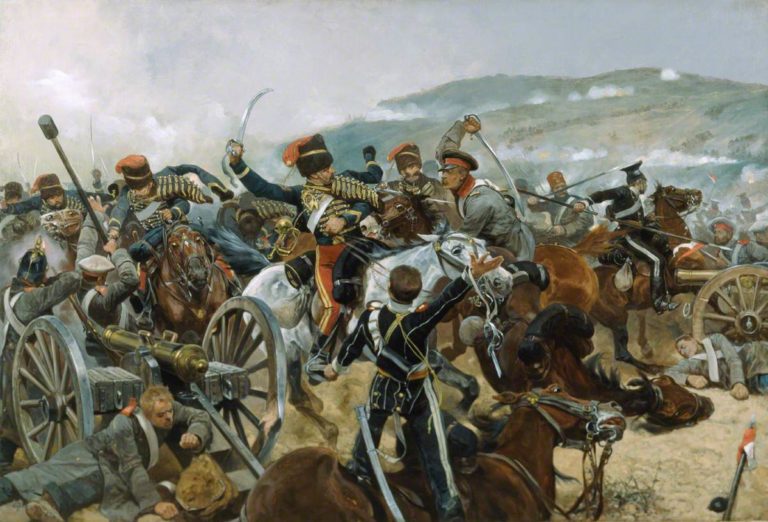
Lord Tennyson wrote in “The Charge of the Light Brigade”
“’Forward the Light Brigade!’
Was there a man dismayed?
Not though the soldier knew
Someone had blundered.
Theirs not to make reply.
Theirs not to reason why.
Theirs but to do and die.
Into the valley of Death
Rode the six hundred.”
And what about our recollections of Beirut. And what were the major factors that kept recurring with all these conflicts? Was it Religion, Oil, Power? What an extraordinary world we live in. And now, especially with Kiev in mind, we seem to just fly on by.
You know the feeling….you’ve been waiting for that bus for ages and when it arrives three others arrive at the same time?
Well, back in 2021, following some advice I had received from Anne Copley of the Monte San Martino Trust about researching my dad’s wartime record, I reached out to an organisation called WW2Talk but sadly unearthed very little about my father or his wartime unit in the Indian Army, which was the 4/11th Sikh Regiment.
Then, out of the blue, a few days ago (21st August 2023) one of the contributors to the site sent me a message explaining that he had seen the thread that I had posted about my father, Andre Graham Romain WILLIS, and his wartime Regiment and that, in May 2013 (possibly 2023?), he had “started a thread on the 18th Indian Brigade’s battle at Deir el Shein, where your father was taken POW. See: Deir el Shein sources – July 1942.“
Of course I was immediately curious as, although I had always known that my Dad served in the Desert Campaign and had been taken captive there, I had no real idea where that had been exactly, other than what I had recalled as a child and heard from my eldest brother who had recently written a chapter in a book about a period in his own life when he was in an unbeaten rugby side at King’s School Canterbury, in which he mentioned a little about Dad’s wartime experiences. But I had no recollection of hearing anything about Deir el Shein. Perhaps Tobruk and El Alamein, yet these were household names to children of my age. But my brother’s words had started my thoughts racing. The following is an extract from my brother’s book which had been prefaced by none other than, Sir Michael Morpurgo who had been head boy at King’s at the same time as my brother.
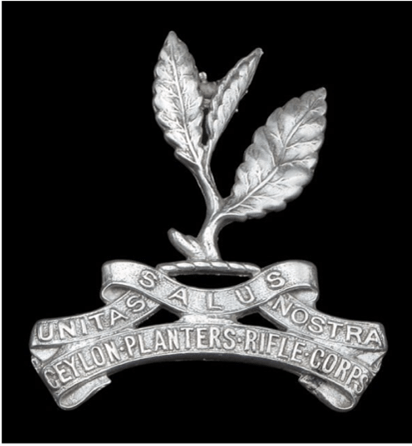
“When storm clouds gathered in Europe and war became inevitable all the young British tea planters and brokers were expected to join the volunteer regiment, the Ceylon Planters Rifle Corps (their cap badge was a tea leaf) and, when war broke out, they shipped up to India, where he enrolled in the 4/11 Sikh Regiment and was soon on his way to Egypt. He was one of 33,000 Allied troops captured at the fall of Tobruk in 1942 but escaped on his first night of captivity and, after two weeks during which he was given food and shelter by Bedouin tribes, made his way back to Allied lines on foot. Captured a second time he was sent to a POW camp in Italy where he escaped again and, for 6 months, found shelter with Italian communist villagers in the hills of Tuscany.”
N.T.G. Willis
Whenever I heard or read stories about the desert war, the only recollections I was left with of what my Dad talked about were that he spent most of his time walking backwards and forwards across the desert. But the names Mersa Matruh and El Alamein kept popping up in my head. I was very young when I heard this stuff for the first time so it’s hard to recall what is factual and what I think sounds like romantic war time heroics. But could any of this have been true? And what did this battle at Deir el Shein have to do with my Dad I wondered?
Well, it didn’t take very long to find out as the link I was provided with took me straight to a breakdown of the Battalion Diary of the 4/11 Sikhs in June 1942 that had been posted by another contributor to the site. And, as I’m rushing through it, I’m jotting down 1st June 1942 Erbil (is that Iraq?) and on to Mosul (yes it is Iraq!), Then on to Chadada (could that be Ash Shaddadi?). We’re heading west into Syria! 11th June on to Deir ez Zur and Palmyra on 12th June. 13th June Palmyra to Damascus – are they in a bit of a rush? 14th June sees them move on to Lajjun which appears to be near Haifa in then Palestine? And they then have about 5 or 6 days of training!
But then I nearly fall over backwards – the diary entry reads….
23 June 1942 Road party in unit M.T. under Willis & Ward, who had just returned off a Commando Course, left at 0500 hrs. Remainder of Bn left for HAIFA EAST railway station starting at 0645. Everybody entrained by 0945 & train left at 1005 hrs for KANTARA.
“Willis & Ward”! It sounds like I’m suddenly in a truck with my Dad belting along the Mediterranean coast with a whole contingent of Sikh soldiers heading towards the Suez Canal and the main port of what must be El Qantara and on to possibly Cairo or Alexandria? But the next couple of entries suddenly make you realise that you’re heading right smack into a war zone and not only that, but Rommel is in a hurry to blast straight past you following the fall of Tobruk!
The final destination for the Regiment is a place called Galal, but the German thrust eastwards means they suddenly have to withdraw back to Daba, which today now looks like El Dabaa, just west of El Alamein.
The next diary entry reads….
24 June 1942 Arrived KANTARA on time at 0200 hrs. Men got tea & by 0430 everything had been ferried across the canal & all loaded up in train ready for move. The train left at 0500 for SEMILLA which was some 15 miles from MERSA MATRUH. This obviously indicated a change in plan as our road parties were definitely ordered to Cairo. Some of the mess servants got left behind on departure but they caught up later as they were brought along by 2/5 ESSEX REGT. Arrived AMIRYEH at 1500 hrs where we had a two hours halt & the men were able to cook food. Left at 1700. Up to now we had been running well on time. From now onwards slow progress & sometime during night halted short of DABA. Moved again but then halted soon after owing to the train running out of water. Were passed by 2/5 ESSEX train. Eventually got water & arrived at DABA 1600 hrs. After another 20 miles or so the train halted about a ¾ mile short of GALAL where the ESSEX had also halted. Some doubt as to reason.
Yup! The Diary said “MERSA MUTRUH”!
25/26 June 1942 Obliged to spend night here although had to be ready to move at a moment’s notice. Continual air activity on both sides. The enemy dropped flares & soon realised the situation. As a result both us & the Essex were bombed. One stick bursting very close to the train. Unfortunately everybody was not able to get clear in time and 7 were killed & 18 wounded. Of the wounded 2 later died in hospital. The remainder of the night was spent lying dispersed away from the train. No further bombing directed on us but not much sleep obtained & a most unpleasant return to W.D. However all well next day & jawans [??] cheerful.
But where’s my Dad in all this?
26 June 1942 At 0745 hrs the train was ordered to move back to DABA, where we arrived at 1200. After a short halt we moved back to EL ALAMEIN & came under 1 S.A. Div. Went into a dispersal area N.W. of station at about 1415. At about 1600 Willis & road party arrived. They had gone to DABA but had been sent back from there.
PHEW! And yes that was “EL ALAMEIN”! My Dad went into Battle at El Alamein! And I now know that the 4/11th Sikh Regiment was rather hastily put together as part of the 18th Indian Infantry Brigade that was allocated a defensive Box at a small depression called Deir el Shein just to the west of Ruweisat Ridge together with:-
2/5th Battalion The Essex Regiment
2/3rd Gurkhas Rifles
121 Field Regiment Royal Artillery
Plus Field Ambulance, Work Section, Brigade Transport Section
I’m so grateful for this wonderful response from my new found friends at WW2Talk and I am so looking forward to meeting up with people in Servigliano in a few weeks time whose fathers were also in Fontanellato with my Dad. I’m so curious as to how he ended up there as it appears that there are no other Sikh Regiment officers in that camp, although there are quite a number of Indian Army regiments represented.
4 years ago, in July 2019, just prior to my Cancer Diagnosis and the World shutting down with Covid, I was lucky enough to discover a small village in Italy called Monte San Martino while holidaying close by in the foothills of the Sibillini Hills in Le Marche, at the home of an old school friend.
I had just started investigating the wartime exploits of my father and had discovered that he had been a Prisoner of War (POW) in Fontanellato, near Parma in Italy.
Unfortunately, as I was just starting out on my journey to piece together my Dad’s wartime experiences in 2018, the Monte San Martino Trust had been celebrating the 75th Anniversary of the Italian Armistice, and this had taken place in September 2018 in Fontanellato, the very Prison Camp my father had been a POW.
The Monte San Martino Trust celebrating the 75th Anniversary of the Italian Armistice in Fontanellato – September 2018
But there had been several other Anniversaries in Fontanellato that I had known nothing about. The first that I came across was when I first stood outside the gates of Dad’s wartime prison, the “Orfantario” (The Orphanage), in 2019 while Rex and I had been driving from Lucca to Verona, which indicated the 40th Anniversary had taken place on “11 SETTEMBRE 1983”. Although the date below it appeared to indicate 11th September 1965?!
Then notably the 60th Anniversary which also took place in Fontanellato in September 2003.
And inside the building yet another plaque that indicated the 70th Anniversary that had been celebrated in Fontanellato on 8th September 2013.
But this year, 2023, will mark the 80th Anniversary of the Italian Armistice on 8th September 1943 and I am lucky enough to be returning to the area we visited in 2019 known as Le Marche (pronounced luh mahr-kay) to join in with those celebrations in the villages of Servigliano and Monte San Martino that are being co-ordinated by the Monte San Martino Trust in conjunction with the Escape Lines Memorial Society (E.L.M.S.) and the Casa Della Memoria Association.
The Monte San Martino Trust was started by Keith Killby, a former inmate of the nearby POW Camp (PG 59) at Servigliano, who had sought shelter in the nearby village of Monte San Martino shortly after the release of the prisoners into the Italian countryside.
And it is the Trust that has provided me with snippets of information about my father and the time he spent as a POW, together with a few pieces of the jigsaw that saw him being released and his subsequent journey through the Italian countryside in his attempts, presumably, to reach England. Or at the very least re-uniting with Allied forces in Italy or reaching the wartime sanctuary and safety of neutral Switzerland.
This website that I have created tells of my own journey of discovery in piecing together this puzzle in the hope that it provides us with a glimpse into the extraordinary kindnesses and sacrifices that were made by so many Italian families who provided the nourishment and shelter that thousands of Allied soldiers received after their release from captivity.






 PG 49 at Fontanellato in Italy - The Story of allied servicemen who were held prisoner of war in this town in Italy in World War II