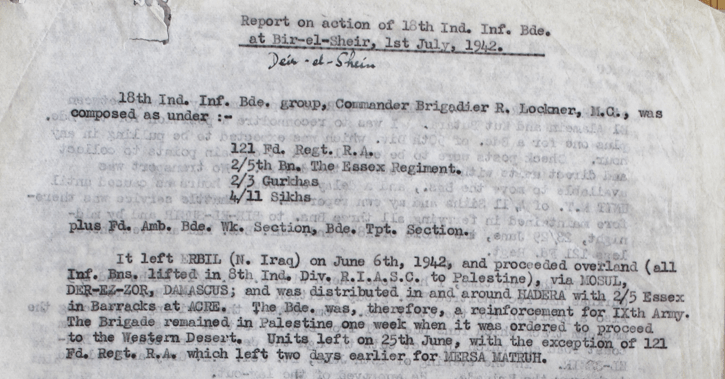
THE PARTICIPANTS

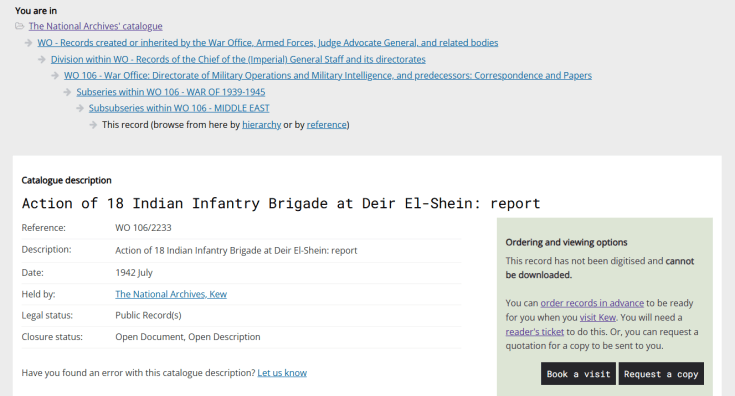
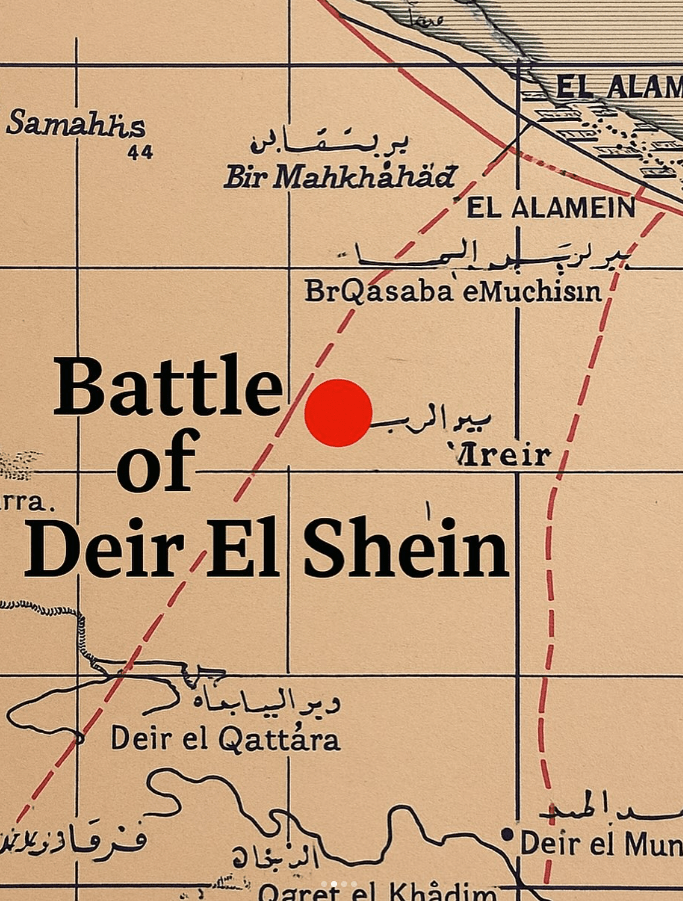
In an extract from a Post submitted to WW2Talk entitled “Deir el Shein sources – July 1942” we see from the War Diary of the 4/11 Sikh Battalion that the Brigade consists of the following, which ties in nicely with the Diary (above) of 2/5th Bn. of the Essex Regiment submitted by Lieut. Col. K.F. May: –
- In the box itself were –
- 2/5 Essex,
- 4/11 Sikhs,
- 2/3 Gurkha Rifles,
- 66 Field Coy S & M,
- 4 medium M.G. manned by the Cheshires,
- 7 Matilda tanks manned by scratch crews from 42 R.T.R.
- while the arty consisted of 18 (?) 25 pdrs manned by 121 Field Regt & 79 Field Regt,
- approx 20 2 pdr A/Tk guns manned by unit’s, South Africans & some of the WELSH Regt
- also 16 (?) 6 pdr A/Tk guns manned by ?
- In addition of course was an Advanced Dressing Station (A.D.S.) from 32 Field Ambulance & some S.A. sappers with compressors.
I’m also learning from my WW2Talk friends of some of the participants both in the 2/5 Essex and also that of the 32nd Field Ambulance, both of which were there in support of 18th Indian Infantry Brigade. Firstly, a wonderful epitaph from the son of a Doctor with the 32nd Field Ambulance.
This is remembering all doctors & medical staff and the contribution of the Indian Army throughout WW2.
“My dad, a doctor, already a veteran of Dunkirk, was promoted to Acting Lt Col on 22nd June 1942 to become Commanding Officer of the 32nd Field Ambulance attached to the 18th Indian Army Brigade.
They played a critical role in the Battle of Deir el Shein on 1 July 1942. This engagement marked the beginning of the First Battle of El Alamein, where Axis forces under General Erwin Rommel attempted to break through to Alexandria.
The 18th Indian Brigade, recently arrived from Iraq, was ordered to hold a defensive position at Deir el Shein to delay the German advance.
The 32nd Field Ambulance established its main dressing station close behind the infantry positions, within range of artillery and tank fire. Throughout the day, the medical officers and orderlies worked under intense bombardment, treating wounded men from both the brigade and neighbouring units. Despite heavy shelling and repeated attacks by tanks and aircraft, the unit continued to operate until overrun in the late afternoon.
When German armoured forces broke through the defensive perimeter, the 18th Indian Brigade was effectively destroyed. Most of the 32nd Field Ambulance’s personnel, including medical officers, were killed, wounded, or captured. Only a handful managed to withdraw eastward to regroup with Eighth Army medical formations.
Their stand at Deir el Shein delayed Rommel’s advance by nearly a full day, allowing British and Commonwealth forces to organise the El Alamein defensive line. This delay proved decisive in halting the Axis drive toward Egypt and contributed directly to the later Allied victory at El Alamein.
My father unlike many of his colleagues survived to rejoin other 8th Army medical units, to then serve in Burma, and after D day in Germany responsible for a Displaced Persons Camp for 14,000 persons.“
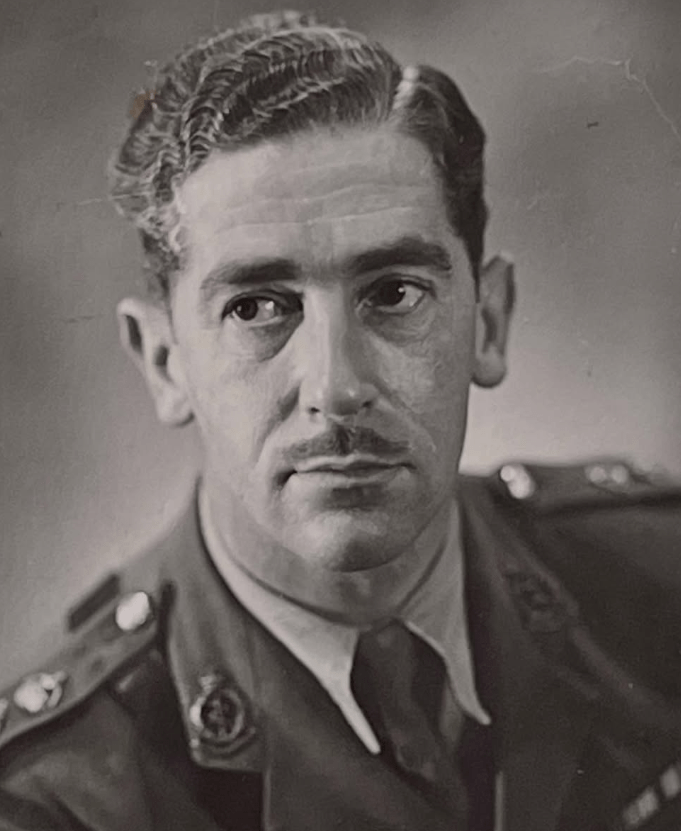
At the 2nd Battle of El Alamein – “…he took command of a field ambulance/casualty clearing station after his senior officer had a breakdown, this was attached to an Indian Army division. In the chaos and fog of war the vehicles got lost, and were captured by retreating troops of the Afrika Korps. He worked alongside German doctors, who had large numbers of wounded; to treat all patients according to medical need. In return his captors agreed they would release them. The following morning this agreement was honoured, their German guards had gone.“
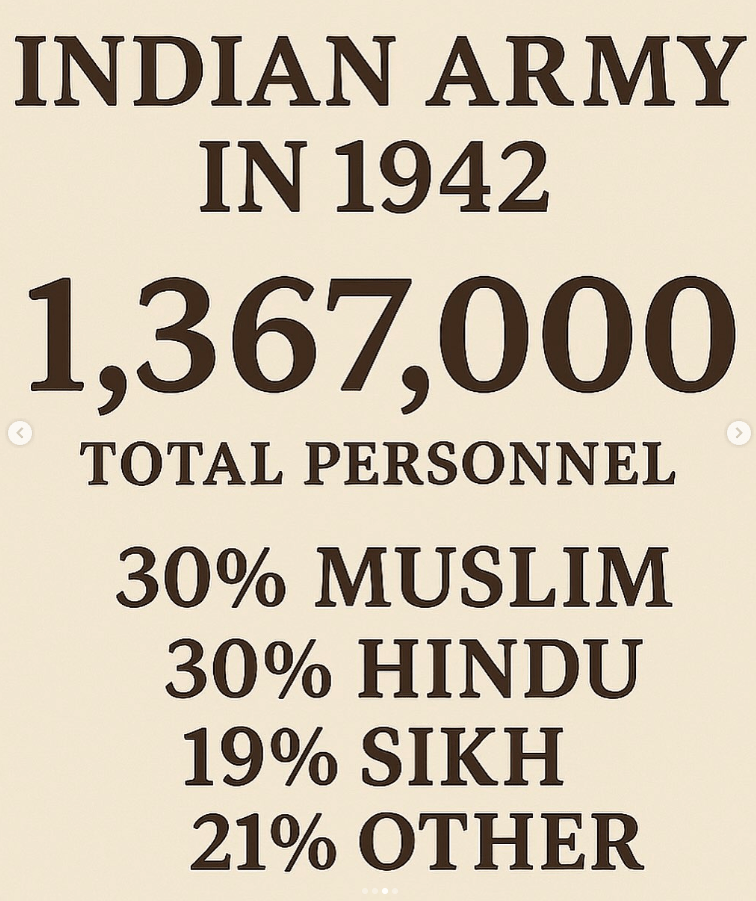
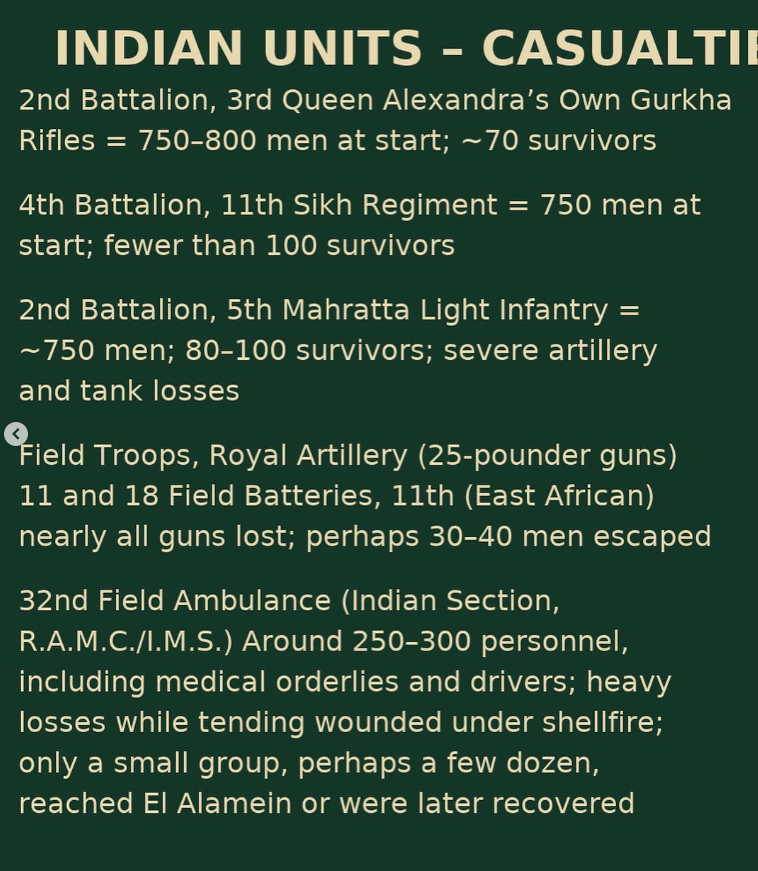
“We owe a debt to men like your father & mine. Their experience needs to be known, and understood for all generations.” Thank you Miles I couldn’t have said it better myself.
The story of the 2/5 Essex seems somehow even more harrowing –
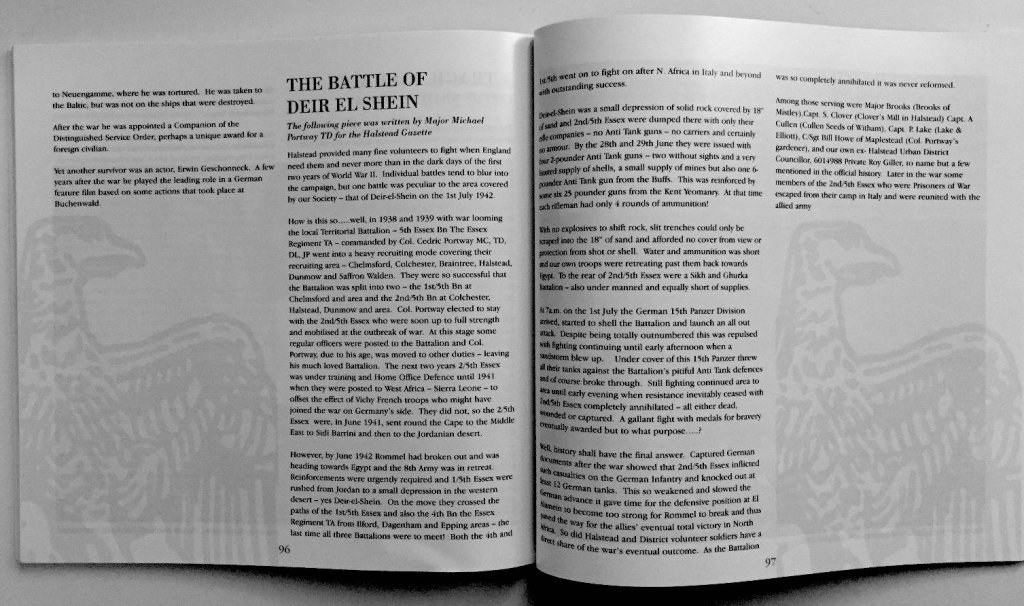
“Deir-el-Shein was a small depression of solid rock covered by 18 inches of sand and 2nd/5th Essex were dumped there with only their ****? companies – no Anti Tank guns – no carriers and certainly no armour. By the 28th and 29th June they were issued with four? 2-pounder Anti Tank guns – two without sights and a very limited supply of shells, a small supply of mines but also one 6-pounder Anti Tank gun from the Buffs. This was reinforced by some six 25 pounder guns from the Kent Yeomanry.
At that time each rifleman had only 4 rounds of ammunition!“
Written by Major Michael Portway for the Halstead Gazette.
The above information is supported by Post No. 369 of the same WW2Talk Thread about Deir el Shein which links to the Auction of a set of medals awarded to the Company Quarter-Master Sergeant W. H. Howe, Essex Regiment, who was taken P.O.W. after the 2/5th Battalion’s gallant last stand at Deir-el-Shein on 1 July 1942.
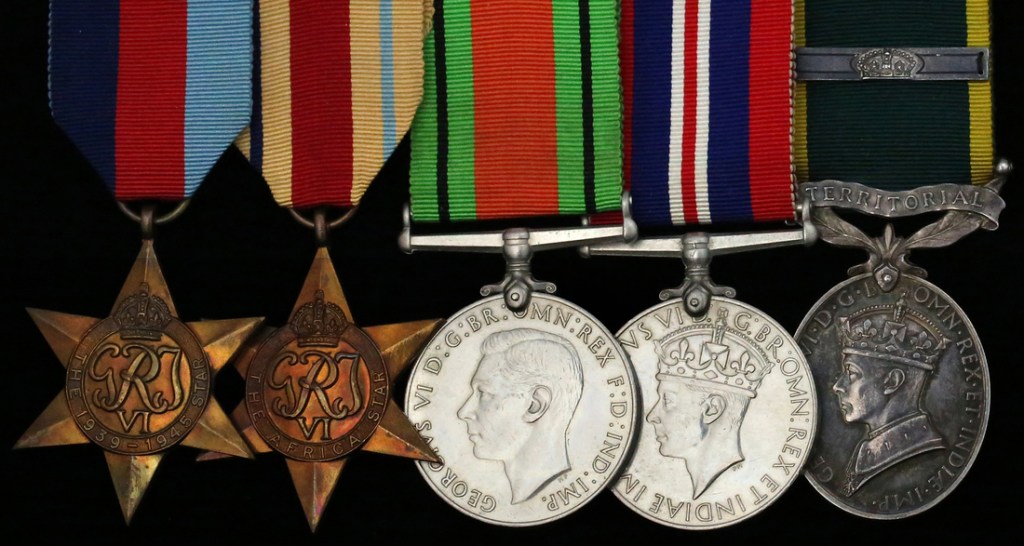
William Harry ‘Bill’ Howe, a native of Great Maplestead, Essex, was born on 24 August 1907. A gardener by profession, he enlisted in the 5th Battalion, Essex Regiment (Territorials) in October 1925. Mobilised in September 1939, the Battalion was embarked for the Middle East in December 1940 and served in Palestine and Iraq in 1941-42. Following his capture at Deir-el-Shein on 1 July 1942, Howe was held at Fermo in Italy prior to being transferred to Stalag 4B at Muhlberg, on the Elbe in September 1943. He was finally liberated in April 1945.
It is accompanied by an extract of the same page above: –
‘Deir-el-Shein was a small depression of solid rock covered by 18 inches of sand and 2/5th Essex were dumped there with only their rifle companies – no anti-tank guns, no carriers and certainly no armour … with no explosives to shift rock, slit trenches could only be scraped into 18 inches of sand and afforded no cover from view or protection from shot or shell … At 7 a.m. on 1 July 1942 the German 15th Panzer Division arrived and started to shell the Battalion and launch an all out attack Despite being totally outnumbered this was repulsed with fighting continuing until early afternoon when a sandstorm blew up. Under cover of this 15th Panzer threw all their tanks against the Battalion’s pitiful anti-tank defences and, of course, broke through. Fighting still continued area to area until early evening when resistance inevitably ceased with 2/5th Essex completely annihilated – all dead, wounded or captured.’
Accompanying article by Major M.C. Portway, T.D., refers.Also at Deir el Shein with 2/5 Essex was Stanley William DOWLING –
- My dad was a private infantryman in 2/5 (TA) Essex Battalion. He joined up around Nov 1939 and initially had training at Warley Barracks near Brentwood. His army number was 6018306.
- He sailed to Egypt via Freetown and Durban and I believe arrived in North Africa in late July 1941. He was in MEF 27th General Hospital in Aug ‘41 with rheumatic fever.
- 10 months later I think he was in the Battle of Deir-El-Shein near El Alamein where he was taken prisoner. Initially he was kept in a camp in Benghazi where he contracted amoebic dysentery and malaria; next I have a record that he spent 7 months in Caserta Military Hospital, Naples before being transferred to POW Camp Sforzacosta near Maserati, Italy.
For more on 2/5 Essex see – WO169/5013 – 2/5th (East) Bn The Essex Regiment
On cover:- Jan – May 42 WD.
2/5 (East) Bn, The Essex Regiment, 18 Indian Infantry Brigade, 8 Indian Division.
In Jan 1942 they were in Mosul. There was no narrative for Feb 42, and by March 1942 they had moved to Erbil, moving to Baquba on 18th March. They moved back to Erbil on 22 April 1942 and were still there on 31 May 1942.
May – “Final – Reduced to cadre and finally dispersed in Jan 1943”.
WO 169/4006: XIII Corps (G Branch) June to August 1942.
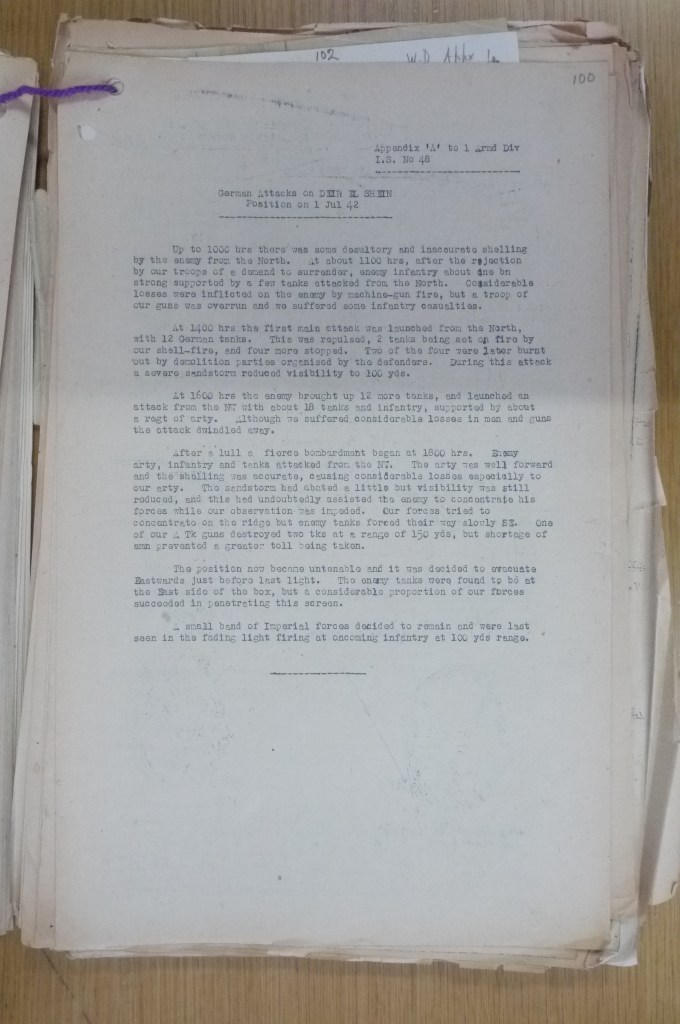
Following 2/5th Essex account of being overrun at Deir el Shein on 1/7/42
Finally, a most appropriate summation of 4/11th Sikhs at Deir el Shein from the Feldgrau Forum submitted by DocAmerica:-
“As for the 18th Brigade at Deir el Shein, the 4/11th Sikhs were on the NW of the box, the 2/5 Essex on the NE, the 2/3 Gurkhas on the E in a semi circle, and the 66th Field Company of Sappers & Miners on the SW.
They were supported by 7 Matildas of the 42nd Royal Tank Regiment, 4 medium machine guns of the Cheshire Regiment, 2-pounders and 6 pounders manned by South African and Welsh units. Oh, and the 32nd Field Ambulance had an Advanced Dressing Station too.
Sorry, I don’t really remember all the other units outside of the main battalions of the 18th Brigade since there was a huge mess in setting up the box, the 18th Brigade had no signal equipment, very little ammunition, and the supporting artillery came in too late and because the area of Deir el Shein was bedrock, there was not enough time to dig the guns in.
As for the result of the battle, the Sikhs were overrun at 1730 hours, the Gurkhas at 1900 hours and Essex by 1930 hours. The Sikhs lost 3 officers and 370 other ranks with 7 officers and 500 other ranks missing. The Gurkhas lost 12 officers and 580 men, not sure of how many missing, but their commanding officer was captured.“
 PG 49 at Fontanellato in Italy - The Story of allied servicemen who were held prisoner of war in this town in Italy in World War II
Leave a comment