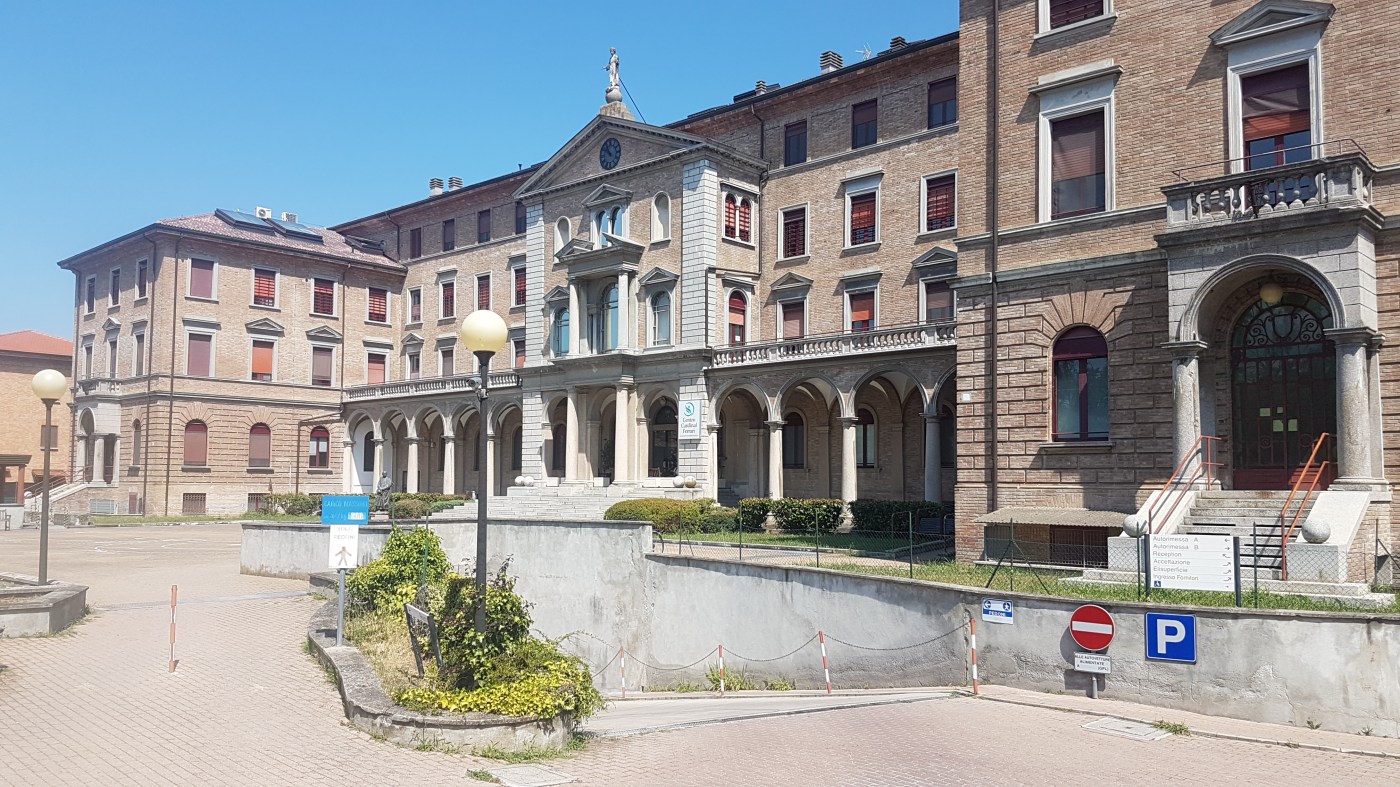
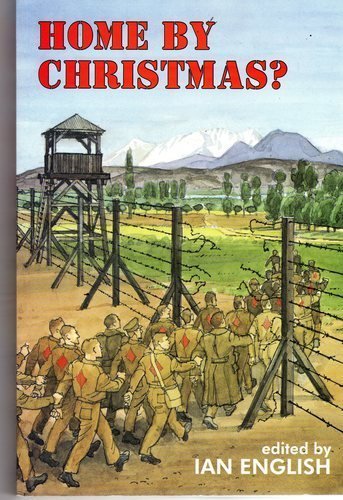
One of the great things about being handed a ‘Gift’, such as this book that I recently received, edited by Ian English, entitled “Home by Christmas?”, is that it feels as though it provides me with an entirely fresh set of paints with which to paint my picture.
For me, learning about where my Dad was during the period 1939-1945 and reading about the people that he was with during that period, is helping me to picture what life was like for him during this tumultuous period in our history.
And so, when pouring through the pages of this book I can’t help but stop to dip my paint brush into the names and events that pop up on each page. And I find myself confirming things such as, yes this person does appear in my Roll Call, or that person performed this role in the Camp and, goodness, that’s what his nickname was. And so they become real people. Not just epitaphs, but REAL people. And part of me wants to be there.
And one of the greatest benefits of being handed this new box of paints is that it unearths, or maybe just cements for me, the role that these men played in this very poignant time in our lives. And I am thrilled when I see names popping out of the pages that I’m reading of this 1997 Edition of the book Edited by Ian English, of “Home by Christmas?”: –
- and immediately Page 13 starts off with Peter Langrishe describing the setting of PG 49 at Fontanellato, explaining that “Behind was a field about 2 acres in size which we were given permission to turn into a playing field. Here rugby, soccer and basketball were played with gusto….. It later provided the opportunity for a small number of inmates to escape, as described by Toby Graham…”
- It goes on to portray that “The prisoners enjoyed a tolerable standard of living due mainly to the expert catering ability of Lieut. Leon Blanchaert, a Belgian serving with the British army who spoke six languages, including Italian.“
- And, their “allotment of Red Cross Parcels – one per man per week – was not distributed individually, but was taken into a central store under the control of C.D. ‘Kit’ Patterson…“
- Also, “A popular venue was a bar run by Tommy Pitman, which opened for late morning and evening sessions. One could buy vermouth which was drinkable and either the cheap vino ‘molto ordinario’ which was quite dreadful, or more expensive wines, always provided one had the wherewithal.”
- And further on “An amusing and interesting feature of camp life was the activities of ‘Opportunities Ltd.’ or ‘Opps’. This was a loose organisation run by Pilot Officer Bill Rainford or ‘Rainy’ as he was known. ‘Opps’ provided a multiplicity of services, for which he charged 10%, such as tailoring, watch repair, recovery of cigarette lighters dropped down loos, exchange of clothing, and also chocolate and cigarettes; in fact, almost anything except a means of escape from the camp.”
- Also present were of course:-
- Lt.-Col. Hugh Mainwaring who had been G.S.O.1 (Operations) at 8th Army Headquarters.
- And the American journalist named Larry Allen, who had been on H.M.S. Ark Royal when she was sunk in the Mediterranean.
So, quite apart from being a great read, this book is confirming for me so many details, not only of life in the camp, but the men and the roles they played in its day-to-day function,
 PG 49 at Fontanellato in Italy - The Story of allied servicemen who were held prisoner of war in this town in Italy in World War II
Leave a comment