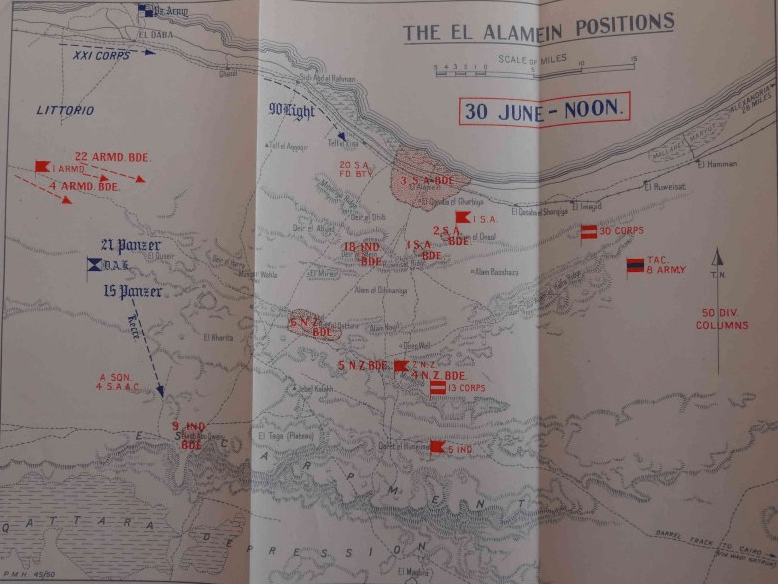
The First Battle of El Alamein
Following on from my first Post about Deir el Shein and, as I continue to stumble upon fragments of my father’s wartime story, I’m starting to piece together the lives of so many men that he was ultimately to become associated with in PG 49 at Fontanellato. But how had it amounted to this?
“When General Norrie assumed command of the [Alamein] Line, after handing over Matruh on 23 June, he was disturbed by the wide gaps between the three fortified positions, but could do little with the troops at his disposal. Even the original boxes could not be adequately held, but he did try to fill the gap between El Alamein and Bab el Qattera by the establishment of a new position at Deir el Shein, which he assigned to 18th Indian Infantry Brigade…” – From Crisis in the Desert, p.272
And I already know that, from the story of Lieutenant Graham Francis OLDHAM, and notably Post #321 of a Thread on WW2Talk and Post #17 above:-
“Officer Commanding 18th Indian Infantry Brigade Signal Section. WWII. Western Desert Campaign. Published citation: In recognition of gallant and distinguished services in the field. No recommendation—For his conduct at Deir el Shein on 1 July 1942 in the First Battle of El Alamein during the Western Desert Campaign prior to being captured when the brigade was overrun.”
From a footnote: Captured in the Western Desert on 1 July 1942 and held in Italy at Campo 49 (Fontanellato) and at Oflag 79 at Brunswick, in Lower Saxony, Germany. (LG 11 April 1946; 37528, p. 1835.)
“So, was this when my Dad was captured in the Desert too?”
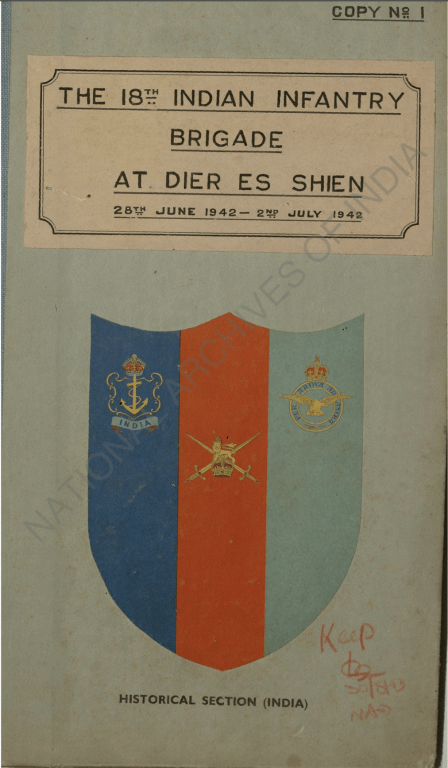

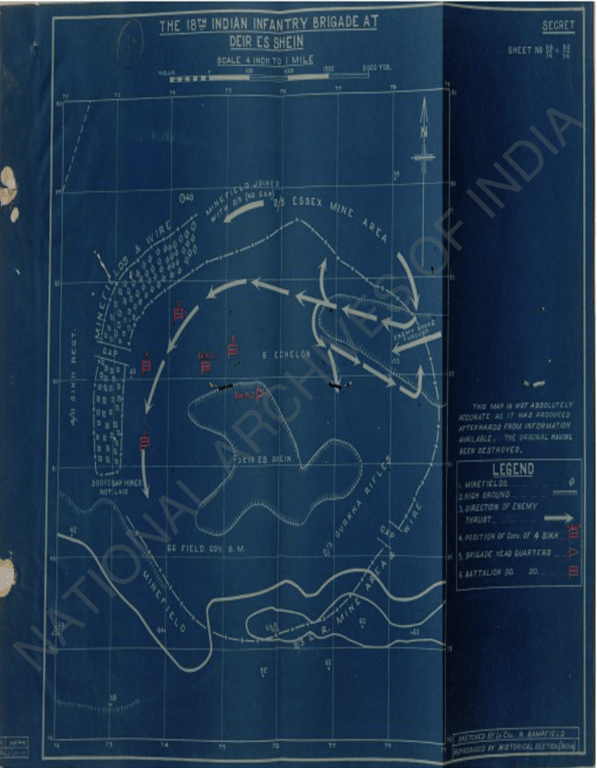
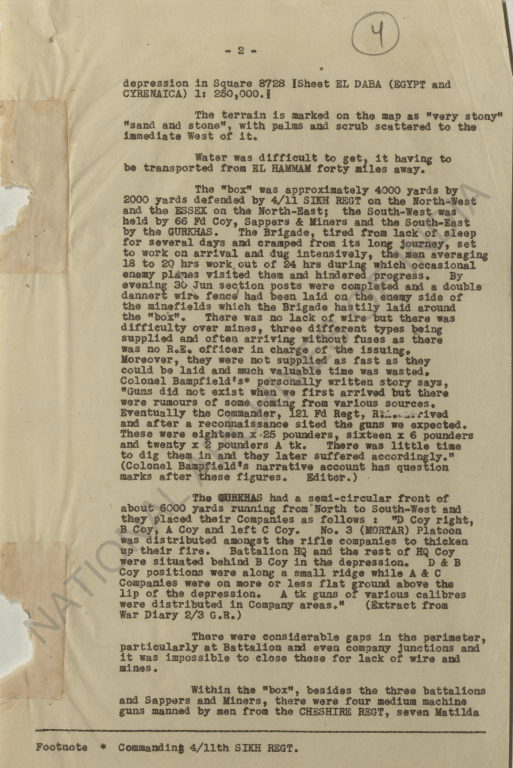
It’s very clear that 4/11 SIKH REGT is at the North West corner of this “Box” at Deir El Shein, 16 miles south of El Alamein, and I’m getting the distinct impression that my Dad is at the sharp end of an inevitable thrust by the Desert Fox, Erwin Rommel, himself.
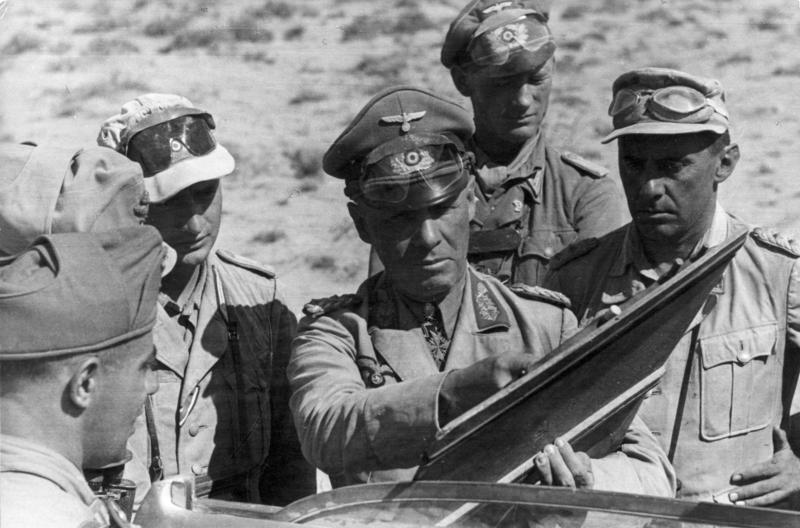
A further Google search brought up something called the Feldgrau Forum providing information about:-
2/11th Sikh Regiment and 4/11th Sikh Regiment
“As for the 18th Brigade at Deir el Shein, the 4/11th Sikhs were on the NW of the box, the 2/5 Essex on the NE, the 2/3 Gurkhas on the E in a semi circle, and the 66th Field Company of Sappers & Miners on the SW. They were supported by 7 Matildas of the 42nd Royal Tank Regiment, 4 medium machine guns of the Cheshire Regiment, 2-pounders and 6 pounders manned by South African and Welsh units. Oh, and the 32nd Field Ambulance had an Advanced Dressing Station too. Sorry, I don’t really remember all the other units outside of the main battalions of the 18th Brigade since there was a huge mess in setting up the box, the 18th Brigade had no signal equipment, very little ammunition, and the supporting artillery came in too late and because the area of Deir el Shein was bedrock, there was not enough time to dig the guns in. As for the result of the battle, the Sikhs were overrun at 1730 hours, the Gurkhas at 1900 hours and Essex by 1930 hours. The Sikhs lost 3 officers and 370 other ranks with 7 officers and 500 other ranks missing. The Gurkhas lost 12 officers and 580 men, not sure of how many missing, but their commanding officer was captured.” – by DocAmerica Sun Aug 28, 2011: Moderator John W. Howard
One of my few recollections of my Dad talking about his wartime experiences was a very brief reference to suddenly being surrounded by German forces somewhere in the middle of the desert, ultimately leading to becoming a Prisoner of War in Italy. But that was it and how I wish I had pushed for more information then rather than looking now for lots of little needles in this vast haystack.
I already know that the very first post written by Tom O’Brien on Deir el Shein sources – July 1942 had identified the following list of 10 British Officers present with the Battalion on the midnight of 30/6/42. Sourced from WO169/7773 – The Battalion Diary of 4/11 Sikh Regiment. Commanding Officer – Lieut. Col. R. Bampfield.

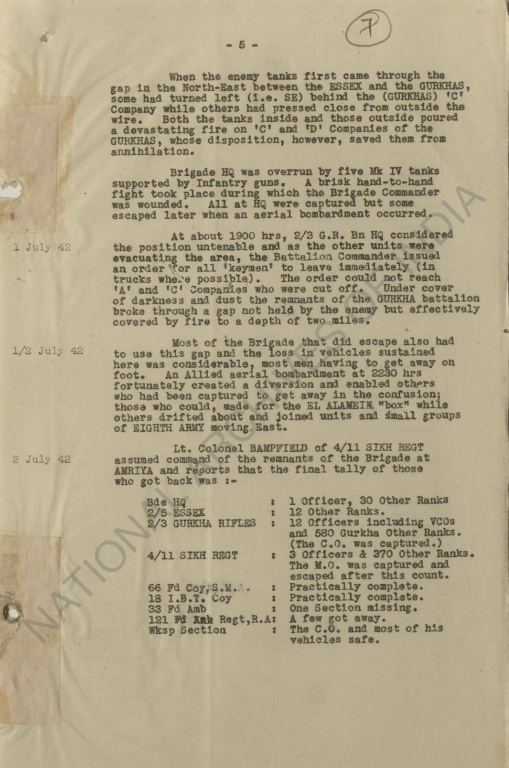
So, of the 10 British Officers of the 4th Battalion 11th Sikh Regiment listed above only 3 officers, together with 370 Other Ranks, were recorded as being present at Amriya on 2nd July 1942 when the Roll Call was carried out. And these appear to have been:-
- Lieutenant Richard Bampfield1
- T/ Capt. Simon Anthony Cunningham (S.A.C.) Trestrail2
- 2/ Lieut. Alan Cadell Barnes (A.C.B.) Wimbush
So, from that do we have to deduce that the following 7 British Officers were captured at Deir el Shein by the German forces on 1st July 1942? It certainly makes sense and when we look at the list of POW’s held in Italy what do we find?
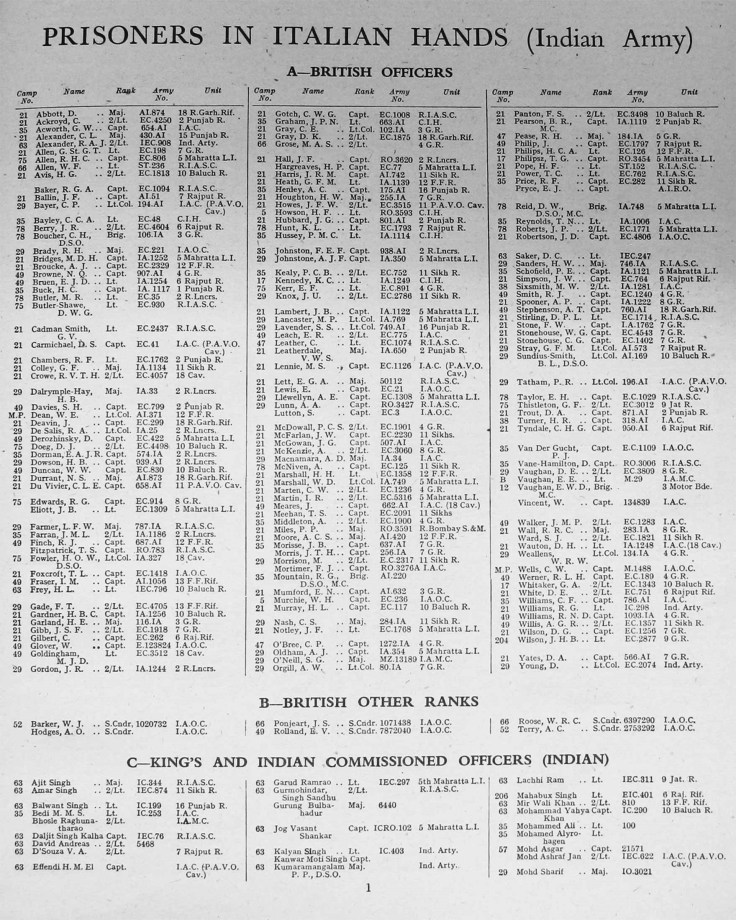
- A/Major G.F. Colley (M.C.) IA. 1134 – is at PG 21 Chieti in the Abruzzo region
- A/Capt. J.R.M. Harris AI. 742 – is also at PG 21 Chieti in the Abruzzo region
- A/Capt. A. McNiven (M.C.) EC. 125 – PG 78 Sulmona
- 2/Lieut. A.G.R. Willis EC. 1357 – PG 49 Fontanellato near Parma
- 2 Lieut. M. Morrison EC. 2317 – PG 29 Viano near Reggio
- 2/Lieut. S.J. Ward EC. 1821 – ??
- 2/ Lieut. J.U. Knox EC. 2786 – PG 29 Viano near Reggio
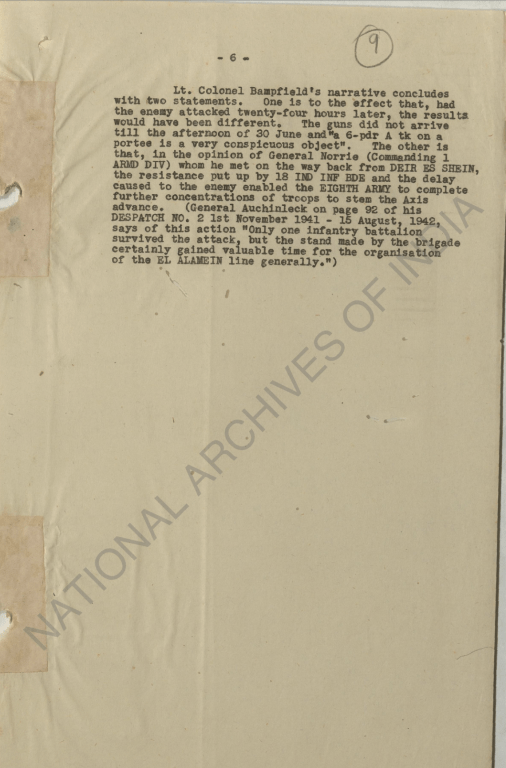
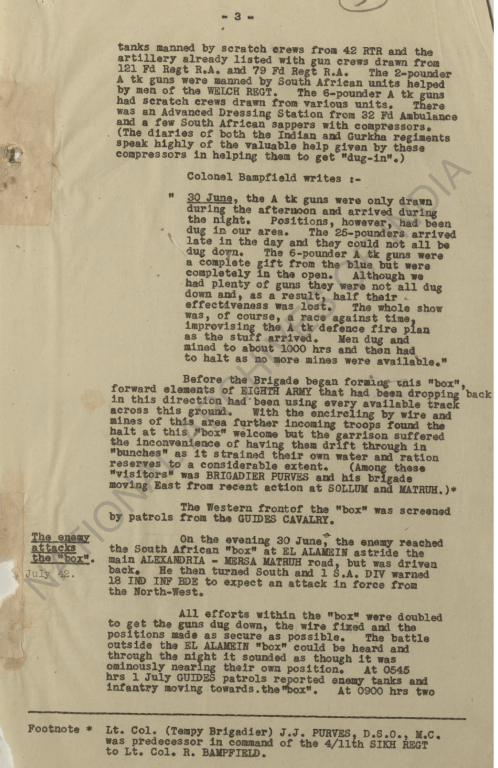
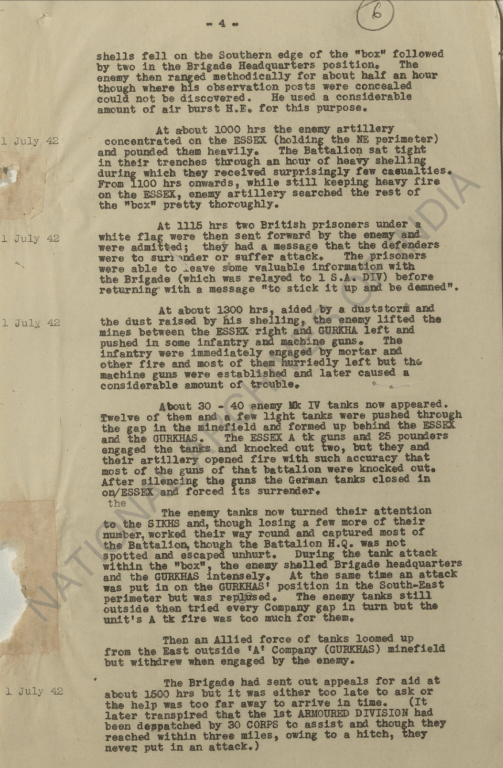
Having established that 2/5th Battalion the Essex Regiment were also present at Deir el Shein as part of the 18th Indian Infantry Brigade, I feel honour bound to post a document that I was lucky enough to come across in Post #19 on the WW2Talk website as part of the Thread relating to Deir el Shein sources – July 1942. A transcript was kindly provided and very much mirrors the Battalion Diary of 4/11th Sikhs that I first came across and posted under Another piece of the Jigsaw:-
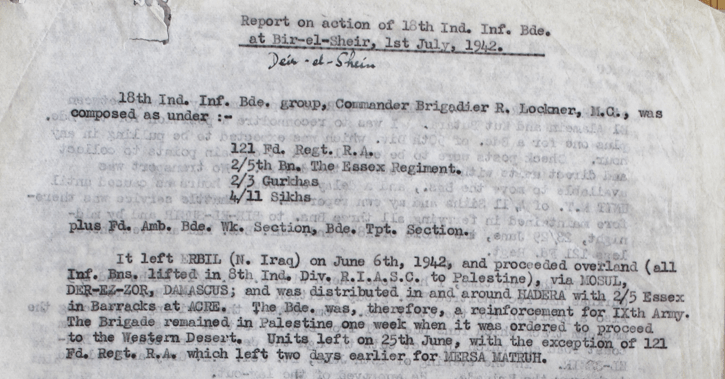
……. although I’m pleased that some comments questioned the criticism levelled at the Sikh Regiment towards the end of the report.
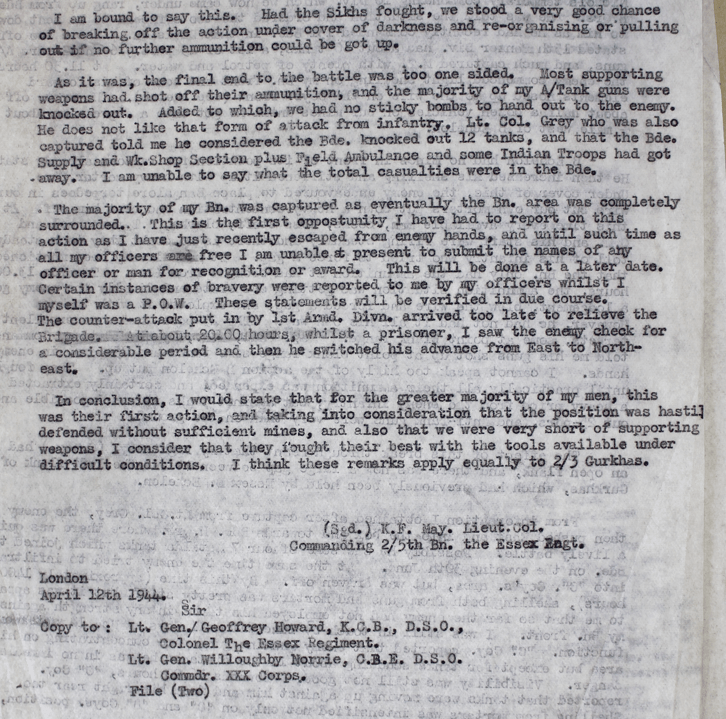
Auchinleck’s Despatch No.2 (1/11/41-15/8/42) says on pg. 92 of the action:
‘Only one infantry battalion survived the attack, but the stand made by the Brigade certainly gained valuable time for the organization of the El Alamein line generally’.
- Richard Bampfield (13th August 1898 – 11th August 1964) was an English first-class cricketer and an officer in the British Indian Army. Bampfield was born at Frome in August 1898. He was educated at St Edward’s School, Oxford. From there, he went to British India to attend the Cadet College at Wellington, graduating from there into the British Indian Army as a Second Lieutenant in June 1917, with him seeing action in the final fifteen months of the First World War. By December 1919, he held the rank of Lieutenant and acted in the capacity of an aide-de-camp until February 1920.
Promotion to Captain would follow, with a further promotion to Major coming in June 1935. Bampfield was a member of the 11th Sikh Regiment and spent time as an instructor at the Indian Military Academy beginning in July 1937. Bampfield would serve with the 11th Sikh in the Second World War, seeing action in the Middle East campaign for which he was mentioned in despatches in December 1941. He was promoted to Lieutenant-Colonel during the war in June 1943. He retired from active service in September 1948, three years after the end of the war and a year after Indian Independence; the latter event had seen him transferred to the specialist list of the British Army. Bampfield died at Rustington on 11th August 1964, two days before his 66th birthday. ↩︎
 PG 49 at Fontanellato in Italy - The Story of allied servicemen who were held prisoner of war in this town in Italy in World War II