
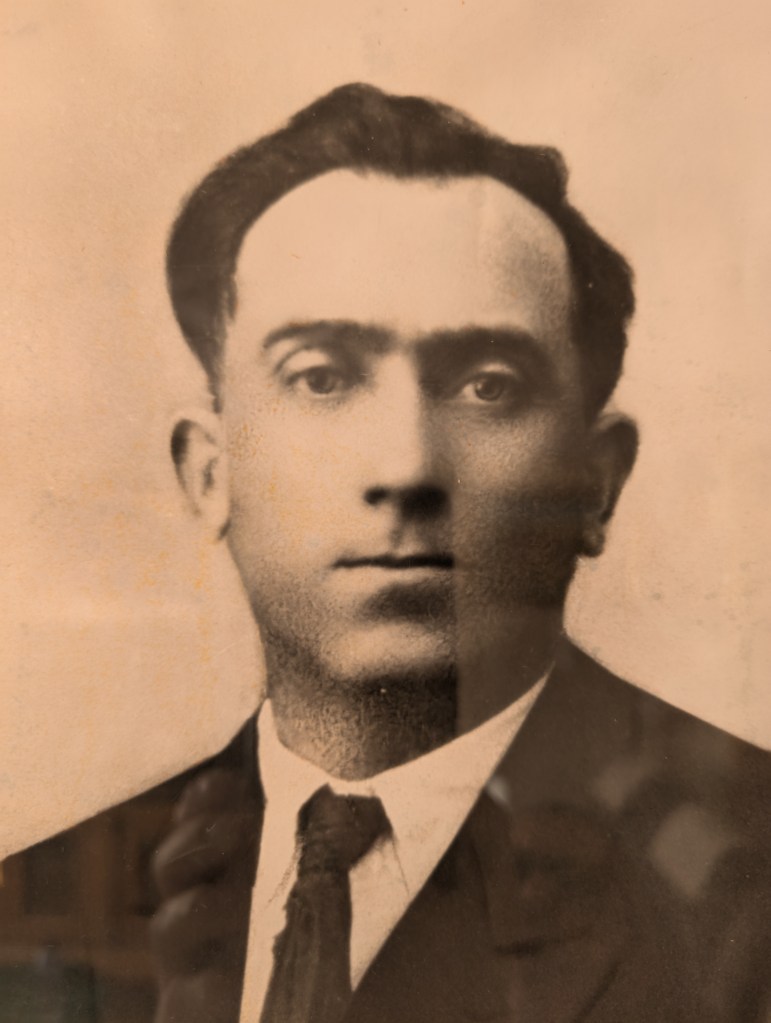
Recently my PG49 Fontanellato contact page notified me that I had a message from a Stefano Marzocchi in which he said:-
“Hi there, I have some information about my grandfather who helped allied servicemen during WW2 and it was whilst googling one of the names and their service number that I came across your site.”
Numerous e-mails were exchanged during which ‘Stef’ very kindly supplied me with all the information that he had gathered about his grandfather thus far, including a photograph of a document I had heard about, but which I had not had any direct connection with before.
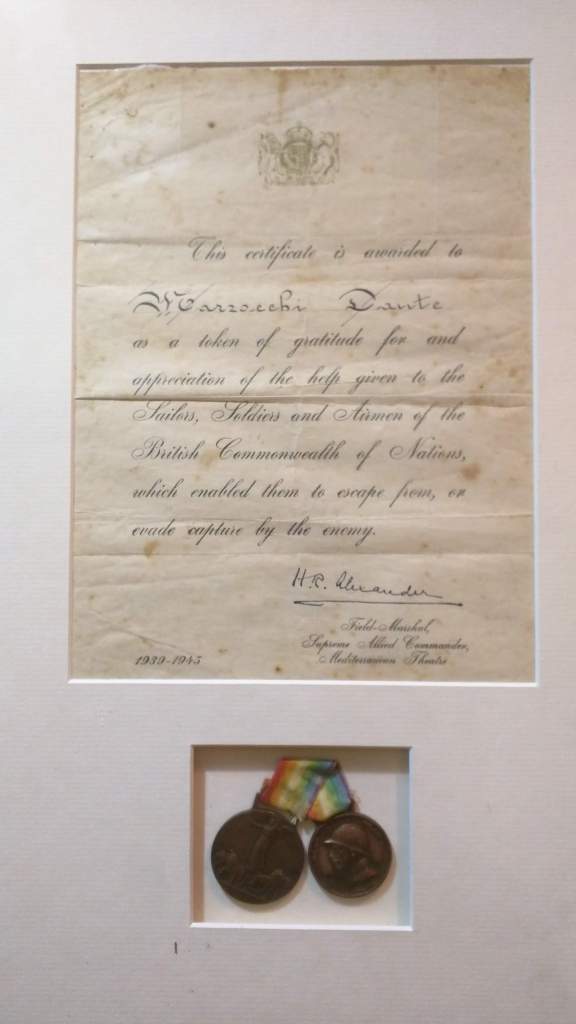
“This certificate is awarded to Dante Marzocchi as a token of gratitude for and appreciation of the help given to the Sailors, Soldiers, and Airmen of the British Commonwealth of Nations, which enabled them to escape from, or evade capture by the enemy.“
H.R. Alexander.
Field-Marshall,
Supreme Allied Commander,
Mediterranean Theatre
1939–1945
Stef had gone on to say:- “Our records are very sketchy but they do contain some service numbers that tally with names that were at pg49. I hope to hear from you as I would love to find out more about the servicemen my grandfather helped and if they survived the war etc.”
I jumped at the opportunity and replied:- “Ciao Stefano. How great to hear from you. How can I help? Can you tell me the names or the service numbers of the people your grandfather assisted? I will do my best to see if together we can trace them or their families.”
The photo above duly followed together with documents Stef had uncovered himself and also some passed to him by Brian Lett, the son of Major Gordon Lett, although he was having some difficulty in obtaining information from the national archives in Washington (N.A.R.A.). Stef went on to explain-
“My grandfather lived in a town called Succisa in the hills above Pontremoli, if you’ve heard about operations Galia or Speedwell or indeed Major Gordon Lett then you’ll recognise Pontremoli.
He had lived in America for a while so could speak a bit of English thus I imagine was a useful asset to have as a link in the chain that assisted allied personnel.
You’ll see from the documentation I have that there is a variety of service numbers and names, in my limited success so far I have ascertained that three of the men escaped together, were caught but eventually made it back after recapture to upper Heyford.”
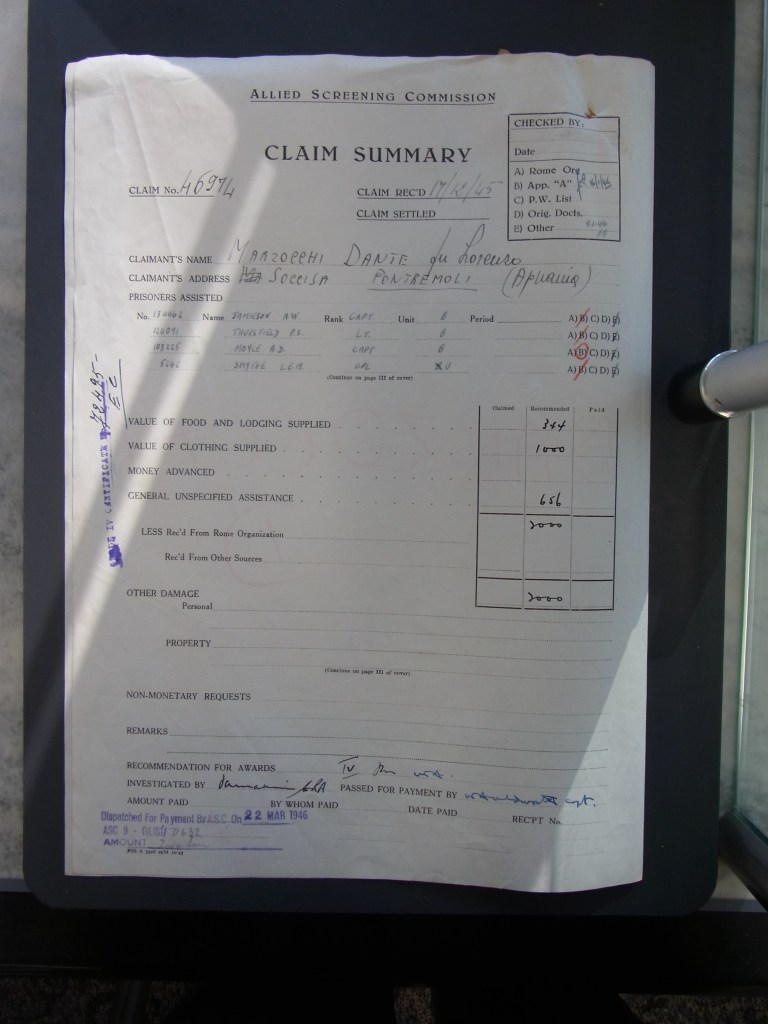
The Claim Summary submitted to the Allied Screening Commission on 17th December 1945 records the claimant to be Dante (Fu Lorenzo – Son of Lorenzo) Marzocchi of Succisa (originally Soccisa), Pontremoli, (Apuania – now Massa Carrara). And the 4 prisoners that he assisted were recorded as being:-
- Jamieson, A.W., Captain (No. 134462)
- Thursfield, P.S., Lieutenant (No. 124091)
- Moyle, A.D., Captain (No. 108225
- Smythe, L.E.M., Corporal (No. 5242)
I very quickly confirmed that the first 3 men were indeed POW’s in PG49 Fontanellato and it appeared as though Stef had found an account written by P.S. Thursfield that must have been sent to J. Keith Killby who had, after the war, been collating the stories of hundreds of prisoners and who had later founded the Monte San Martino Trust “to acknowledge the bravery of Italian people who hid Allied servicemen on the run from prisoner of war camps after the Armistice with Italy in 1943.”
“Lieutenant Thursfield mentions Jamieson and Moyles both whom are recorded on my grandfathers documentation so it’s wonderful to know they at least made it home and my grandfather in some small way facilitated that!
I hope you can help me collate any other information that may be available, dad and his brother’s have no idea I’m sitting on all this and would be blown away to read anything on their father.”
It only took a little further research to find Smythe, L.E.M., Corporal (No. 5242) as being at Camp (PG) 65 (Altamura – Gravina di Puglia) which was closed in July 1943, which could mean that he (along with many others perhaps?) was moved to PG49 just prior to the Armistice in September 1943?

When I first heard about the attempts by the Allied Screening Commission to recompense those Italians who had assisted escaping prisoners I was a bit conflicted for, whilst I was pleased that something had been done to recognise these heroic acts of bravery it seemed that receiving a certificate, and possibly some financial recompense, was a small price to put on saving someone’s life and, in some cases, there was even loss of life as these extraordinarily brave people placed not only their lives but the lives of their families and communities at risk (see Don Giuseppe BEOTTI).
But, after reading so many similar stories, not once do I get the feeling that these people opened their doors for financial gain. They did it because these men were desperate for food, shelter and even boots! And they were miles from home. And these Italian families too perhaps had sons who they had lost during the war or who they hoped were trying to get home. And maybe there is a direct corelation to the feelings that they were experiencing with the rise of fascism and your country being invaded by foreign powers to those we ourselves are experiencing today with Russia and the extraordinary political climate in America.
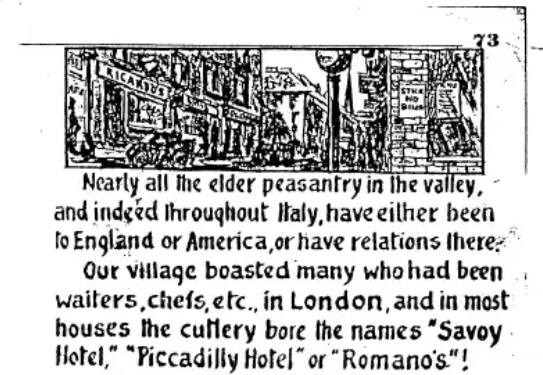
The one advantage that these allied soldiers had over their German counterparts was that “nearly all the elder peasantry in the valley, and indeed throughout Italy, have either been to England or America, or have relations there.” So succintly summed up by Mike Goldingham in his classic diary of his wartime exploits:-
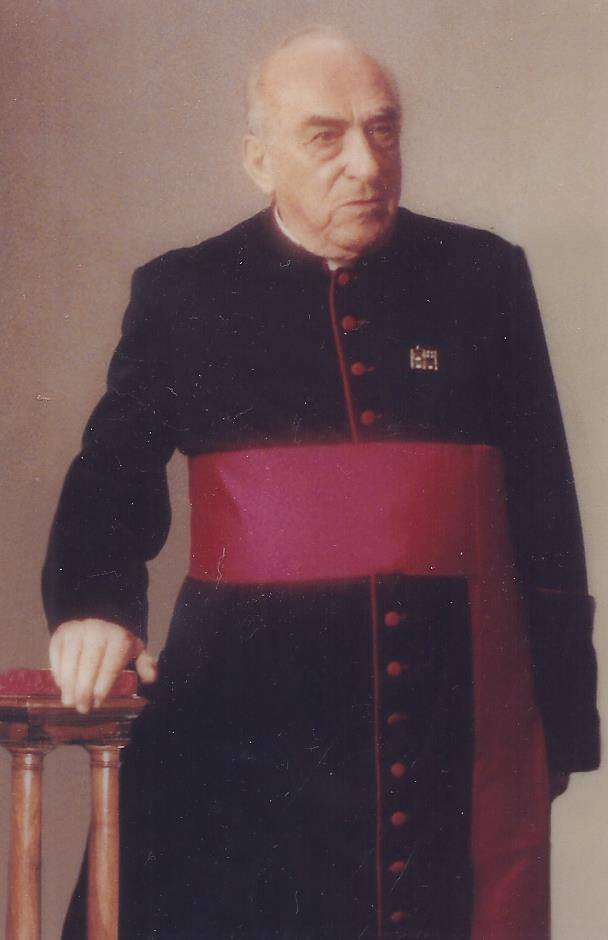
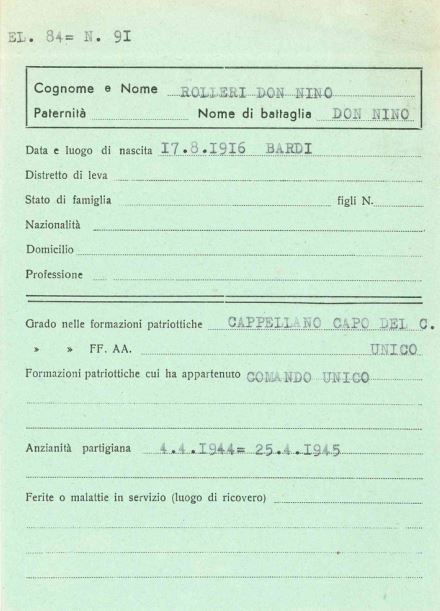
But, after telling Stef about the documents I had found at N.A.R.A., detailing a similar claim to that of his grandfather’s, made by Don Nino Rolleri for Don Giuseppe Beotti who had been shot by the Nazis for helping prisoners as they made their way through Sidolo, he responded immediately by saying:-
“It’s interesting reading the accounts around Sidolo as it’s also very close to my mum’s side of Italy as she grew up in a village called Baselica in Borgotaro where there was also a fair amount of activity. I’ve been to Bardi a good few times and Sidolo rings a bell but perhaps I’ve just seen the road signs and recall it from that.
My maternal grandfather also played a part as he used to go into the mountain above their home and light the fire to mark the spot for the weapon drops by the RAF etc.
There was a partisan leader in Borgotaro who went by the name Vampa who was very well known in the region at the time, sadly he passed away a few years ago but I know my cousin knew him well so when I’m next in Italy in August I’ll see if he has any information regards allied activity that may help fill in any blanks for other people along the way.”
So, I’m starting to recognise that these Certificates do provide families and communities with a huge sense of pride. Yes, it’s difficult to put a price on life but the sense of community that I feel as a descendant of an escaping prisoner towards those Italian communities who helped them all is enormous.
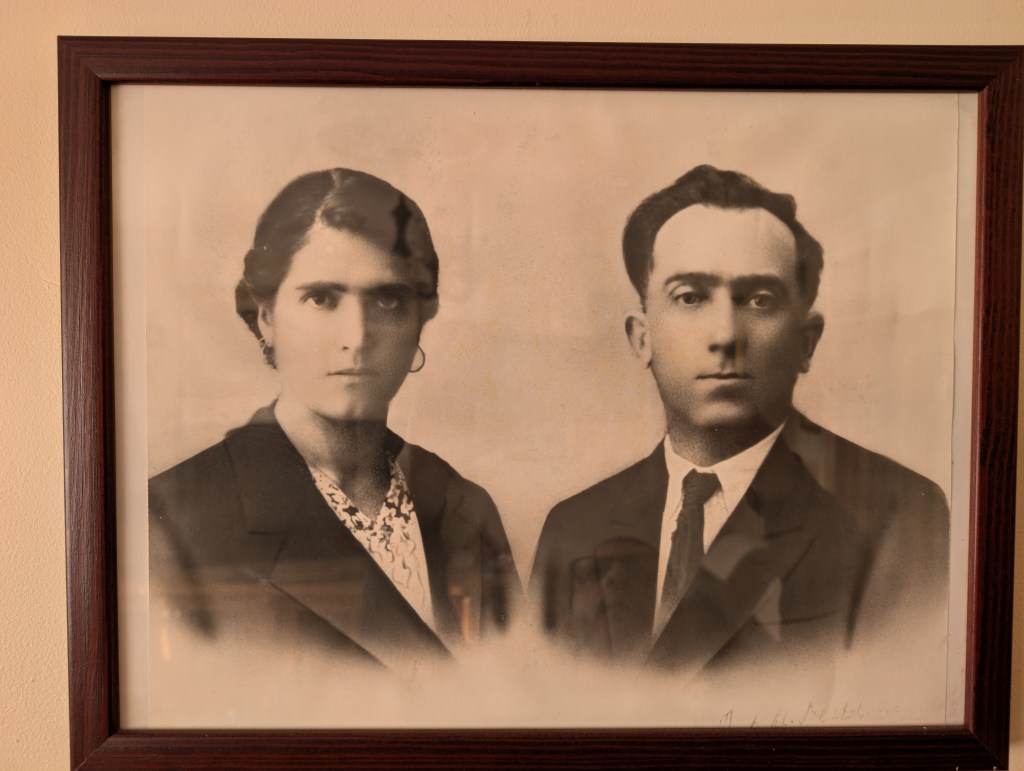
When I first started my website it had initially been to:-
- Try and record my father’s WWII experiences. And, having unearthed vast amounts of information this then led to….
- Trying to record all the servicemen who were POW’s with him in PG49 in Fontanellato and to shed light on their stories
- And, whilst I was doing that, I started to realise that there were lots of Italians who had helped my Dad, and thousands of others, as he was trying to return home.
So, whilst the website had initially been set up to honour my Dad, it then turned into a site where, hopefully, families were able to find out more about their ancestors experiences as POW’s in Italy and prisoners on the run in WWII, and from there to a site which also enabled those Italian families to find out how their ancestors had contributed to saving the lives of those freed from captivity at the time of the Italian Armistice in September 1943.
So, what’s next? How do we go about finding relatives of these men? Stef has one further document that provides some addresses of the men his grandfather helped and maybe with a little further research, and maybe even a stroke of luck, someone might spot this Post and help to connect the dots that we’ve put together so far.

From the information extracted above I have so far tried to expand upon the clues provided:-
- 134462 – Jamieson, Andrew W., Capt.: was in the Royal Artillery (in 1948 possibly lived at 87 Spottiswoode Street, Edinburgh in Scotland with his parents James G. and Mary E. Jamieson? I also found a document in 1954 where a Jamieson, Andrew W. was living with Jamieson, Helen E.M. (Helen Evelyn Mary Jamieson his wife?) at 21 West Garth Avenue, Colinton in Edinburgh)
- 124091 – Thursfield, P.S., Lieut.,: also Royal Artillery (address shown as 200 Woodstock Road, Oxford, England)
- [Possibly Peter Spencer THURSFIELD born August 31st, 1919 and died August 31st 2008 aged 89]
- after searching in Ancestry and then confirming with a researcher on Geneanet, I was able to confirm that his 4th Cousin was Erica Tindall PORTER and she married Peter Spencer THURSFIELD in 1946. At one point they lived at 1 Field House, Turville Barns, Cirencester, Gloucester.
- If correct he married Erica Tindal PORTER and there are possibly 3 children
- The final entry in Peter Thursfield’s story with the M.S.M.T. confirms his marriage to Erica on 29th January 1946
- one son is Hugh Tindal THURSFIELD m. Victoria (Vicky) J. Beckett
- William Richmond Thursfield
- Oliver Tindal Thursfield
- Alexandria Thursfield
- and Nigel Spence Thursfield m. Lendriani (living in Australia?)
- Andrew Thursfield
- Christopher Thursfield
- another Timothy Hume Thursfield m. Stella Aitchison Salmon with children
- John (Johnny) Hume Thursfield
- and Celia Mary Aitchison Thursfield
- one son is Hugh Tindal THURSFIELD m. Victoria (Vicky) J. Beckett
- 108225 – Moyle A.David, Capt. : R.A.S.C. (Royal Army Service Corps) – Address shown as Maresfield (near Uckfield), Sussex, England.
5242 – Smythe, L.E.M., Cpl, (Camp 65) – Address indicating Natal, South Africa.
As a postscript to this story I have to firstly thank my good friend Dennis Hill who provided me with the confidence to start this Blog. His own tribute to his father, the magnificent Camp 59 Survivors, is growing daily. But it was this post that he had submitted entitled “A Reflection on Heroism and Humility” that brought about an extraordinary coincidence. I sent it to Stef to give him an idea of what I thought might be a suitable platform for his grandfather’s story, and this was his reply.
“I clicked that link you sent me and saw the site, then saw the surname Cavaciuti then the area called Morfasso and realised it was where my uncle grew up so sent it to my cousin and it turns out that Antonio Cavaciuti was my cousin’s wife’s great grandfather!“
I think Dennis summed up his story beautifully. You only have to swap the name “Cavaciuti” for any Italian family who….
“acted on a principal of deeply-felt humanity.”
Thank you Denis and thank you too Stef and all your family. I hope one day I can say the same to the relatives of any family who helped my own father.
“The wartime episode is a testament to the Cavaciutis’ humility—when the escapers wandered onto their property, Antonio and Domenica acted on a principal of deeply-felt humanity. Sheltering the men was likely a natural, spontaneous impulse.
Nazi retribution for helping escapees was swift and severe. They were risking their lives—and the lives of their children. I have no doubt they realized this.
The Alexander certificate attests to their heroism. It is a document Antonio and Domenica’s descendants can rightly be proud of.“
Dennis Hill
A Reflection on Heroism and Humility





 PG 49 at Fontanellato in Italy - The Story of allied servicemen who were held prisoner of war in this town in Italy in World War II